
Side by sideParallel across traditions

Artemis vs Hina

Artemis
ArtemisGreek
Hina
HinaPolynesian

Both are moon goddesses associated with femininity.

At a glance

Artemis and Hina compared
ArtemisHina
TraditionGreek PantheonPolynesian Pantheon
Domainshunt, wilderness, moon, childbirth, virginitymoon, tapa cloth, women's work, beauty, fertility
Symbolsbow and arrow, deer, moon, cypressmoon, tapa beater, coconut, white flowers
Also calledDianaHina-i-ka-malama (Hawaiian), Sina (Samoan), Hine (Maori form)

Where they meet

Both are associated with moon.

They share a symbol: moon.

  • moon

Where they part

Only Artemis

Associated with hunt, wilderness, childbirth, and virginity.

Only Hina

Associated with tapa cloth, women's work, beauty, and fertility.

How each was worshipped

Artemis

Cult sites
Artemision at Ephesus; Brauron in Attica; Sanctuary at Aulis
Festivals
Brauronia; Elaphebolia; Ephesian Artemisia

Wild animals, childbirth, and girls leaving childhood are hers. Brauron kept the arktoi, the 'bears.' Ephesus housed a many-breasted civic image that is not a Greek huntress in a short chiton. Both are Artemis.

Hina

Cult sites
Moon and tapa; island variants under one name

Bark-cloth, the moon, and a woman who is not one biography. Hawai'i, Tahiti, and Aotearoa do not share a single parish. Name the work: cloth and night sky.

The two figures

Greek Pantheon

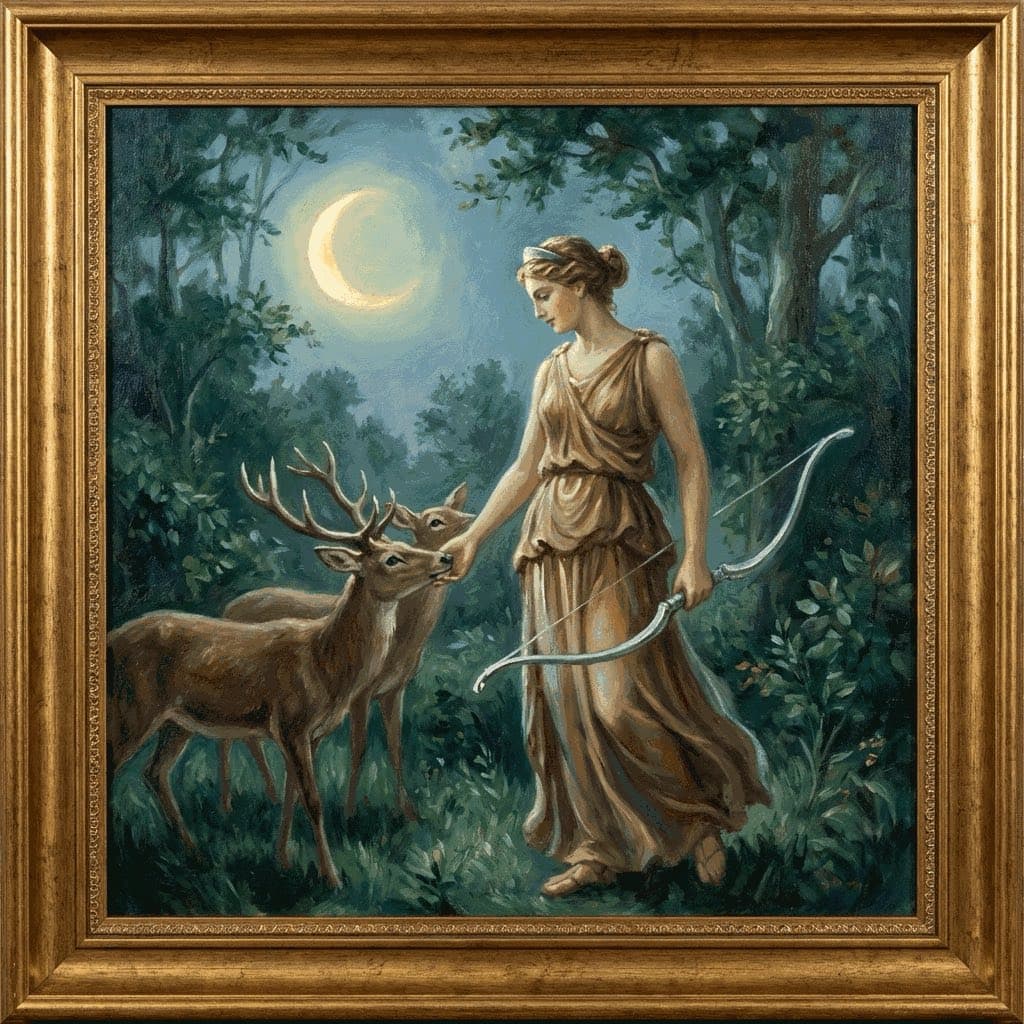
Artemis

Goddess of the hunt, wilderness, and the moon. Twin sister of Apollo, protector of young women and animals.

Artemis is the fierce virgin goddess of the hunt and the wilderness ("*Potnia Theron*"). She roams the forests with her band of nymphs, protecting the natural world and punishing those who disrespect it.

Read the full Artemis entry

Polynesian Pantheon

Hina

The goddess of the moon and women's arts, particularly the making of tapa cloth. Hina appears in many forms across Polynesia, sometimes as the mother of Maui, sometimes as a goddess who fled to the moon.

Hina's origins vary by tradition. In some stories she was always a goddess; in others, she was a mortal woman who achieved divine status. Most commonly, she was a beautiful woman who fled to the moon to escape earthly troubles, where she can still be seen beating tapa cloth.

Hina is one of the most widely distributed goddess figures in Polynesian mythology, appearing in virtually every island group though with different specific stories. She represents femininity, the moon, and the domestic arts that sustain community life.
Read the full Hina entry
About this comparison

Comparisons pair figures that play a similar role across traditions, or that the myths connect within one. A shared role does not, by itself, establish a shared origin.