Mythos Atlas

Side by sideParallel across traditions

Asclepius vs Dian Cécht

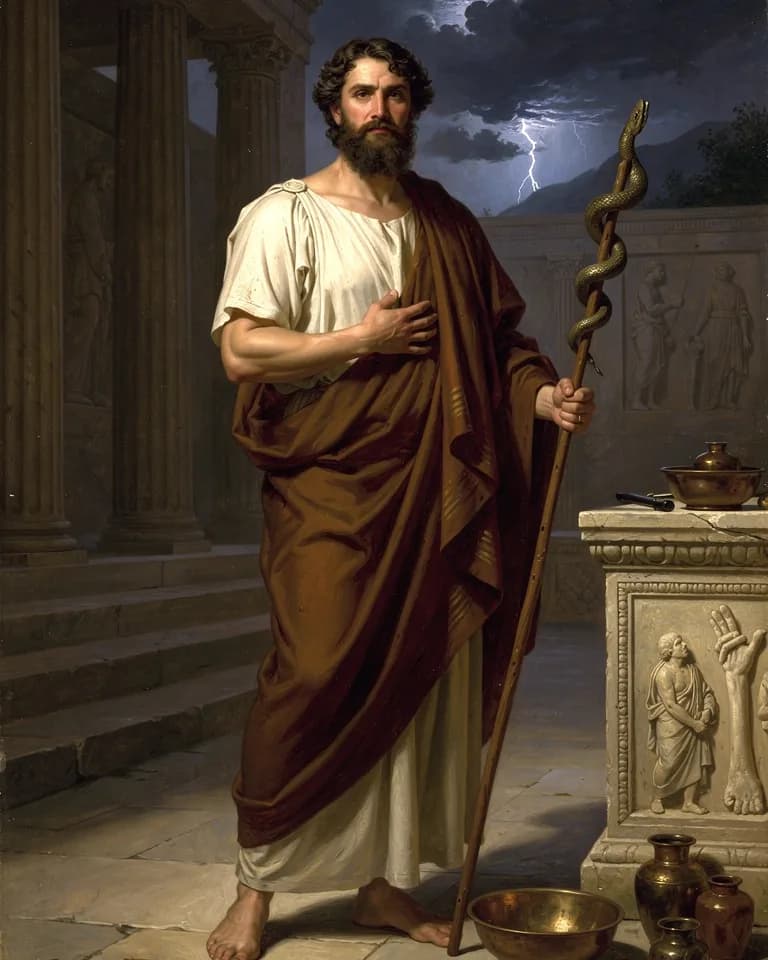
Asclepius
AsclepiusGreek
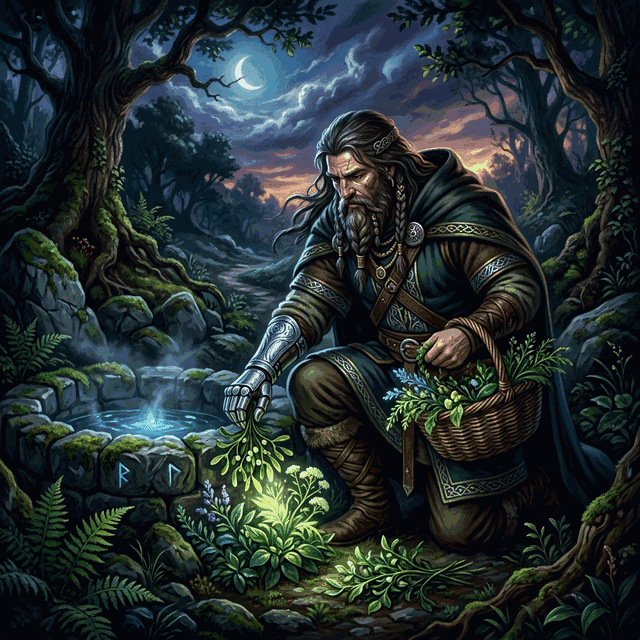
Dian Cécht
Dian CéchtCeltic

Both are divine physicians whose healing reaches toward restoring the dead.

At a glance

Asclepius and Dian Cécht compared
AsclepiusDian Cécht
TraditionGreek PantheonCeltic Pantheon
Domainshealing, medicine, physicianshealing, medicine, health
Symbolsstaff with a single coiled serpent, serpents, dogssilver hand, healing herbs, well
Also calledAsklepios, Aesculapius (Roman)Dian Cecht, Cainte

Where they meet

Both are associated with healing and medicine.

Where they part

Only Asclepius

Associated with physicians.

Only Dian Cécht

Associated with health.

How each was worshipped

Asclepius

Cult sites
Sanctuary of Asclepius at Epidaurus; Asclepieion of Kos; Asclepieion of Pergamon; Temple of Aesculapius on the Tiber Island, Rome
Festivals
Asclepieia (festivals at Epidaurus and Athens); Epidauria at Athens, within the Eleusinian Mysteries

Incubation: the sick purified themselves, offered sacrifice, and slept in the sanctuary's abaton hoping for a healing dream. Votive models of healed body parts and inscribed cure records were left at the shrines.

Dian Cécht

Cult sites
No attested temple in the surviving record

Physician of the Tuatha; the well of healing is in the tales. No surviving Irish temple of Dian Cecht. Healing cults went to wells and saints later.

The two figures

Greek Pantheon

Asclepius

The healer god, son of Apollo and the mortal Coronis, trained in medicine by the centaur Chiron. His skill grew so great that he raised the dead, and Zeus struck him with a thunderbolt; he was nonetheless worshipped across the Greek and Roman world at sanctuaries where the sick slept in hope of a cure.

Asclepius was the son of Apollo and Coronis. When Coronis was killed for her infidelity, Apollo rescued the unborn child from her pyre and entrusted him to the centaur Chiron, who taught him the healing arts.

The *Homeric Hymn to Asclepius* names him son of Apollo and of Coronis, daughter of King Phlegyas, born in the Dotian plain of Thessaly. Pindar's third *Pythian Ode* tells the darker version: Coronis was unfaithful to Apollo while carrying his child, Artemis killed her, and Apollo snatched the infant from her funeral pyre and gave him to the centaur Chiron to raise and teach.

Read the full Asclepius entry

Celtic Pantheon

Dian Cécht

The physician of the Tuatha Dé Danann, whose healing well could restore the dead to life. His jealousy over his son's greater skill led to tragedy.

Dian Cécht served as chief physician to the **Tuatha Dé Danann**. When **Nuada** lost his arm in the First Battle of Mag Tuired, Dian Cécht fashioned him a fully functional arm of silver—a feat of divine surgery that restored the king's eligibility to rule. However, Dian Cécht's son **Miach** later replaced the silver arm with one of true flesh and bone, surpassing his father's craft. Consumed by jealousy, Dian Cécht struck Miach three times on the head with his sword: Miach healed the first two wounds, but the third cut his brain, killing him. From Miach's grave grew 365 healing herbs, one for every joint and sinew. Dian Cécht's daughter **Airmed** gathered and organized these herbs, but her father scattered them, and their secrets were lost.

Dian Cécht is the divine healer of Irish mythology, whose skills preserved the Tuatha Dé Danann through their wars against the Fir Bolg and the Fomorians. His name may mean "swift power" or "god of power," and his craft represents the ancient Irish respect for medical knowledge and its keepers.

Read the full Dian Cécht entry
About this comparison

Comparisons pair figures that play a similar role across traditions, or that the myths connect within one. A shared role does not, by itself, establish a shared origin.