Mythos Atlas

Side by sideParallel across traditions

Asclepius vs Okuninushi

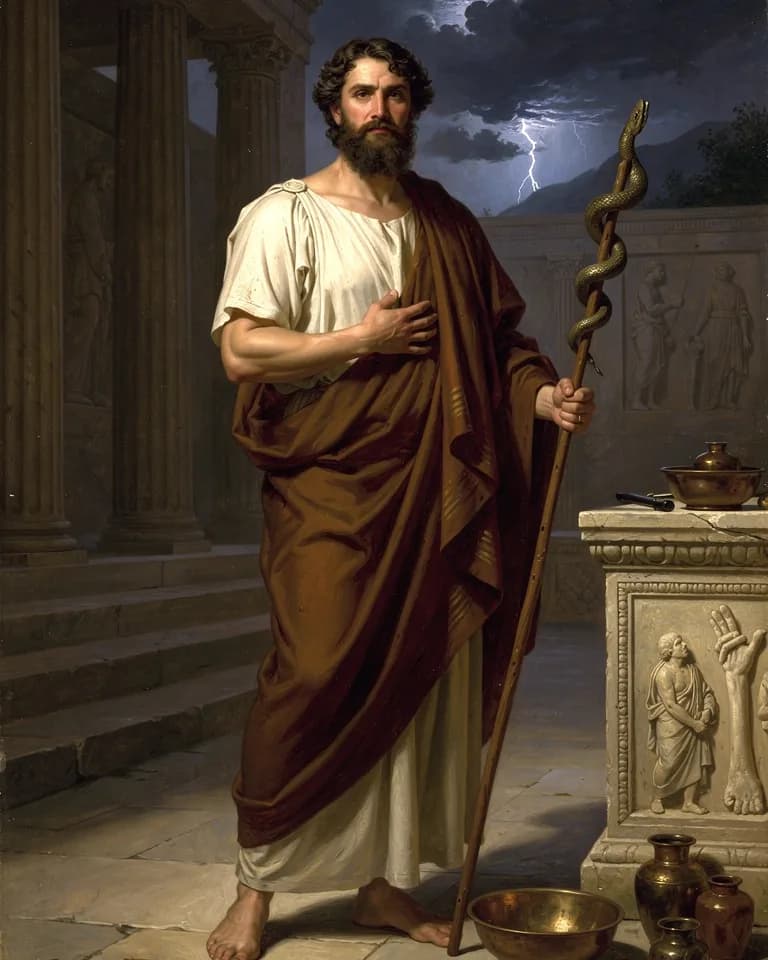
Asclepius
AsclepiusGreek
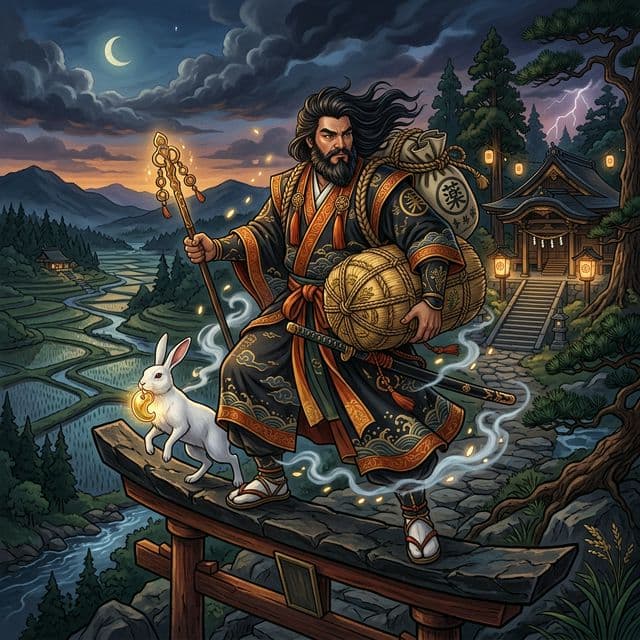
Okuninushi
OkuninushiJapanese

Both are gods of medicine and healing who underwent trials and death.

At a glance

Asclepius and Okuninushi compared
AsclepiusOkuninushi
TraditionGreek PantheonJapanese Pantheon
Domainshealing, medicine, physiciansnation-building, medicine, magic, marriage, agriculture
Symbolsstaff with a single coiled serpent, serpents, dogshare of Inaba, medicine bag, jewel, giant bale of rice
Also calledAsklepios, Aesculapius (Roman)Okuninushi-no-Mikoto, Daikoku-sama, Onamuchi, Ashihara-no-Shikoo

Where they meet

Both are associated with medicine.

Where they part

Only Asclepius

Associated with healing and physicians.

Only Okuninushi

Associated with nation-building, magic, marriage, and agriculture.

Why they are compared

Both are associated with medicine and healing, and both undergo death and restoration in their myths.

How each was worshipped

Asclepius

Cult sites
Sanctuary of Asclepius at Epidaurus; Asclepieion of Kos; Asclepieion of Pergamon; Temple of Aesculapius on the Tiber Island, Rome
Festivals
Asclepieia (festivals at Epidaurus and Athens); Epidauria at Athens, within the Eleusinian Mysteries

Incubation: the sick purified themselves, offered sacrifice, and slept in the sanctuary's abaton hoping for a healing dream. Votive models of healed body parts and inscribed cure records were left at the shrines.

Okuninushi

Cult sites
Izumo Taisha
Festivals
Kamiari-zuki at Izumo, when the gods gather

The great land master and matcher of fates. Izumo's shimenawa is the size of the claim. En-musubi is the popular face of a much older kingdom-god.

The two figures

Greek Pantheon

Asclepius

The healer god, son of Apollo and the mortal Coronis, trained in medicine by the centaur Chiron. His skill grew so great that he raised the dead, and Zeus struck him with a thunderbolt; he was nonetheless worshipped across the Greek and Roman world at sanctuaries where the sick slept in hope of a cure.

Asclepius was the son of Apollo and Coronis. When Coronis was killed for her infidelity, Apollo rescued the unborn child from her pyre and entrusted him to the centaur Chiron, who taught him the healing arts.

The *Homeric Hymn to Asclepius* names him son of Apollo and of Coronis, daughter of King Phlegyas, born in the Dotian plain of Thessaly. Pindar's third *Pythian Ode* tells the darker version: Coronis was unfaithful to Apollo while carrying his child, Artemis killed her, and Apollo snatched the infant from her funeral pyre and gave him to the centaur Chiron to raise and teach.

Read the full Asclepius entry

Japanese Pantheon

Okuninushi

The Great Land Master who built and ruled the earthly realm before ceding it to Amaterasu's descendants. God of nation-building, medicine, magic, and matchmaking. Principal deity of Izumo Grand Shrine.

Okuninushi was the son of **Susanoo** and endured trials including being killed by his jealous brothers and revived by his mother. He descended to the underworld, married Susanoo's daughter **Suseri-hime**, and escaped with magical treasures. He then built the earthly nation with the help of the dwarf deity **Sukunabikona**.

**Okuninushi-no-Mikoto** is one of the most beloved and complex figures in Japanese mythology. His lengthy saga, recorded primarily in the **Kojiki** and the **Izumo Fudoki**, tells of a persecuted youngest son who rises through trials to become ruler of the earthly realm—only to graciously surrender that realm to the heavenly gods.

Read the full Okuninushi entry
About this comparison

Comparisons pair figures that play a similar role across traditions, or that the myths connect within one. A shared role does not, by itself, establish a shared origin.