Side by sideParent and child

Okuninushi vs Susanoo

Okuninushi
OkuninushiJapanese
Susanoo
SusanooJapanese

Okuninushi and Susanoo are recorded as parent and child in the Japanese Pantheon.

At a glance

Okuninushi and Susanoo compared
OkuninushiSusanoo
TraditionJapanese PantheonJapanese Pantheon
Domainsnation-building, medicine, magic, marriage, agriculturestorms, sea, chaos, heroism
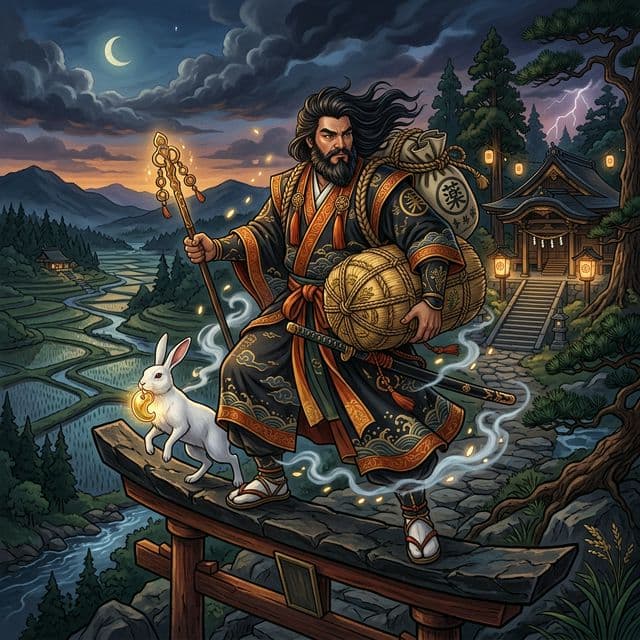
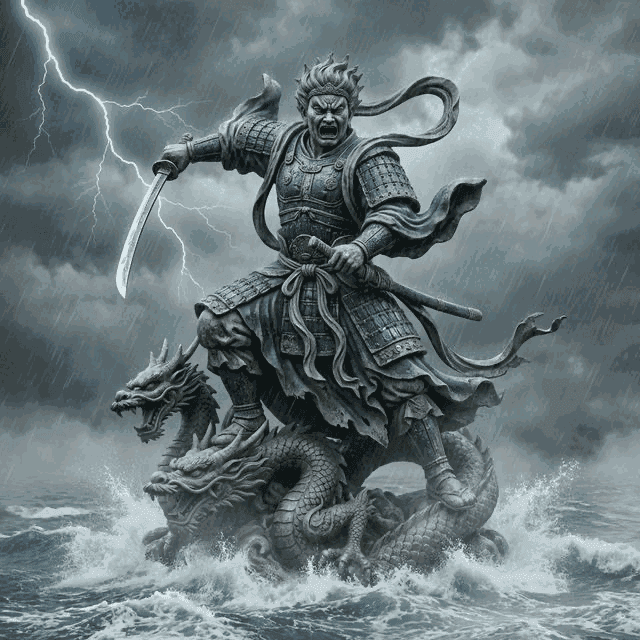
Symbolshare of Inaba, medicine bag, jewel, giant bale of ricesword, storm, dragon
Also calledOkuninushi-no-Mikoto, Daikoku-sama, Onamuchi, Ashihara-no-ShikooSusanoo-no-Mikoto

Where they meet

The atlas records no domain or symbol that Okuninushi and Susanoo share.

They are compared because of how the myths connect them, not because of what they rule.

Where they part

Only Okuninushi

Associated with nation-building, medicine, magic, marriage, and agriculture.

Only Susanoo

Associated with storms, sea, chaos, and heroism.

How each was worshipped

Okuninushi

Cult sites
Izumo Taisha
Festivals
Kamiari-zuki at Izumo, when the gods gather

The great land master and matcher of fates. Izumo's shimenawa is the size of the claim. En-musubi is the popular face of a much older kingdom-god.

Susanoo

Cult sites
Yasaka Shrine in Kyoto; Hiromine and other Gion-line shrines; Izumo as the wild brother of the sun
Festivals
Gion Matsuri; Susanoo festivals at Yasaka

Storm, sword, and the eight-headed serpent. Gion's month-long parade is plague-exorcism dressed as spectacle. He is worshipped as a settler of chaos, not as a polite rice god.

The two figures

Japanese Pantheon

Okuninushi

The Great Land Master who built and ruled the earthly realm before ceding it to Amaterasu's descendants. God of nation-building, medicine, magic, and matchmaking. Principal deity of Izumo Grand Shrine.

Okuninushi was the son of **Susanoo** and endured trials including being killed by his jealous brothers and revived by his mother. He descended to the underworld, married Susanoo's daughter **Suseri-hime**, and escaped with magical treasures. He then built the earthly nation with the help of the dwarf deity **Sukunabikona**.

**Okuninushi-no-Mikoto** is one of the most beloved and complex figures in Japanese mythology. His lengthy saga, recorded primarily in the **Kojiki** and the **Izumo Fudoki**, tells of a persecuted youngest son who rises through trials to become ruler of the earthly realm, only to graciously surrender that realm to the heavenly gods.

Read the full Okuninushi entry

Japanese Pantheon

Susanoo

God of storms, sea, and chaos. Brother of Amaterasu. Initially wild but later heroic. Famous for slaying the eight-headed dragon Yamata no Orochi.

Born from Izanagi's nose during purification. Exiled from heaven for his violence, he descended to Earth where he became a hero, slaying the dragon Yamata no Orochi.

**Susanoo-no-Mikoto** embodies the raw, untamed power of storms and the sea. Born from Izanagi's nose during his purification ritual, Susanoo was assigned to rule the ocean realm. However, his nature was wild and tempestuous, and his refusal to accept his duties set in motion one of Shinto mythology's most dramatic sagas.

Read the full Susanoo entry
About this comparison

Comparisons pair figures that play a similar role across traditions, or that the myths connect within one. A shared role does not, by itself, establish a shared origin.