
Mythos Atlas

Side by sideParallel across traditions

Cuniraya Viracocha vs Raven

Cuniraya Viracocha
Cuniraya ViracochaInca and Andean
Raven
RavenTlingit and Haida

Both are trickster-transformers whose travels and appetites account for features of the world and the habits of animals, creating by redistributing things as much as by making them.

At a glance

Cuniraya Viracocha and Raven compared
Cuniraya ViracochaRaven
TraditionInca and Andean TraditionTlingit and Haida Tradition
Domainsirrigation and terraces, trickery, the ordering of animalstransformation, daylight, trickery and creation
Symbolsbeggar's rags, a lúcuma fruit, a hollow canethe raven, the bentwood box
Also calledConiraya, Cuni RayaYéil, Xuuya, Yáahl

Where they meet

The atlas records no domain or symbol that Cuniraya Viracocha and Raven share.

They are compared for the part each plays in their own tradition rather than for any attribute in common.

Where they part

Only Cuniraya Viracocha

Associated with irrigation and terraces, trickery, and the ordering of animals.

Only Raven

Associated with transformation, daylight, and trickery and creation.

How each was worshipped

Cuniraya Viracocha

Invoked before difficult work, especially by weavers, with a leaf of coca thrown on the ground as an offering, according to Ávila; Ávila also reports a stone into which Cuniraya was said to have been turned, above the Cupara irrigation channel.

Raven

Raven stories continue to be told publicly today, including through Sealaska Heritage Institute's published collections, and are carved and painted on totem poles, house fronts, and regalia across Tlingit and Haida communities; this site does not describe any restricted ceremony connected to Raven.

The two figures

Inca and Andean Tradition

Cuniraya Viracocha

The ragged trickster-creator of the Huarochirí stories, who makes terraces and canals with a word, fathers a child on the proud huaca Cavillaca through a fruit, and blesses or curses each animal he meets as he chases her to the sea.

No birth is told; he simply 'appeared in the form and dress of a very poor Indian' in the most ancient times (Ávila, ch. II).

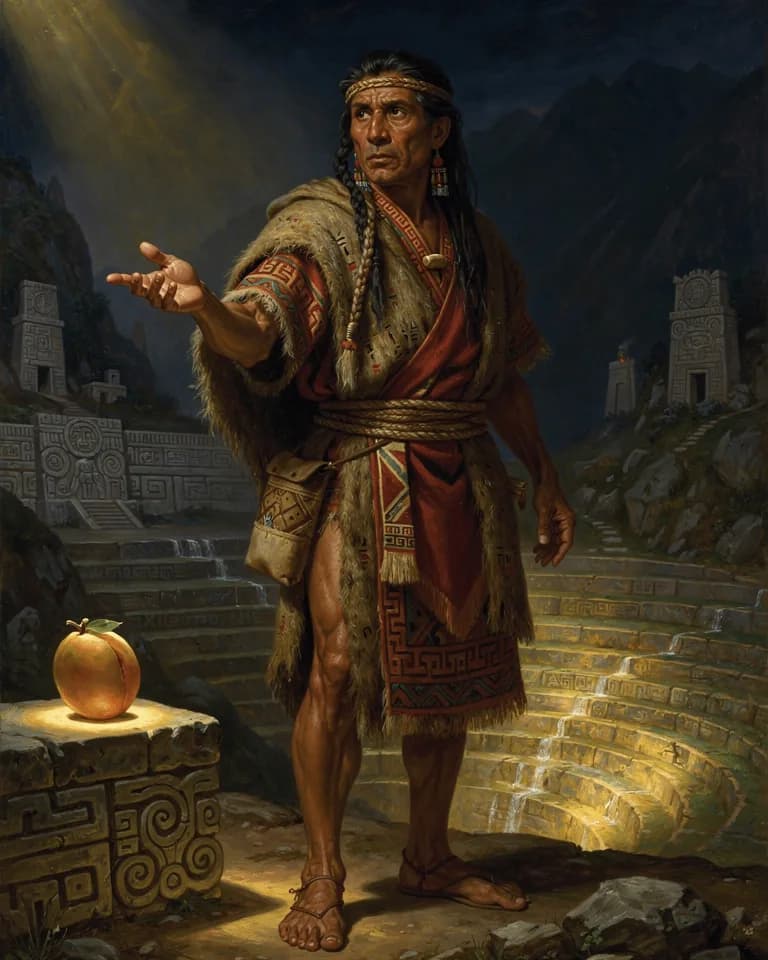
The Huarochirí Manuscript (ch. 2) and Francisco de Ávila's Spanish retelling (1608) describe Cuniraya wandering the land as a lice-ridden beggar whom people mock. Yet with a word he makes terraces rise on the ravine sides and, by throwing a cane, sets irrigation channels flowing. In the most famous story he fathers a child on the beautiful and aloof huaca Cavillaca by placing his seed in a ripe lúcuma fruit, then pursues her to the sea at Pachacamac, rewarding the condor, puma, and falcon that give him hopeful news and cursing the skunk, fox, and parrots that do not.

Read the full Cuniraya Viracocha entry

Tlingit and Haida Tradition

Raven

The central figure of Tlingit and Haida oral tradition, who steals daylight from a wealthy old man's nested boxes at the head of the Nass River and, in a Haida telling, coaxes the first people from a clamshell on the beach at Haida Gwaii.

As the poet and translator Robert Bringhurst wrote of the Haida telling, Raven "never actually creates anything; he made the world by stealing, exchanging, redistributing, and generally moving things around." Both Tlingit and Haida traditions cast Raven this way: greedy, funny, and self-interested, yet the figure through whom the world's useful and beautiful things (daylight, salmon, the first people) come to be. Raven's stories are told today by Tlingit and Haida people as living oral tradition, and Sealaska Heritage Institute, the Tlingit, Haida, and Tsimshian nations' own cultural institution, publishes Raven stories for public audiences.

Read the full Raven entry
About this comparison

Comparisons pair figures that play a similar role across traditions, or that the myths connect within one. A shared role does not, by itself, establish a shared origin.