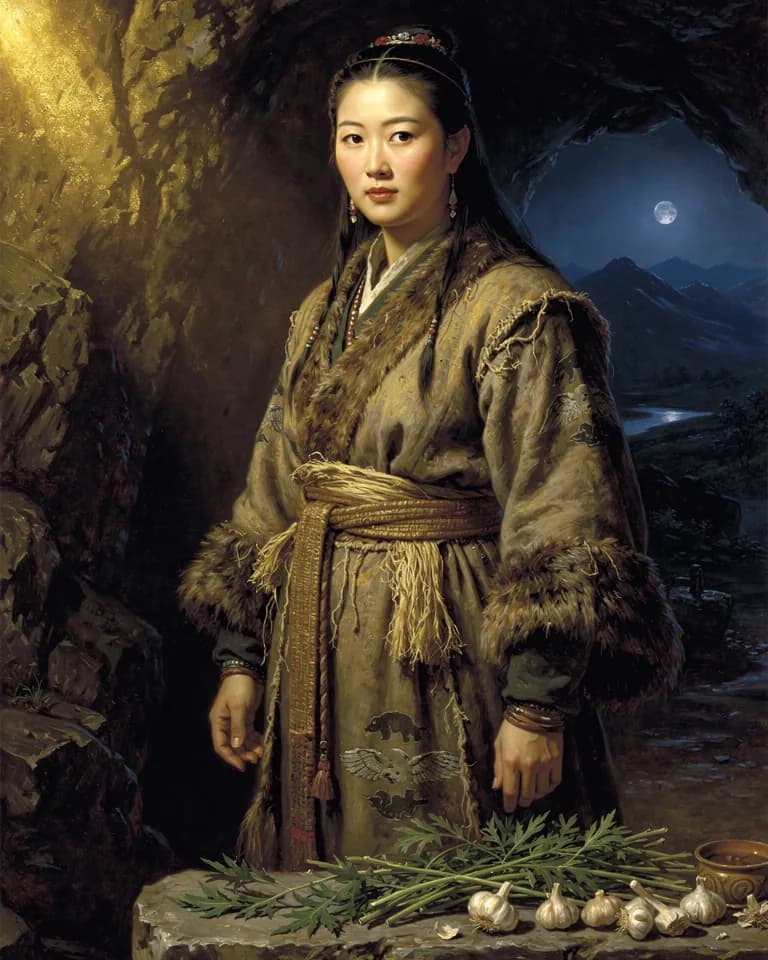
Ungnyeo
The bear who, with a tiger, begs Hwanung to become human, endures twenty-one days in darkness eating only mugwort and garlic, becomes a woman, and by Hwanung bears Dangun, founder of the first Korean kingdom.
Divine domains
7 deities from 6 traditions whose entries in this atlas list transformation among their domains, grouped by tradition.
The bear who, with a tiger, begs Hwanung to become human, endures twenty-one days in darkness eating only mugwort and garlic, becomes a woman, and by Hwanung bears Dangun, founder of the first Korean kingdom.
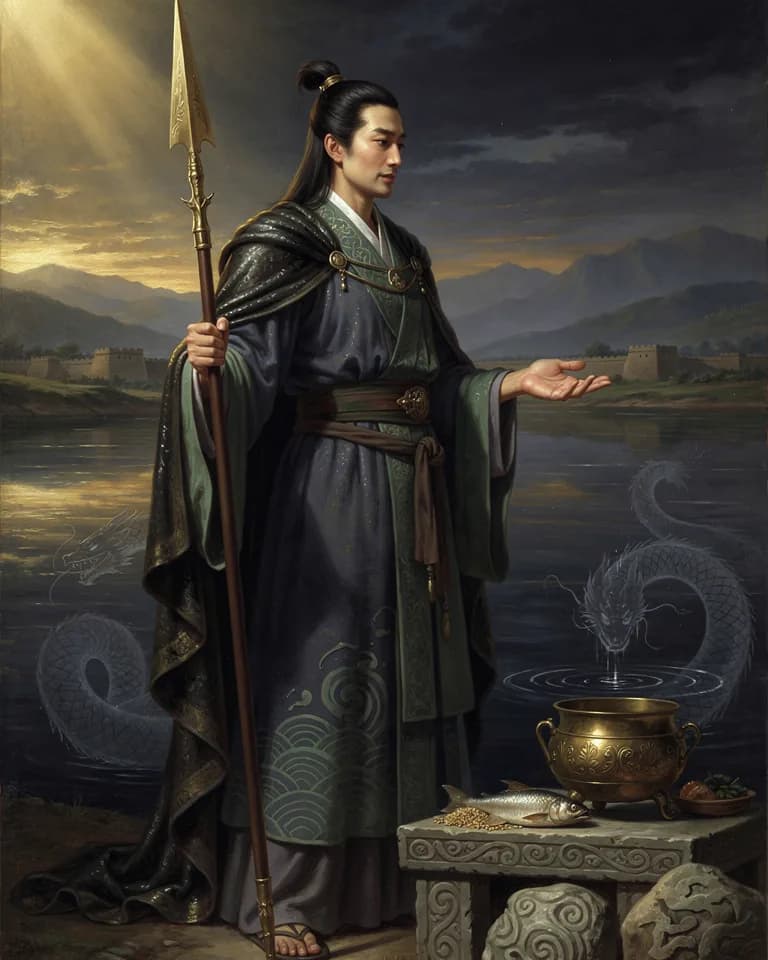
The River Earl, water god of the Amnok (Yalu) region and father of Yuhwa, who tests Haemosu's divine claim in a contest of transformations and is claimed by Goguryeo's kings as the founder's maternal grandfather.
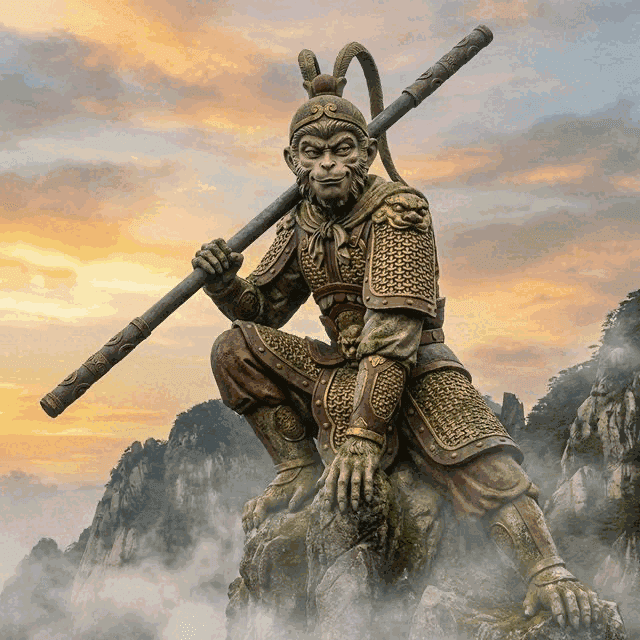
A monkey born from a magical stone who acquired supernatural powers through Taoist cultivation. After wreaking havoc in Heaven, he was imprisoned for 500 years before redeeming himself as the protector of the monk Tang Sanzang on the journey to retrieve Buddhist scriptures.
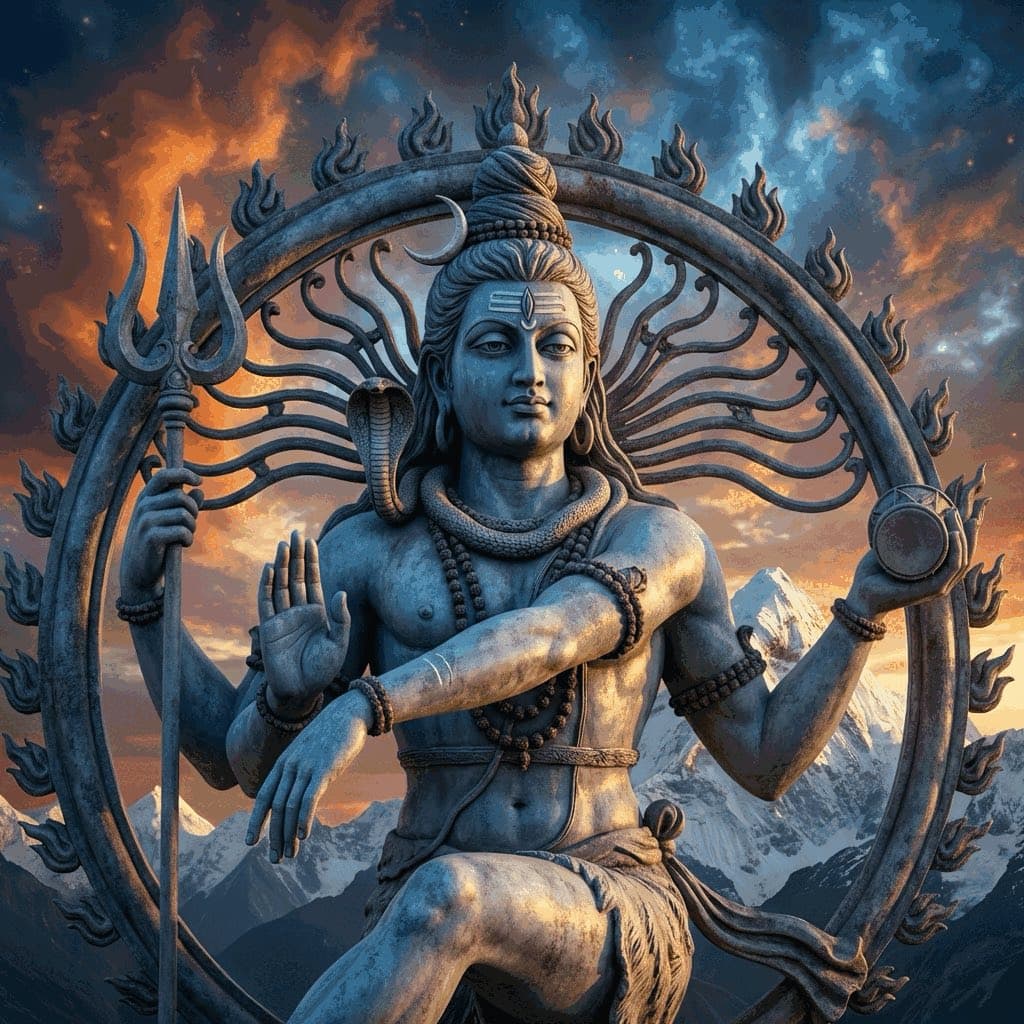
The destroyer and transformer, third member of the Trimurti. Shiva destroys the universe at the end of each cosmic cycle to allow recreation. God of meditation, yoga, and the arts.
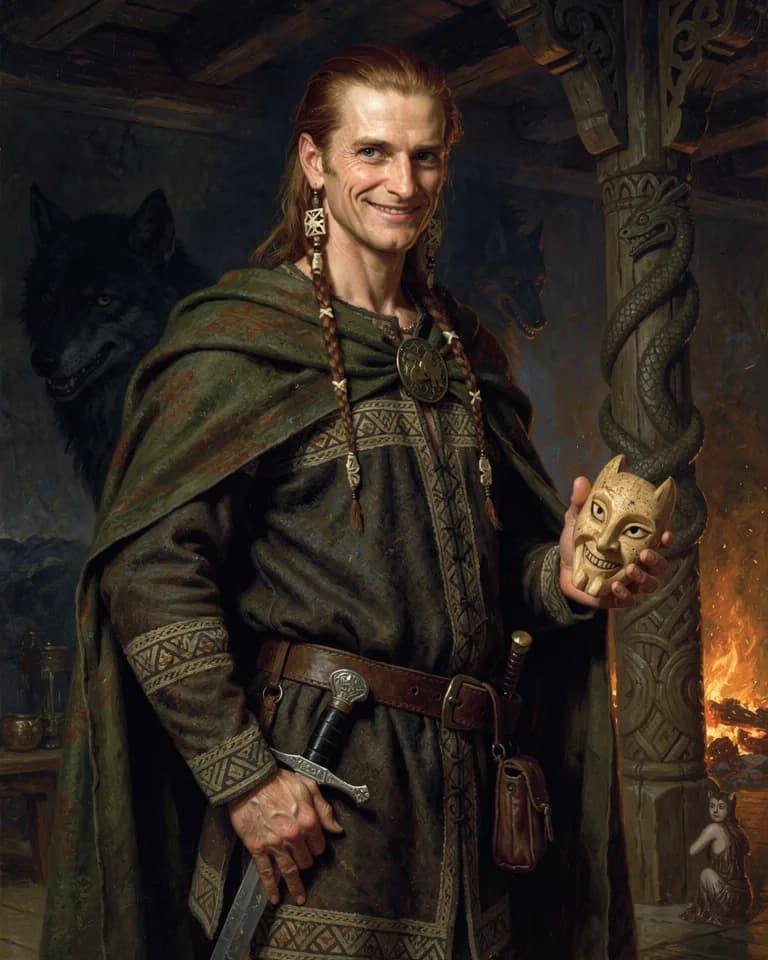
A complex figure, blood brother to Odin but frequently causing trouble for the gods. A shape-shifter and trickster who fathers monstrous children including Fenrir, Jormungandr, and Hel.
The central figure of Tlingit and Haida oral tradition, who steals daylight from a wealthy old man's nested boxes at the head of the Nass River and, in a Haida telling, coaxes the first people from a clamshell on the beach at Haida Gwaii.
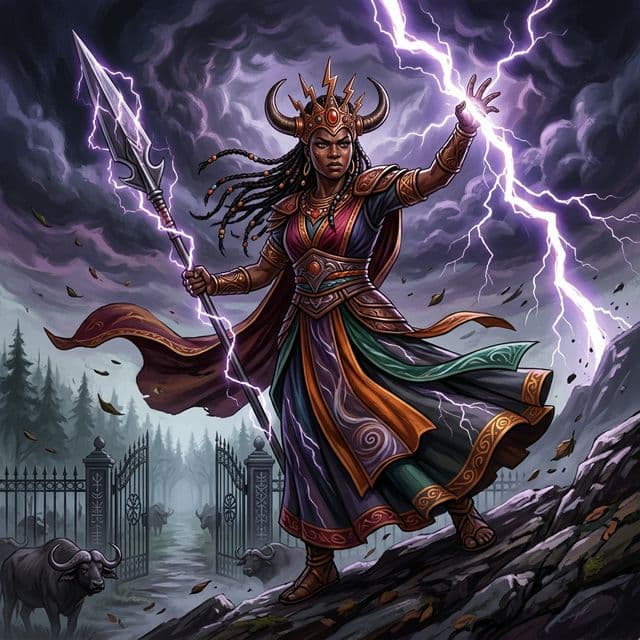
The Orisha of wind, storms, and transformation. Oya is a fierce warrior goddess who controls the forces of change and guards the cemetery gates.
Editorial comparisons recorded on these entries; a shared role does not establish a shared origin.
Loki (Norse) and Sun Wukong (Chinese)
Sun Wukong already lists Loki; both are shape-shifting troublemakers whose mischief repeatedly disrupts the divine order
Compare Loki and Sun WukongRaven (Tlingit and Haida) and Loki (Norse)
Both are shapeshifting, morally ambiguous figures whose schemes, rather than any straightforward heroism, reshape the world; the comparison is a common one in popular writing about tricksters, not a claim of historical contact.
Compare Raven and LokiBuilt from each deity's catalog entry. See every domain side by side on Divine Domains, or browse every cross-pantheon parallel.