Chinese Pantheon
Sun Wukong
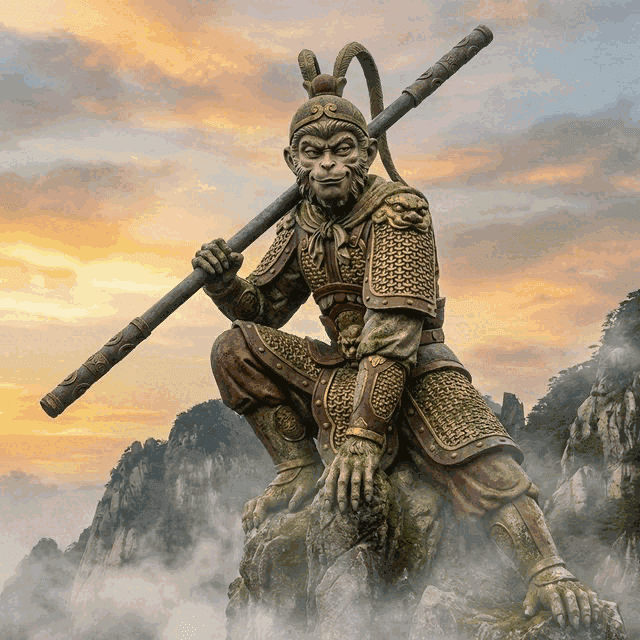
Also known as Monkey King, Great Sage Equal to Heaven, Victorious Fighting Buddha, Beautiful Monkey King
- trickery
- strength
- fighting
- rebellion
- transformation
- immortality
A monkey born from a magical stone who acquired supernatural powers through Taoist cultivation. After wreaking havoc in Heaven, he was imprisoned for 500 years before redeeming himself as the protector of the monk Tang Sanzang on the journey to retrieve Buddhist scriptures.
About Sun Wukong
The Great Sage Equal to Heaven
Sun Wukong is China's most beloved mythological figure, a trickster hero who combines irreverent rebellion with ultimate redemption. Born from a stone egg nourished by heaven and earth, he embodies the tension between chaos and order, individual freedom and cosmic duty.
The Stone Monkey's Rise
On the Mountain of Flowers and Fruit, a stone egg exposed to the five elements for eons hatched into a stone monkey of extraordinary intelligence. He became king of the monkeys and, fearing death, journeyed to find the secret of immortality. Under the Taoist master Subhuti, he learned the 72 transformations (allowing him to change into any form) and cloud-somersaulting (traveling 108,000 li in one leap).
Havoc in Heaven
Armed with the Ruyi Jingu Bang (a 13,500-pound pillar from the Dragon King's palace that could shrink to the size of a needle), Wukong erased his name from the Book of Life and Death, making himself truly immortal. When Heaven tried to contain him with minor posts, he declared himself 'Great Sage Equal to Heaven' and battled the entire celestial army. Even the Jade Emperor's forces could not defeat him.
Buddha's Wager
Finally, the Buddha himself intervened. He bet Wukong could not leap out of his palm. Wukong somersaulted to what he thought was the edge of the universe, only to discover the 'five pillars' he found were Buddha's fingers. He was imprisoned under Five Elements Mountain for 500 years.
The Journey West
Released by the bodhisattva Guanyin, Wukong pledged to protect Tang Sanzang on the pilgrimage to India. A golden fillet on his head caused excruciating pain when the monk recited a sutra, keeping the wild monkey in check. Through 81 tribulations, Wukong's fierce loyalty and combat prowess saved his master repeatedly. At journey's end, he achieved Buddhahood as the 'Victorious Fighting Buddha.'
Legacy
Sun Wukong represents the untamed human spirit that must be disciplined through spiritual practice. His journey from rebel to Buddha mirrors the path of enlightenment: raw potential refined through hardship into wisdom.
Origin story
On the Mountain of Flowers and Fruit, a magical stone nourished by heaven and earth for eons produced a stone egg. When the wind blew upon it, the egg transformed into a stone monkey with golden eyes. This monkey would become Sun Wukong, the Great Sage Equal to Heaven.
Across traditions
Parallel figures
Figures who play a role like Sun Wukong's in other traditions.
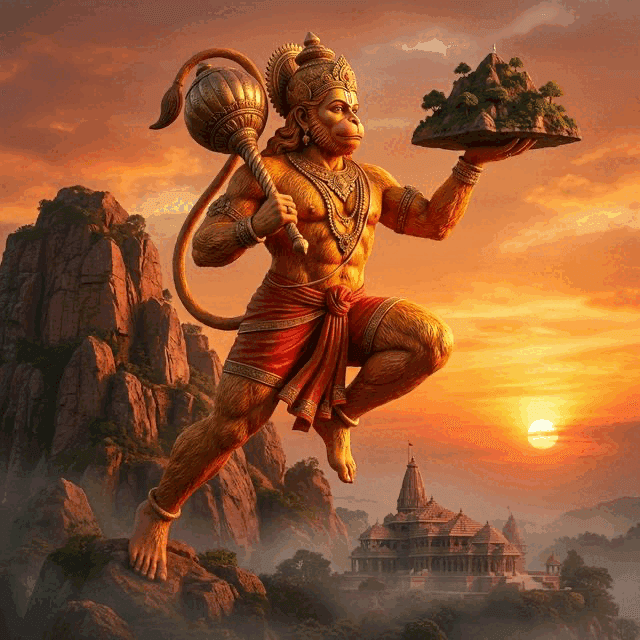 HinduHanumanIllustration
Both are monkey heroes of immense strength and devotion. Some scholars suggest Hanuman may have influenced Sun Wukong's character
Compare Sun Wukong and Hanuman side by side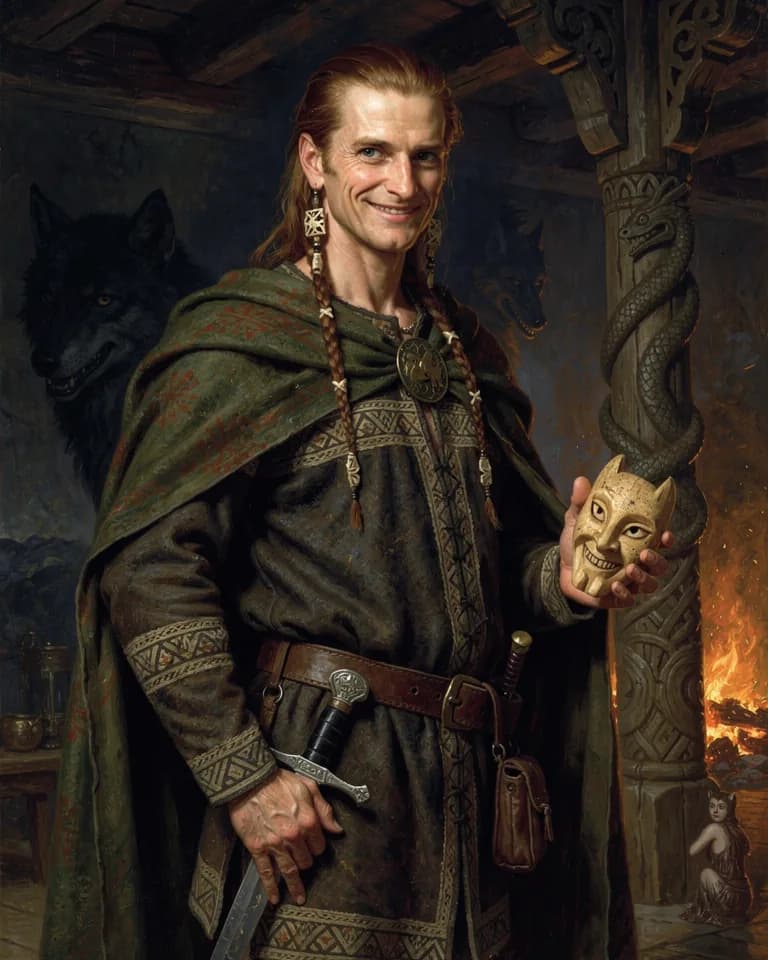 NorseLokiIllustration
Both are trickster figures who rebel against cosmic order and use shape-shifting abilities
Compare Sun Wukong and Loki side by side
Worship and cult
Temples, festivals, and practices recorded for Sun Wukong
Monkey, staff, and the novel made a god people actually visit. Mediums, opera, and fruit. This is living cult from literature, which is a normal Chinese outcome, not a category error.
Sacred sites
- Great Sage temples in Fujian, Taiwan, Singapore, and Malaysia
- Side halls in some Buddhist monasteries
Festivals
- Great Sage birthday festivals
In the atlas
Where Sun Wukong appears
Artifacts
In the museums
Sun Wukong in art
Real objects in public collections, released into the public domain by the museums that hold them. Dates refer to when each object was made. Objects made within the tradition come first, later depictions after.
 (opens the museum record)
Later depiction
The Monkey King Songokū, from the Chinese novel Journey to the West (opens the museum record)
A Japanese surimono print titled by the museum The Monkey King Songoku, from the Chinese novel Journey to the West, using the Japanese reading of Sun Wukong's name. It shows the Chinese Monkey King's story reaching Japanese print culture in the early nineteenth century.
Sources and further reading
Source notes
These references are recorded in the catalog. Their passage wording and translation have not been checked, so quotations are not displayed here.
- Journey to the West, Chapter 1
About this entry
By Elizabeth Stein for Mythos Atlas. About the author. Editorial notes are grounded in the site's cited sources and can be challenged through the contact page.
Parallels are editorial comparisons across traditions: a shared role does not, by itself, establish a shared origin.
Keep exploring
One myth a week, with its sources in a short email. The sign-up form is just below.
Genealogy
Family tree
Sun Wukong's parents, consorts, children and rivals, as recorded in the atlas.