Chinese Pantheon
Jade Emperor
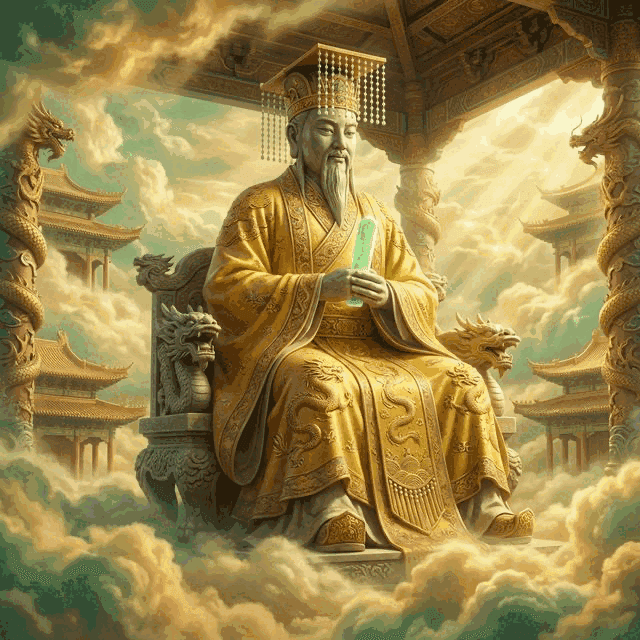
Also known as Yu Huang, Yu Di, Yu Huang Shangdi, Heavenly Grandfather
- heaven
- order
- bureaucracy
- justice
- sovereignty
The supreme ruler of Heaven and lord of all gods. He governs the cosmos through a vast celestial bureaucracy, determining the fate of mortals and immortals alike.
About Jade Emperor
The Sovereign of Heaven
The Jade Emperor (Yu Huang) reigns supreme over the entire Chinese pantheon from his magnificent palace in Heaven. Unlike many supreme deities who rule through raw power, the Jade Emperor governs through an elaborate celestial bureaucracy that mirrors the imperial Chinese government on Earth. He presides over ministries of thunder, rain, fire, and pestilence, promoting or demoting gods based on their performance.
The Long Path to Sovereignty
According to Taoist tradition, the Jade Emperor was originally a mortal prince who renounced his throne to cultivate the Tao in the mountains. Over 1,750 kalpas (each kalpa lasting 129,600 years), he practiced virtue and meditation, eventually attaining supreme enlightenment and ascending to rule Heaven. His journey emphasizes the Taoist ideal that even the highest divinity is achieved through moral cultivation.
The Celestial Court
The Jade Emperor holds court in the Lingxiao Palace ('Palace of the Numinous Sky'), surrounded by celestial officials, warriors, and servants. He receives reports from the Kitchen God on each household's behavior, consults with the Dragon Kings about rainfall, and dispatches thunder deities to punish the wicked. Every soul's fate passes through his court.
In Popular Worship
The Jade Emperor's birthday on the ninth day of the first lunar month is one of the most important festivals in Chinese folk religion. Families burn incense and paper offerings, and temples hold elaborate ceremonies. Despite his supreme status, he is approachable through prayer, especially when seeking justice or divine intervention in worldly affairs.
Origin story
In the primordial age, a prince of the Blessed Kingdom of Pure Felicity renounced his throne to cultivate the Tao. Through 1,750 kalpas of moral cultivation and 3,000 tribulations, he achieved complete enlightenment and became worthy to rule Heaven.
Across traditions
Parallel figures
Figures who play a role like Jade Emperor's in other traditions.
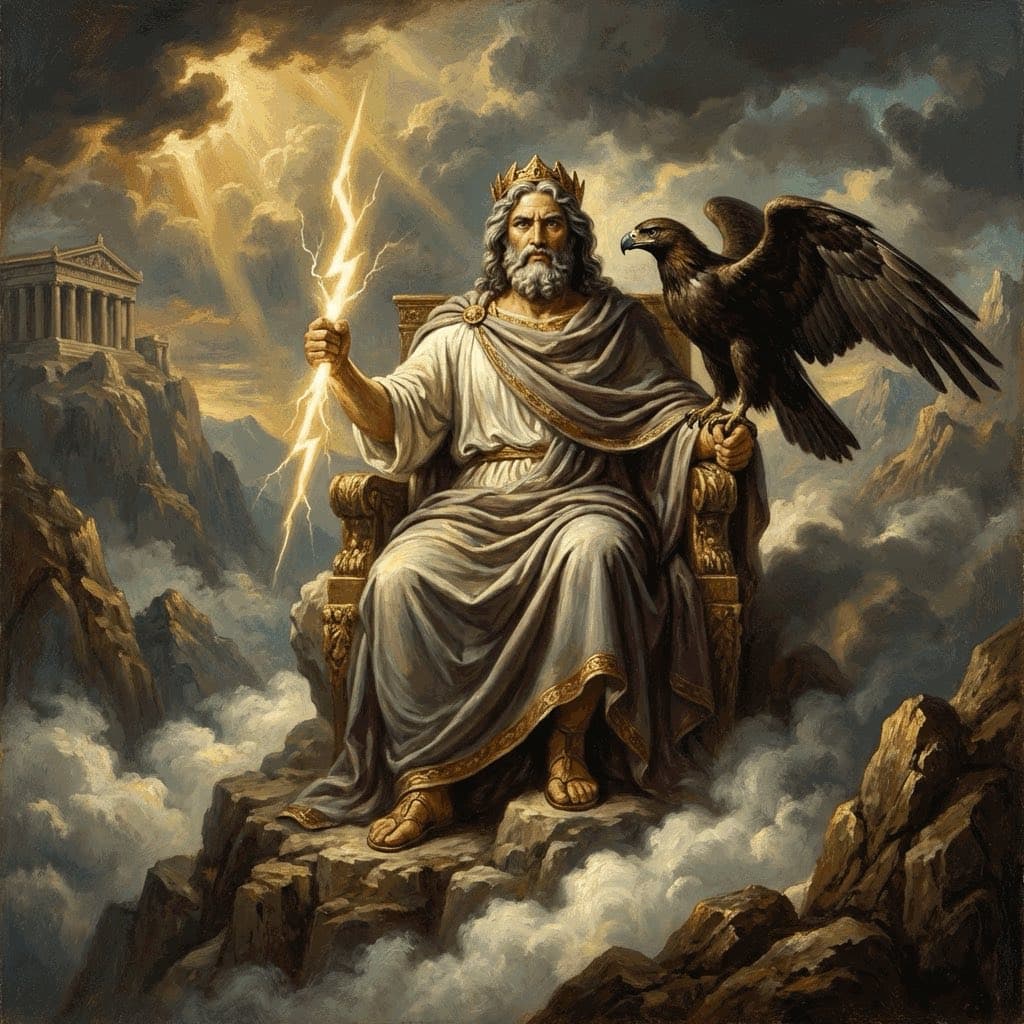 GreekZeusIllustration
Both are supreme rulers of their respective pantheons who govern from celestial palaces, though the Jade Emperor rules through bureaucracy rather than direct power
Compare Jade Emperor and Zeus side by side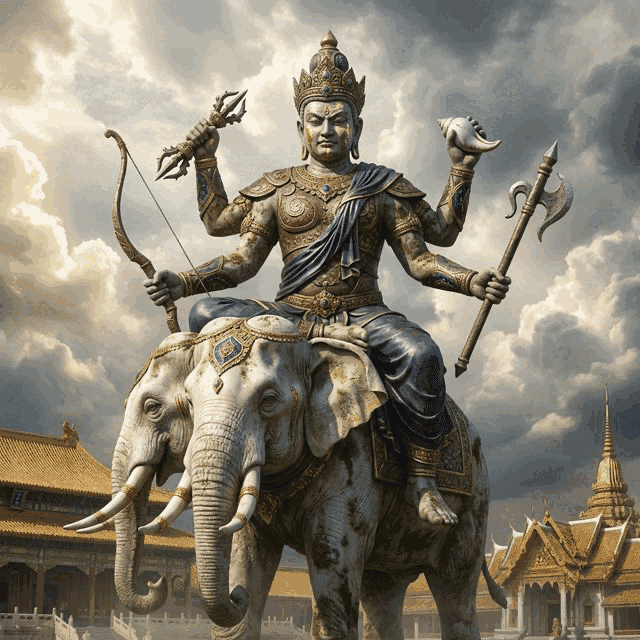 HinduIndraIllustration
Indra as king of the Devas parallels the Jade Emperor's role as king of the celestial realm
Compare Jade Emperor and Indra side by side
Worship and cult
Temples, festivals, and practices recorded for Jade Emperor
Yuhuang Shangdi as bureaucratic heaven. Incense, paper offerings, and a birthday that opens the year. Folk religion treats him as a distant boss; Daoist liturgy gives him a full court. Both are the cult.
Sacred sites
- Jade Emperor temples across the Chinese-speaking world
- Heavenly court shrines in city God complexes
Festivals
- Jade Emperor's Birthday (ninth day of the first lunar month)
- Chinese New Year court audiences
In the atlas
Where Jade Emperor appears
Stories
Sources and further reading
Source notes
These references are recorded in the catalog. Their passage wording and translation have not been checked, so quotations are not displayed here.
- Journey to the West
About this entry
By Elizabeth Stein for Mythos Atlas. About the author. Editorial notes are grounded in the site's cited sources and can be challenged through the contact page.
Parallels are editorial comparisons across traditions: a shared role does not, by itself, establish a shared origin.
Keep exploring
One myth a week, with its sources in a short email. The sign-up form is just below.
Genealogy
Family tree
Jade Emperor's parents, consorts, children and rivals, as recorded in the atlas.