Side by sideParallel across traditions

Frigg vs Juno

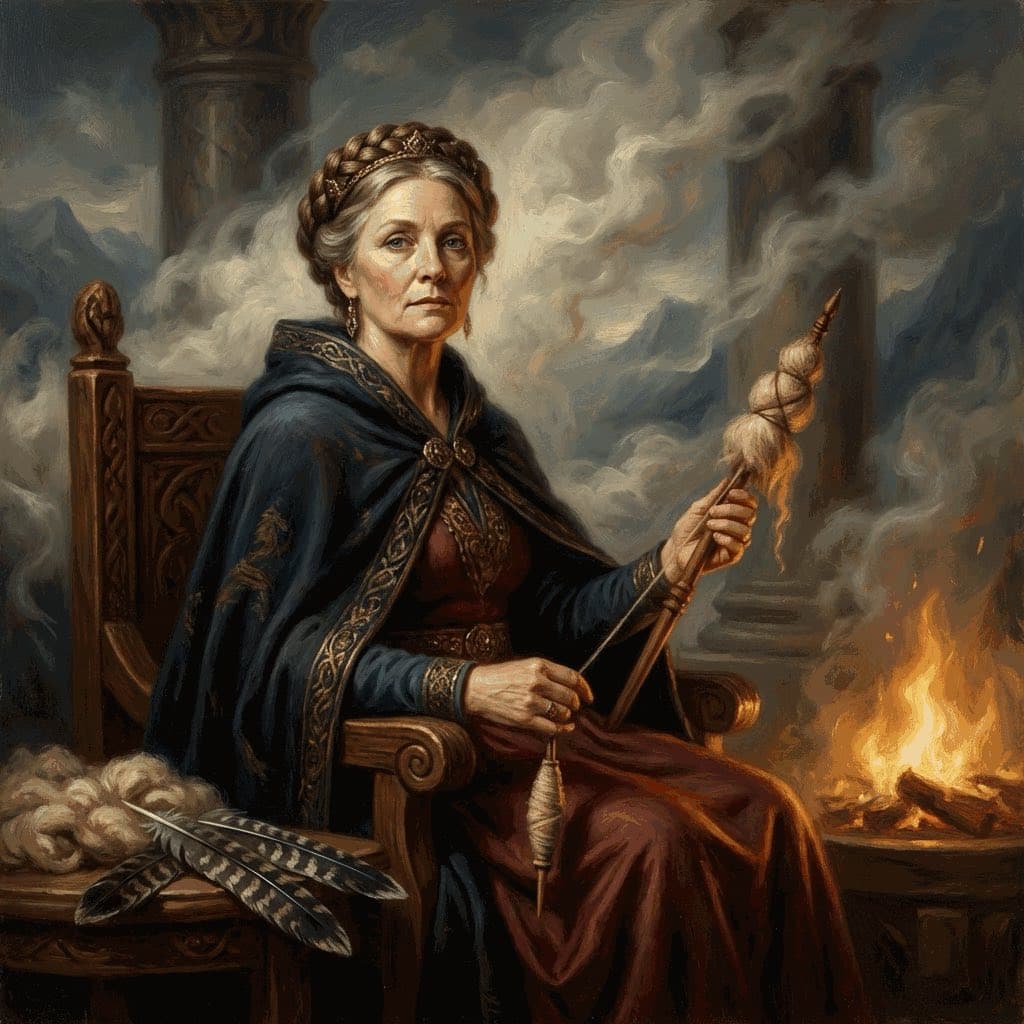
Frigg
FriggNorse
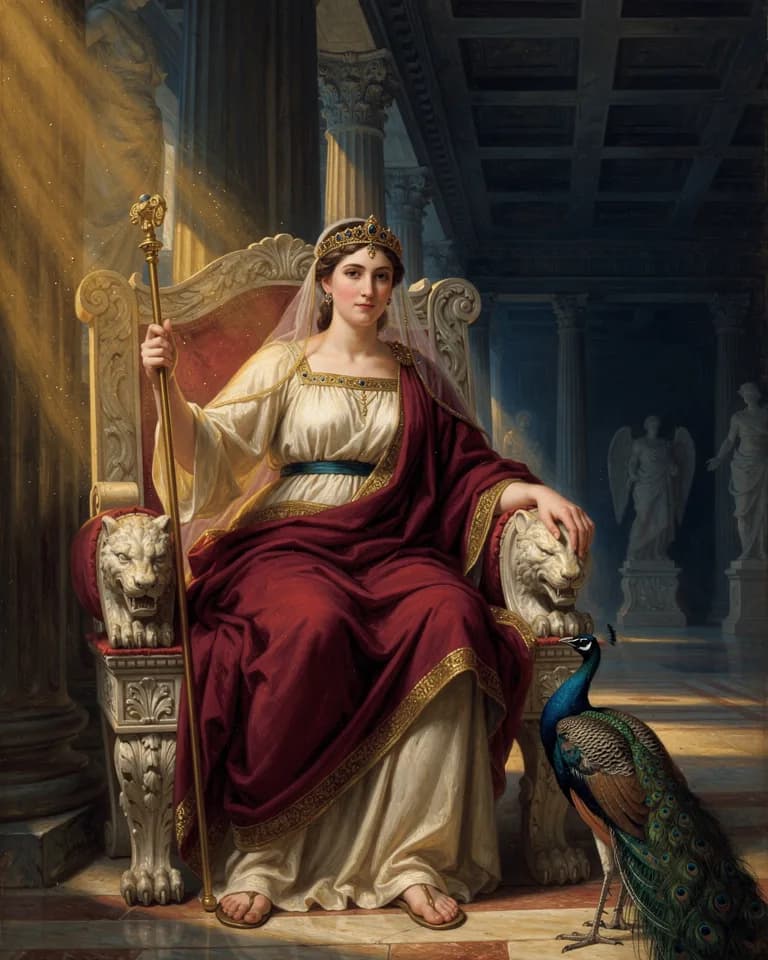
Juno
JunoRoman

Both are the wife of the chief sky god, presiding over marriage, motherhood, and the domestic sphere.

At a glance

Frigg and Juno compared
FriggJuno
TraditionNorse PantheonRoman Pantheon
Domainsmarriage, motherhood, domestic arts, prophecy, fatemarriage, women, childbirth, family
Symbolsspinning wheel, keys, falcon feather cloakpeacock, pomegranate, diadem, cow
Also calledFrigga, FrickaJuno Regina

Where they meet

Both are associated with marriage.

Where they part

Only Frigg

Associated with motherhood, domestic arts, prophecy, and fate.

Only Juno

Associated with women, childbirth, and family.

Why they are compared

Both are the wife of the chief sky god and preside over marriage and the domestic sphere.

How each was worshipped

Frigg

Cult sites
No securely identified temple; paired with Odin in late sources
Festivals
Winter-night offerings in later folklore

Spinning, foresight, and the high-seat woman. Cult evidence is thin. Friday in some languages remembers a related goddess (Frigg or Freyja; the names bled). Treat the quiet household rites as reconstruction, not a festival calendar.

Juno

Cult sites
Temple of Juno Moneta on the Arx of the Capitoline; Temple of Juno Regina on the Aventine (evocatio from Veii); Capitoline triad cella beside Jupiter and Minerva
Festivals
Matronalia (1 March); Nonae Caprotinae; Kalends (monthly)

Juno is the Kalends as Jupiter is the Ides. Matrons offered at the Matronalia. The geese of Juno on the Capitol were remembered as having saved the hill from the Gauls. The flaminica Dialis served her beside the flamen of Jupiter.

The two figures

Norse Pantheon

Frigg

Queen of the Aesir and wife of Odin. Goddess of marriage, motherhood, and the home. She possesses the power of prophecy but chooses not to reveal what she knows.

Frigg is believed to be the daughter of the goddess Fjorgyn (Earth) and belongs to the Aesir, the ruling tribe of gods. Her origins stretch back to the earliest days of the cosmos. She became the wife of Odin and the Queen of Asgard, establishing her hall Fensalir in the realm of the gods. With Odin, she bore Baldur, the most beloved of gods, and Hodr, the blind god. Some scholars connect her to the Germanic goddess Frija, whose name gave us the word Friday. Her knowledge of fate and her role as cosmic mother made her one of the most revered goddesses in the Norse pantheon.

Frigg is the wife of Odin and the foremost goddess of the Aesir. She sits enthroned in Fensalir. She is the only one besides Odin allowed to sit on Hlidskjalf and look out over all the worlds.

Read the full Frigg entry

Roman Pantheon

Juno

Queen of the gods and protector of the Roman state. Goddess of marriage, women, and childbirth. Wife and sister of Jupiter, patron of married women and the Roman matrons.

Juno is the Roman equivalent of Hera, daughter of Saturn and Ops. She became Jupiter's consort and queen of heaven, fiercely protective of marriage and legitimate children.

Juno is queen of the Roman gods and the protector of married women, but she is also a civic goddess. As **Juno Regina** she sat on the Capitol with Jupiter and Minerva. As **Juno Moneta** she kept a temple on the Arx whose name still sits inside the word "money," because the mint later worked nearby. As **Juno Sospita** she came from Lanuvium in goatskin and armed, a savior as much as a wife.

Read the full Juno entry
About this comparison

Comparisons pair figures that play a similar role across traditions, or that the myths connect within one. A shared role does not, by itself, establish a shared origin.