Mythos Atlas

Side by sideParallel across traditions

Ganga vs Oshun

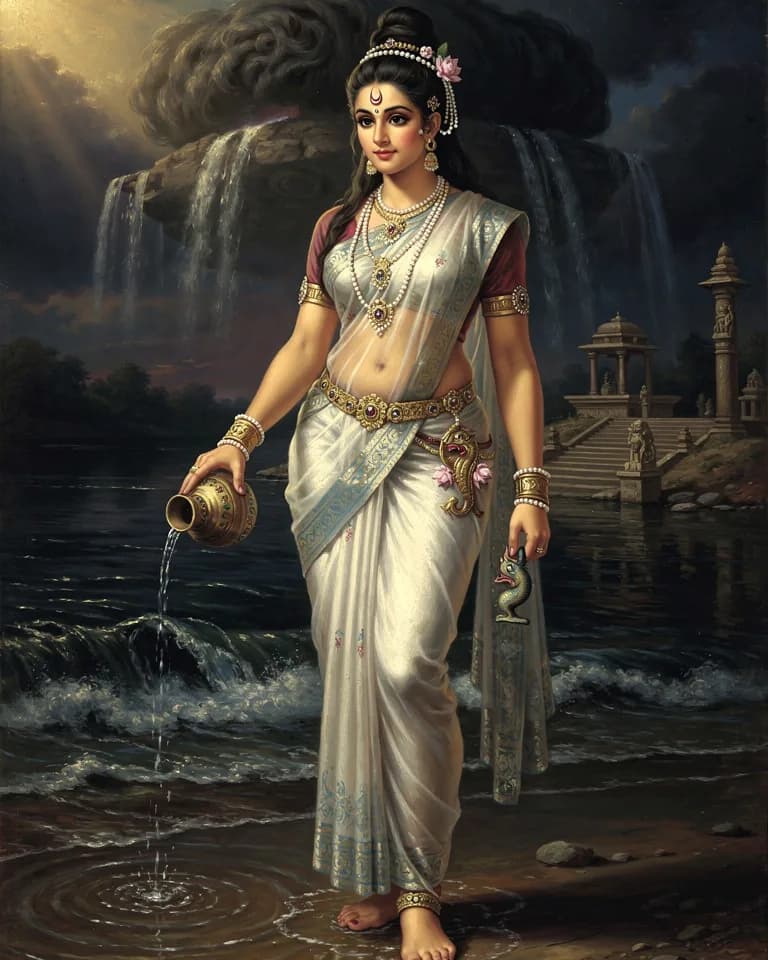
Ganga
GangaHindu
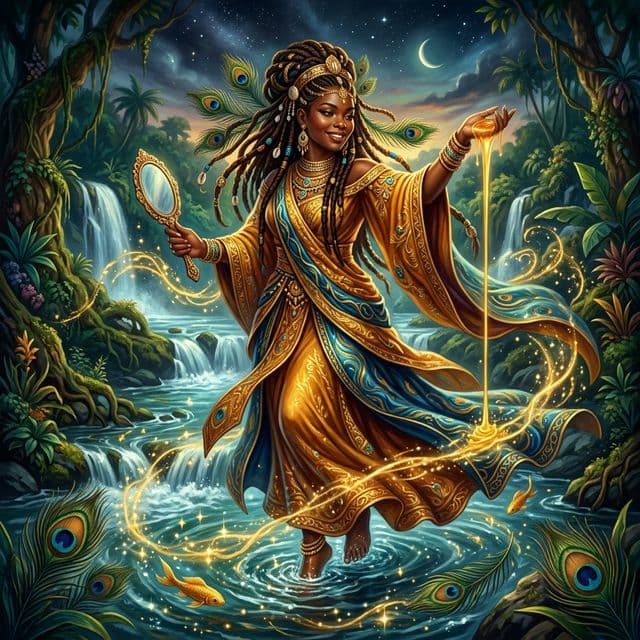
Oshun
OshunYoruba

Both are goddesses present in a specific sacred river whose waters heal and bless.

At a glance

Ganga and Oshun compared
GangaOshun
TraditionHindu PantheonYoruba Tradition
Domainsthe river Ganges, purification, liberation of the deadlove, beauty, rivers, fertility, prosperity
Symbolsmakara (river creature) mount, water pot, lotus, Shiva's matted locksmirror, honey, gold, peacock feathers, river water
Also calledGanges, Jahnavi, Bhagirathi, Mother GangaOxum, Ochun, Osun

Where they meet

The atlas records no domain or symbol that Ganga and Oshun share.

They are compared for the part each plays in their own tradition rather than for any attribute in common.

Where they part

Only Ganga

Associated with the river ganges, purification, and liberation of the dead.

Only Oshun

Associated with love, beauty, rivers, fertility, and prosperity.

How each was worshipped

Ganga

Cult sites
Gangotri Temple at the river's Himalayan source; Har Ki Pauri ghat, Haridwar; Dashashwamedh Ghat, Varanasi
Festivals
Ganga Dussehra (her descent to earth); Kumbh Mela; Ganga Aarti (daily evening lamp ritual)

Ritual bathing to remove sin, immersion of the ashes of the dead, and carrying sealed pots of Ganga water home for household rites.

Oshun

Cult sites
Osun-Osogbo Sacred Grove
Festivals
Osun-Osogbo festival

Honey, brass, and the river. UNESCO listed the grove because the cult is still there. Beauty as power, not as decoration.

The two figures

Hindu Pantheon

Ganga

The sacred river Ganges as a goddess, who descended from heaven to purify the ashes of King Sagara's sons and was caught in Shiva's matted hair to break the force of her fall. Bathing in her waters and immersing ashes in them are among the most important acts of Hindu devotion.

The Ramayana makes Ganga the elder daughter of Himavat and Mena and sister of Uma. Given to the gods, she flowed in heaven until King Bhagiratha's austerities brought her down to earth, broken in her fall by Shiva's hair, to purify the ashes of Sagara's sons.

The *Ramayana* makes Ganga the elder daughter of Himavat, lord of mountains, and sister of Uma (Parvati). The gods asked for her and took her to heaven, where she flowed as the celestial river.

Read the full Ganga entry

Yoruba Tradition

Oshun

The Orisha of love, beauty, fresh water, and fertility. Oshun embodies feminine grace, sensuality, and the life-giving power of rivers.

Oshun emerged from Olodumare as the embodiment of sweet water, love, and feminine power. She was given dominion over all fresh waters, particularly the river that bears her name in Nigeria.

Oshun is perhaps the most beloved of all Orishas, embodying beauty, love, fertility, and the life-giving power of fresh water. Her river, the Osun, flows through southwestern Nigeria and remains a site of pilgrimage.

Read the full Oshun entry
About this comparison

Comparisons pair figures that play a similar role across traditions, or that the myths connect within one. A shared role does not, by itself, establish a shared origin.