Side by sideParent and child

Oshun vs Yemoja

Oshun
OshunYoruba
Yemoja
YemojaYoruba

Oshun and Yemoja are recorded as parent and child in the Yoruba Tradition.

At a glance

Oshun and Yemoja compared
OshunYemoja
TraditionYoruba TraditionYoruba Tradition
Domainslove, beauty, rivers, fertility, prosperityocean, motherhood, fertility, protection, fish
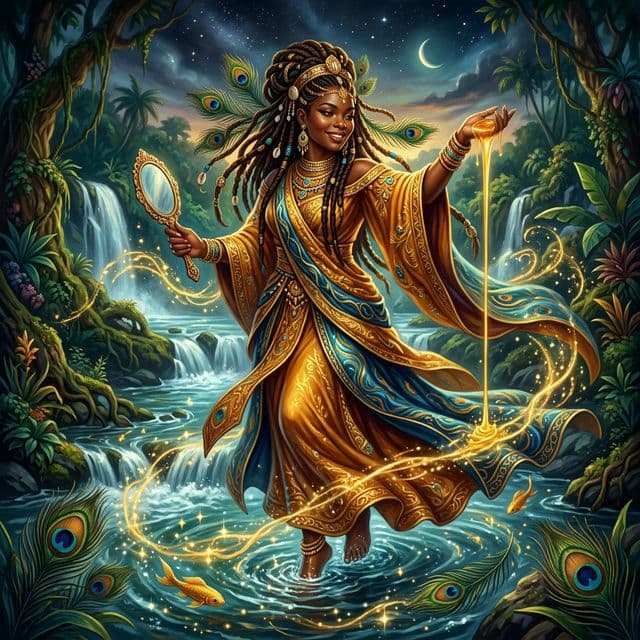
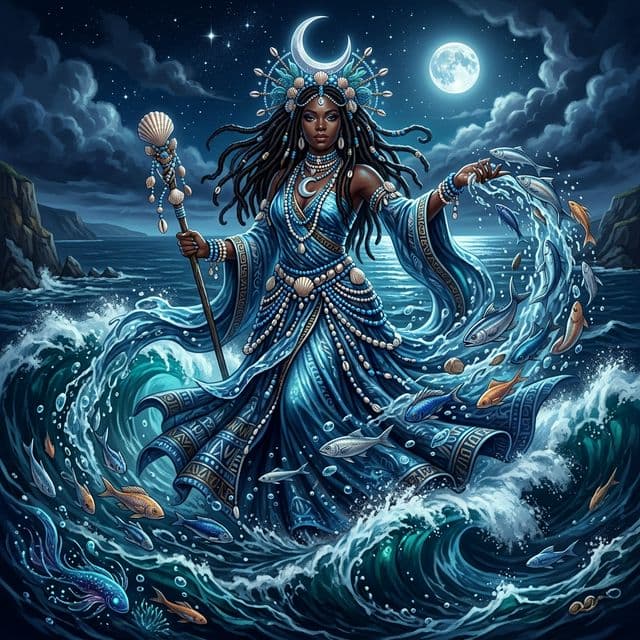
Symbolsmirror, honey, gold, peacock feathers, river waterocean waves, seashells, fish, crescent moon, blue and white beads
Also calledOxum, Ochun, OsunYemaya, Iemanja, Yemanja

Where they meet

Both are associated with fertility.

Where they part

Only Oshun

Associated with love, beauty, rivers, and prosperity.

Only Yemoja

Associated with ocean, motherhood, protection, and fish.

How each was worshipped

Oshun

Cult sites
Osun-Osogbo Sacred Grove
Festivals
Osun-Osogbo festival

Honey, brass, and the river. UNESCO listed the grove because the cult is still there. Beauty as power, not as decoration.

Yemoja

Cult sites
River and ocean shrines; Brazilian Iemanja on the shore
Festivals
Yemoja festival; New Year offerings to the sea in the diaspora

Mother of many orisha, salt or sweet water depending on the house. The cult is the water's edge and children.

The two figures

Yoruba Tradition

Oshun

The Orisha of love, beauty, fresh water, and fertility. Oshun embodies feminine grace, sensuality, and the life-giving power of rivers.

Oshun emerged from Olodumare as the embodiment of sweet water, love, and feminine power. She was given dominion over all fresh waters, particularly the river that bears her name in Nigeria.

Oshun is perhaps the most beloved of all Orishas, embodying beauty, love, fertility, and the life-giving power of fresh water. Her river, the Osun, flows through southwestern Nigeria and remains a site of pilgrimage.

Read the full Oshun entry

Yoruba Tradition

Yemoja

The Orisha of the ocean and motherhood. Yemoja is the great mother of many Orishas and all sea creatures.

Yemoja was created by Olodumare as the embodiment of maternal waters. Originally dwelling in the Ogun River in Nigeria, she accompanied her children across the Atlantic, becoming the goddess of the ocean itself.

Yemoja is the great mother Orisha, whose name means 'Mother whose children are fish.' Originally associated with the Ogun River in Nigeria, she became the goddess of the ocean during the Middle Passage, as enslaved Africans prayed to her during the horrific Atlantic crossing.

Read the full Yemoja entry
About this comparison

Comparisons pair figures that play a similar role across traditions, or that the myths connect within one. A shared role does not, by itself, establish a shared origin.