Side by sideParallel across traditions

Huitzilopochtli vs Marduk

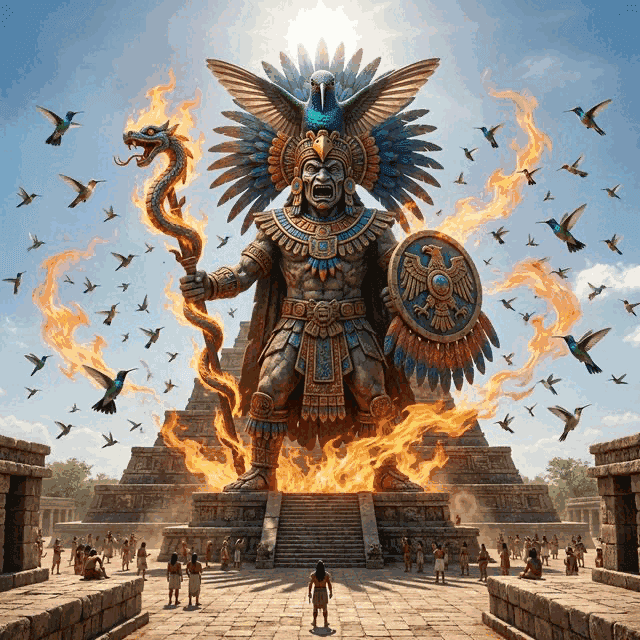
Huitzilopochtli
HuitzilopochtliAztec
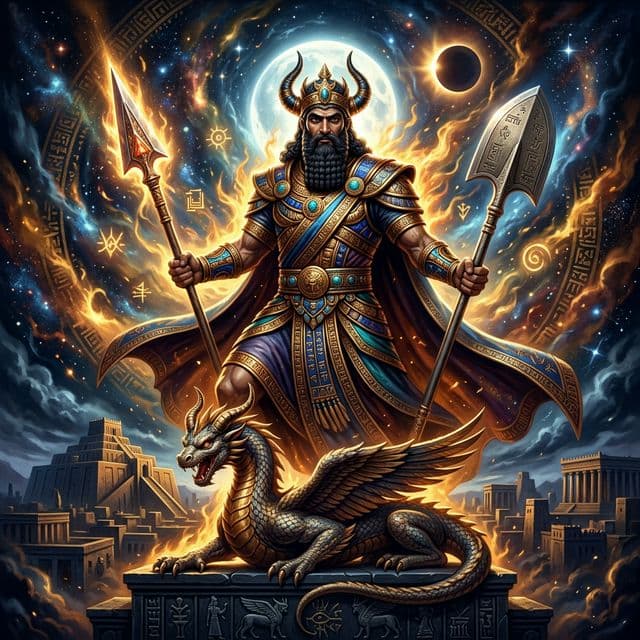
Marduk
MardukMesopotamian

Both are warrior gods who become the supreme patron deity of their city (Tenochtitlan/Babylon) through a myth of martial triumph.

At a glance

Huitzilopochtli and Marduk compared
HuitzilopochtliMarduk
TraditionAztec PantheonMesopotamian Pantheon
Domainssun, war, sacrifice, Tenochtitlancreation, kingship, magic, judgment, order
Symbolshummingbird, fire serpent (Xiuhcoatl)spade, dragon (mushussu), triangular-headed spear
Also calledHummingbird of the SouthBel, Asalluhi

Where they meet

The atlas records no domain or symbol that Huitzilopochtli and Marduk share.

They are compared for the part each plays in their own tradition rather than for any attribute in common.

Where they part

Only Huitzilopochtli

Associated with sun, war, sacrifice, and tenochtitlan.

Only Marduk

Associated with creation, kingship, magic, judgment, and order.

How each was worshipped

Huitzilopochtli

Cult sites
Southern half of the Templo Mayor in Tenochtitlan
Festivals
Panquetzaliztli; Toxcatl adjacent in the same precinct

Hummingbird of the south, sun at war. The Templo Mayor was his and Tlaloc's stacked mountain. Panquetzaliztli raised banners and, in the Mexica state cult, human offerings to keep the sun in motion. That is the imperial rite, not a metaphor.

Marduk

Cult sites
Esagila and the Etemenanki ziggurat in Babylon
Festivals
Akitu, the Babylonian New Year

Fifty names, the Enuma Elish recited, the statue taken out and brought home. Kingship of Babylon is his cult. Tiamat's defeat is liturgy. When the statue was stolen, the New Year broke.

The two figures

Aztec Pantheon

Huitzilopochtli

The patron god of the Aztecs and Tenochtitlan. A solar warrior who requires blood sacrifice to battle the infinite night and keep the sun moving.

Born fully armed from his mother Coatlicue to defend her from his 400 siblings who plotted to kill her. He slew them and drove them away.

Huitzilopochtli was the **supreme deity of the Aztecs**, the divine patron of their empire, and the god who guided them from their mythical homeland of Aztlan to found the great city of **Tenochtitlan**. His name means "Hummingbird of the Left (South)" - the hummingbird symbolizing the souls of fallen warriors who accompanied the sun across the sky.

Read the full Huitzilopochtli entry

Mesopotamian Pantheon

Marduk

Chief god of Babylon and slayer of Tiamat. Marduk rose from a minor deity to supreme god of the Babylonian pantheon after defeating the primordial chaos dragon and creating the world from her body.

Marduk was born to Enki/Ea and the goddess Damkina in the chambers of the Abzu. Born full-grown and radiant with divine fire, he was the most glorious of the gods from his first moment. When Tiamat raised an army of monsters to destroy the gods, young Marduk volunteered to be their champion on condition of receiving supreme authority if victorious.

Marduk represents one of the most dramatic theological shifts in ancient religion. Originally a minor god of thunderstorms in Babylon, he rose to supreme power when Babylon became the dominant Mesopotamian empire. The Enuma Elish, Babylon's creation epic, reframes cosmic history to place Marduk at its center, absorbing the powers and titles of older gods.

Read the full Marduk entry
About this comparison

Comparisons pair figures that play a similar role across traditions, or that the myths connect within one. A shared role does not, by itself, establish a shared origin.