Side by sideRivals

Marduk vs Tiamat

Marduk
MardukMesopotamian
Tiamat
TiamatMesopotamian

Marduk and Tiamat are recorded as rivals in the Mesopotamian Pantheon.

At a glance

Marduk and Tiamat compared
MardukTiamat
TraditionMesopotamian PantheonMesopotamian Pantheon
Domainscreation, kingship, magic, judgment, orderprimordial waters, salt sea, chaos, creation
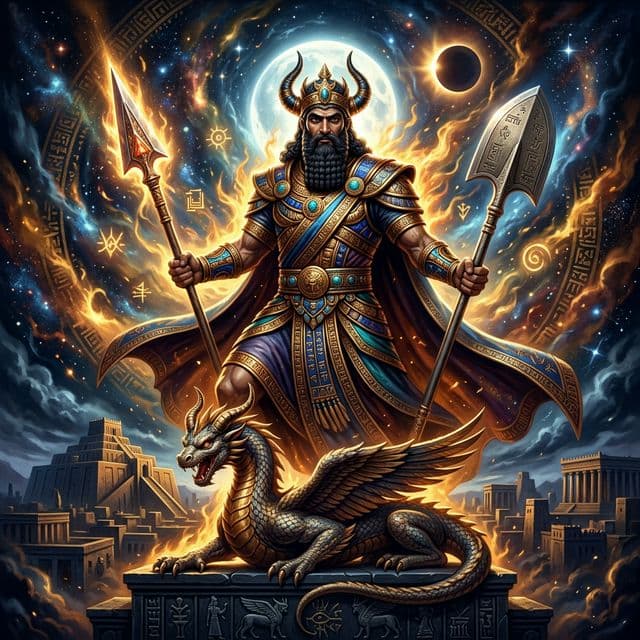
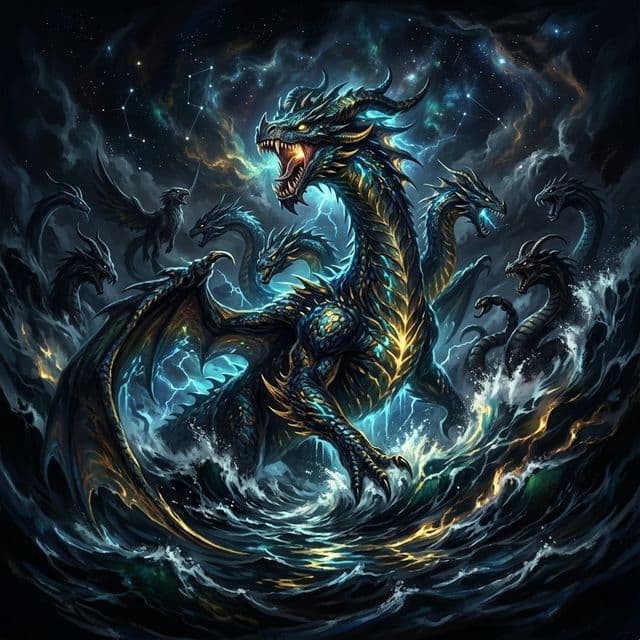
Symbolsspade, dragon (mushussu), triangular-headed speardragon, salt water, eleven monsters
Also calledBel, AsalluhiTamtu, Thalassa

Where they meet

Both are associated with creation.

Where they part

Only Marduk

Associated with kingship, magic, judgment, and order.

Only Tiamat

Associated with primordial waters, salt sea, and chaos.

How each was worshipped

Marduk

Cult sites
Esagila and the Etemenanki ziggurat in Babylon
Festivals
Akitu, the Babylonian New Year

Fifty names, the Enuma Elish recited, the statue taken out and brought home. Kingship of Babylon is his cult. Tiamat's defeat is liturgy. When the statue was stolen, the New Year broke.

Tiamat

Cult sites
No attested temple in the surviving record
Festivals
Enuma Elish recited at Akitu: about her death, not to her

Primordial sea, cut up to make the world. Babylon's New Year recites her defeat. That is not a petitioning cult.

The two figures

Mesopotamian Pantheon

Marduk

Chief god of Babylon and slayer of Tiamat. Marduk rose from a minor deity to supreme god of the Babylonian pantheon after defeating the primordial chaos dragon and creating the world from her body.

Marduk was born to Enki/Ea and the goddess Damkina in the chambers of the Abzu. Born full-grown and radiant with divine fire, he was the most glorious of the gods from his first moment. When Tiamat raised an army of monsters to destroy the gods, young Marduk volunteered to be their champion on condition of receiving supreme authority if victorious.

Marduk represents one of the most dramatic theological shifts in ancient religion. Originally a minor god of thunderstorms in Babylon, he rose to supreme power when Babylon became the dominant Mesopotamian empire. The Enuma Elish, Babylon's creation epic, reframes cosmic history to place Marduk at its center, absorbing the powers and titles of older gods.

Read the full Marduk entry

Mesopotamian Pantheon

Tiamat

The primordial goddess of the salt sea and chaos dragon. Tiamat is the mother of the first gods and, after being slain by Marduk, became the raw material from which the universe was fashioned.

In the beginning, there was only salt water (Tiamat) and sweet water (Apsu), mingling together in the primordial void. From their union emerged the first gods. When the younger gods grew noisy, Apsu sought to destroy them but was killed by Ea. Tiamat mourned but was eventually persuaded to avenge him, transforming into a chaos dragon and creating an army of monsters.

Tiamat represents the salt water of the primeval ocean, complementing her consort Apsu who embodied fresh water. Their mingling produced the first generation of gods. She is both creative and destructive, nurturing mother and terrifying dragon, embodying the ambivalent power of the primordial chaos from which order emerged.

Read the full Tiamat entry
About this comparison

Comparisons pair figures that play a similar role across traditions, or that the myths connect within one. A shared role does not, by itself, establish a shared origin.