Mythos Atlas

Side by sideParallel across traditions

Tethys vs Tiamat

Tethys
TethysGreek
Tiamat
TiamatMesopotamian

Iliad 14 makes Oceanus and Tethys the origin of the gods, a watery primordial couple often compared with Apsu and Tiamat.

At a glance

Tethys and Tiamat compared
TethysTiamat
TraditionGreek PantheonMesopotamian Pantheon
Domainsfresh waters, rivers and springs, primordial motherhoodprimordial waters, salt sea, chaos, creation
Symbolswinged brow (in Roman mosaics), waterdragon, salt water, eleven monsters
Also calledNone recordedTamtu, Thalassa

Where they meet

The atlas records no domain or symbol that Tethys and Tiamat share.

They are compared for the part each plays in their own tradition rather than for any attribute in common.

Where they part

Only Tethys

Associated with fresh waters, rivers and springs, and primordial motherhood.

Only Tiamat

Associated with primordial waters, salt sea, chaos, and creation.

How each was worshipped

Tethys

No cult sites or festivals are recorded in the atlas.

Tiamat

Cult sites
No attested temple in the surviving record
Festivals
Enuma Elish recited at Akitu — about her death, not to her

Primordial sea, cut up to make the world. Babylon's New Year recites her defeat. That is not a petitioning cult.

The two figures

Greek Pantheon

Tethys

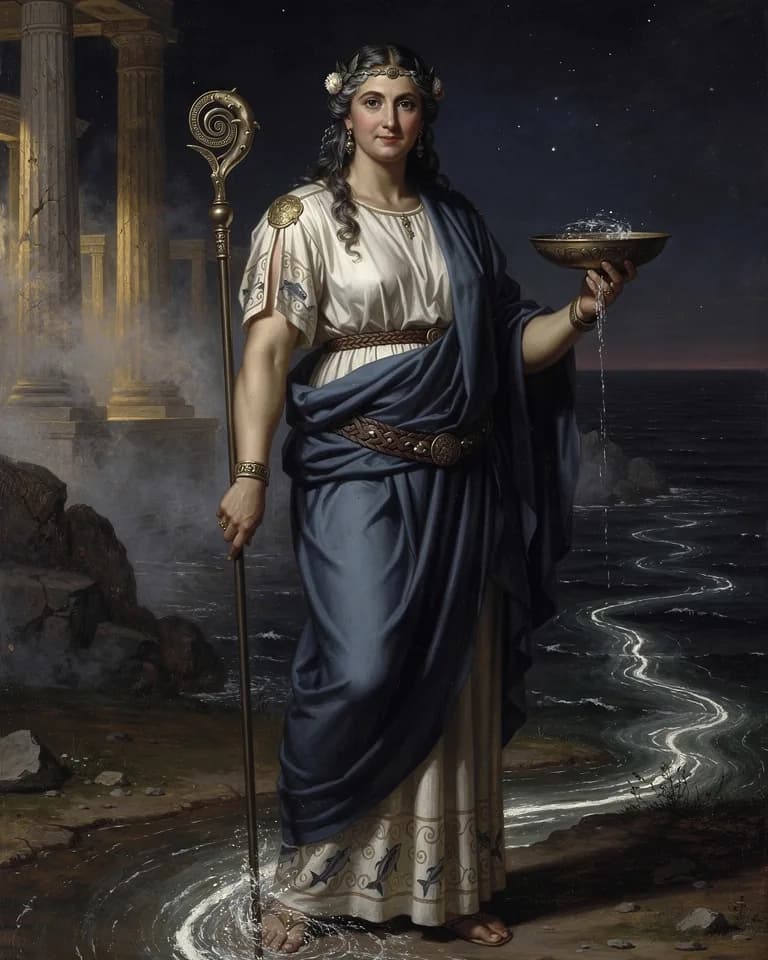
A Titaness, daughter of Gaia and Uranus and wife of her brother Oceanus. Hesiod makes her mother of the world's rivers and of the three thousand Oceanid nymphs; in the Iliad Hera calls her 'mother Tethys' and recalls being raised in her house.

Tethys was among the children Gaia bore to Uranus, the generation of Titans that preceded the Olympians. She married her brother Oceanus and bore him the rivers and the Oceanid nymphs.

Tethys is one of the twelve Titans born to Gaia and Uranus. Paired with her brother Oceanus, the great river that encircles the earth, she becomes in Hesiod's *Theogony* the mother of all rivers (Nile, Alpheus, Scamander, and many more) and of the Oceanids, the three thousand nymphs of springs and streams.

Read the full Tethys entry

Mesopotamian Pantheon

Tiamat

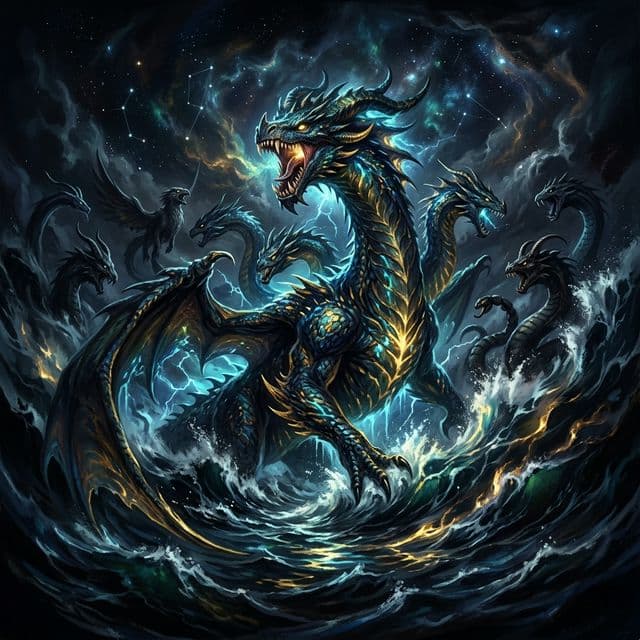
The primordial goddess of the salt sea and chaos dragon. Tiamat is the mother of the first gods and, after being slain by Marduk, became the raw material from which the universe was fashioned.

In the beginning, there was only salt water (Tiamat) and sweet water (Apsu), mingling together in the primordial void. From their union emerged the first gods. When the younger gods grew noisy, Apsu sought to destroy them but was killed by Ea. Tiamat mourned but was eventually persuaded to avenge him, transforming into a chaos dragon and creating an army of monsters.

Tiamat represents the salt water of the primeval ocean, complementing her consort Apsu who embodied fresh water. Their mingling produced the first generation of gods. She is both creative and destructive, nurturing mother and terrifying dragon, embodying the ambivalent power of the primordial chaos from which order emerged.

Read the full Tiamat entry
About this comparison

Comparisons pair figures that play a similar role across traditions, or that the myths connect within one. A shared role does not, by itself, establish a shared origin.