Side by sideParallel across traditions

Marduk vs Odin

Marduk
MardukMesopotamian
Odin
OdinNorse

Both slay primordial beings and create the world from their bodies.

At a glance

Marduk and Odin compared
MardukOdin
TraditionMesopotamian PantheonNorse Pantheon
Domainscreation, kingship, magic, judgment, orderwisdom, war, death, poetry, magic, knowledge
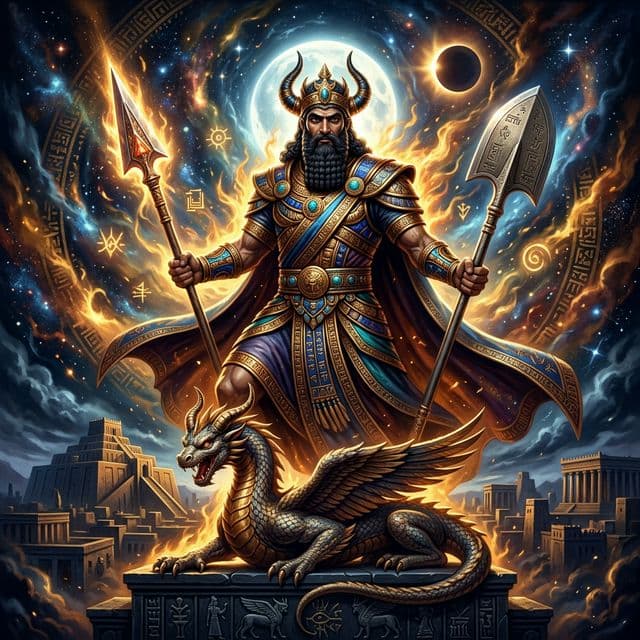
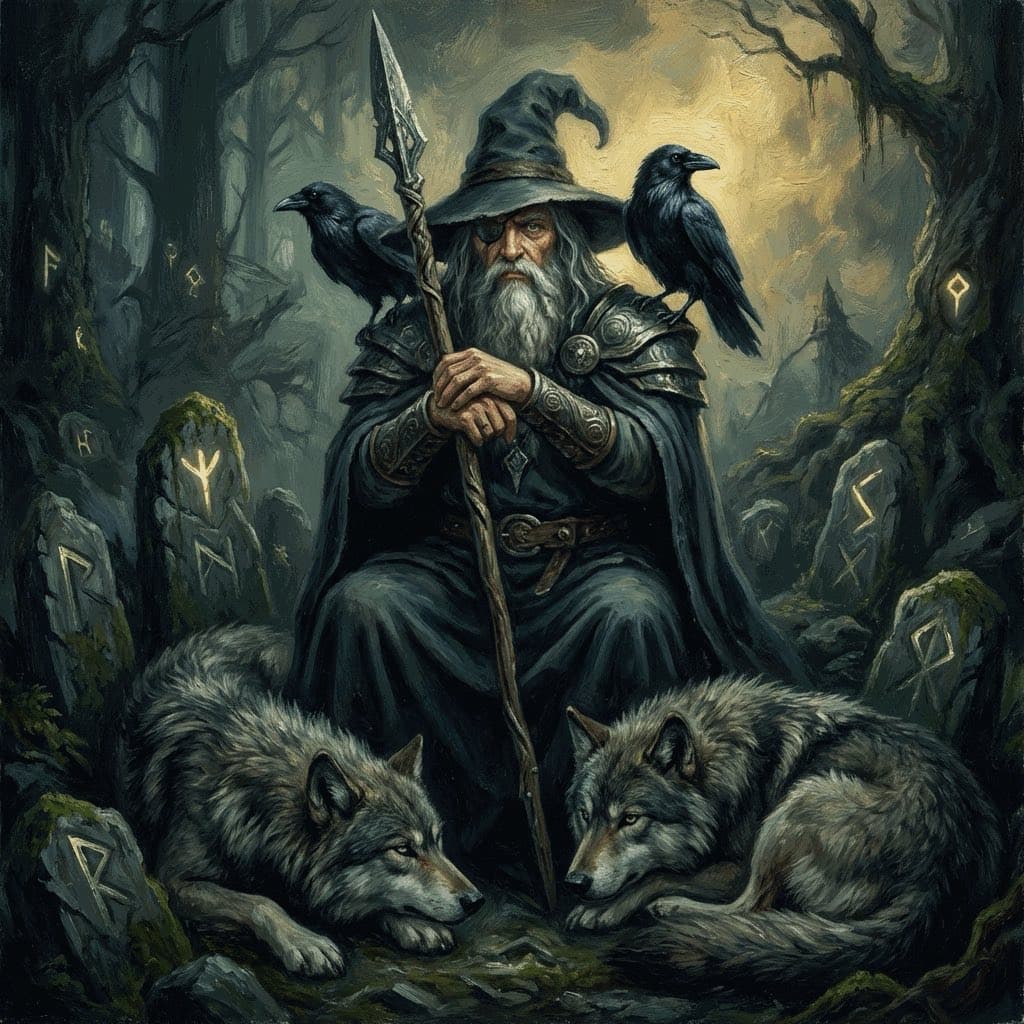
Symbolsspade, dragon (mushussu), triangular-headed spearspear Gungnir, ravens Huginn and Muninn, eight-legged horse Sleipnir, wolves Geri and Freki, one eye
Also calledBel, AsalluhiAllfather, Woden, Wotan, The Wanderer

Where they meet

Both are associated with magic.

Where they part

Only Marduk

Associated with creation, kingship, judgment, and order.

Only Odin

Associated with wisdom, war, death, poetry, and knowledge.

How each was worshipped

Marduk

Cult sites
Esagila and the Etemenanki ziggurat in Babylon
Festivals
Akitu, the Babylonian New Year

Fifty names, the Enuma Elish recited, the statue taken out and brought home. Kingship of Babylon is his cult. Tiamat's defeat is liturgy. When the statue was stolen, the New Year broke.

Odin

Cult sites
Temple at Uppsala (Adam of Bremen), with Thor and Freyr; No surviving named stave-church equivalent; mounds, trees, and halls
Festivals
Yule; Sacrifices for victory (sigurblót)

Hanged god, poetry, and the war-dead. Wednesday keeps his name. Uppsala tradition put him with Thor and Freyr. Spear, ravens, and the high seat are the cult signs; evidence is later and Christian-filtered, and should be read that way.

The two figures

Mesopotamian Pantheon

Marduk

Chief god of Babylon and slayer of Tiamat. Marduk rose from a minor deity to supreme god of the Babylonian pantheon after defeating the primordial chaos dragon and creating the world from her body.

Marduk was born to Enki/Ea and the goddess Damkina in the chambers of the Abzu. Born full-grown and radiant with divine fire, he was the most glorious of the gods from his first moment. When Tiamat raised an army of monsters to destroy the gods, young Marduk volunteered to be their champion on condition of receiving supreme authority if victorious.

Marduk represents one of the most dramatic theological shifts in ancient religion. Originally a minor god of thunderstorms in Babylon, he rose to supreme power when Babylon became the dominant Mesopotamian empire. The Enuma Elish, Babylon's creation epic, reframes cosmic history to place Marduk at its center, absorbing the powers and titles of older gods.

Read the full Marduk entry

Norse Pantheon

Odin

King of the Aesir and god of wisdom, war, and death. Odin sacrificed his eye at Mimir's well for wisdom and hung himself on Yggdrasil for nine days to learn the runes.

Odin is the son of the primordial beings Borr and Bestla. Along with his brothers Vili and Ve, he slew the giant Ymir and created the world from his body.

Odin is the chief of the Aesir, a relentless seeker of wisdom. He sacrificed his eye to Mimir's Well for knowledge and hung himself from Yggdrasil for nine nights to discover the runes.

Read the full Odin entry
About this comparison

Comparisons pair figures that play a similar role across traditions, or that the myths connect within one. A shared role does not, by itself, establish a shared origin.