Mythos Atlas

Side by sideParallel across traditions

Illapa vs Tlaloc

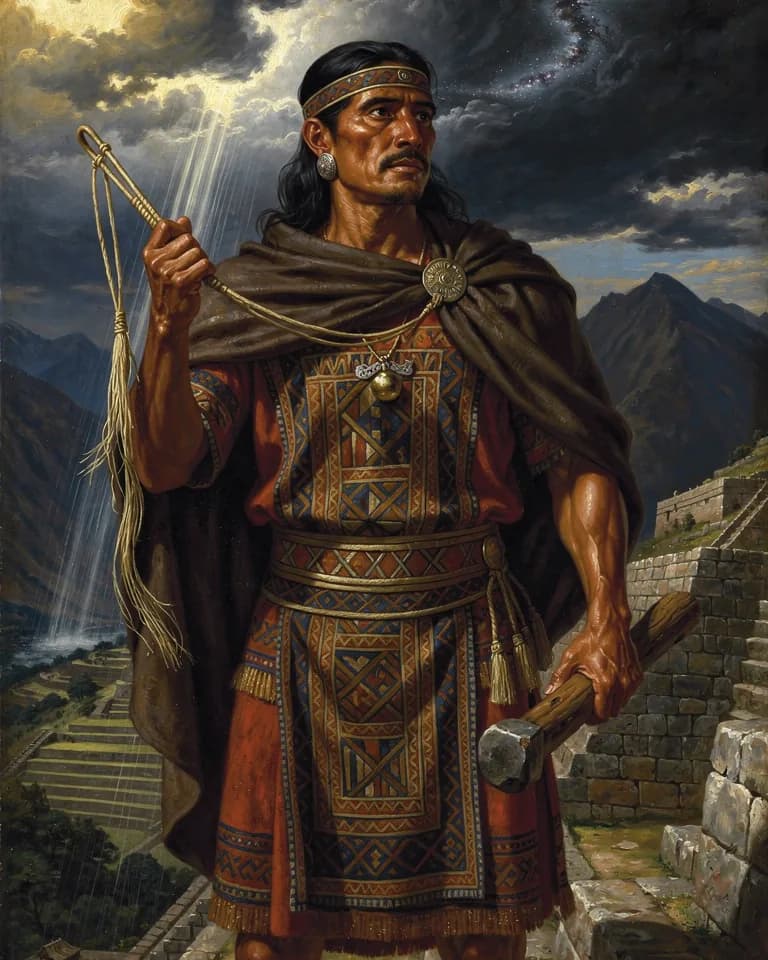
Illapa
IllapaInca and Andean
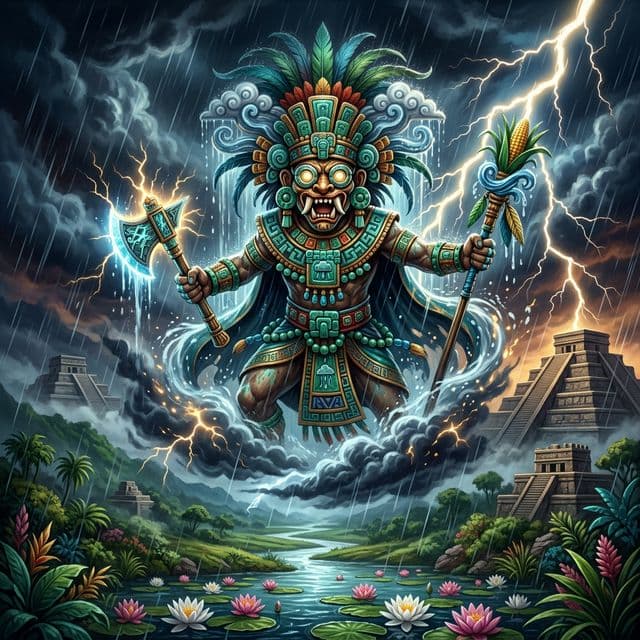
Tlaloc
TlalocMesoamerican

Both are storm and rain gods of American states, petitioned on mountains in time of drought; Illapa wields a sling, Tlaloc the lightning serpent. The resemblance is typological, not historical.

At a glance

Illapa and Tlaloc compared
IllapaTlaloc
TraditionInca and Andean TraditionMesoamerican Pantheon
Domainsthunder, lightning, rain, hailrain, fertility, lightning, earthquakes
Symbolsa sling, a club, the flash of lightninggoggle eyes, fangs, jade, water lilies
Also calledChuquilla, CatuillaHe Who Makes Things Sprout, Tlaloque

Where they meet

Both are associated with lightning and rain.

Where they part

Only Illapa

Associated with thunder and hail.

Only Tlaloc

Associated with fertility and earthquakes.

How each was worshipped

Illapa

Cult sites
A chamber of the Coricancha in Cusco dedicated to thunder and lightning, according to Garcilaso.

Prayers and offerings for rain and against hail, often made on mountaintops; people who survived lightning strikes were thought chosen for ritual office, and twins were regarded as children of the lightning, according to seventeenth-century extirpation reports.

Tlaloc

Cult sites
Northern half of the Templo Mayor; Mount Tlaloc and other mountain shrines; Maya Chaac is a cousin, not this temple
Festivals
Atlcahualo and other rain veintenas; Child offerings in the Mexica rain cult

Rain, mountains, and the dangerous gift of water. Blue, fangs, and Tlalocan as a drowned paradise. The Mexica state cult included child sacrifice for rain. Record it; do not soften it into a weather mascot.

The two figures

Inca and Andean Tradition

Illapa

The Thunder of the Inca state cult, imagined as a man in the sky with a sling and club who draws rain from the heavenly river; after the conquest he was widely identified with Saint James (Santiago).

No birth narrative survives; the Thunder appears in the chronicles as one of the great powers of the sky, ranked after the Creator and the Sun.

Illapa was one of the principal powers of the Cusco state cult, with his own chamber in the Coricancha according to Garcilaso and his own image, lands, and servants according to Molina and Cobo. Bernabé Cobo (1653), summarizing earlier reports, says the Andeans imagined him as a man in the sky with a club in one hand and a sling in the other: the crack of the sling was the thunder, the flash of his clothing the lightning, and he drew water from the river of the sky, the Milky Way, and poured it down as rain.

Read the full Illapa entry

Mesoamerican Pantheon

Tlaloc

The Aztec god of rain, fertility, and water. Tlaloc's distinctive goggled eyes and fanged mouth make him one of the most recognizable deities in Mesoamerican art. He shared the summit of the Templo Mayor with Huitzilopochtli.

Tlaloc was one of the primordial deities who existed before the current creation. He presided over the Third Sun before its destruction by a rain of fire.

Tlaloc is one of the most ancient and important deities in Mesoamerican religion. His name derives from the Nahuatl word *tlalli* (earth) and may mean "He Who Makes Things Sprout." He controlled the **rain** essential for maize agriculture.

Read the full Tlaloc entry
About this comparison

Comparisons pair figures that play a similar role across traditions, or that the myths connect within one. A shared role does not, by itself, establish a shared origin.