Side by sideParallel across traditions

Indra vs Jade Emperor

Indra
IndraHindu
Jade Emperor
Jade EmperorChinese

Both are the ruling sky-king who commands the weather and the pantheon.

At a glance

Indra and Jade Emperor compared
IndraJade Emperor
TraditionHindu PantheonChinese Pantheon
Domainsthunder, rain, storms, heaven, warheaven, order, bureaucracy, justice, sovereignty
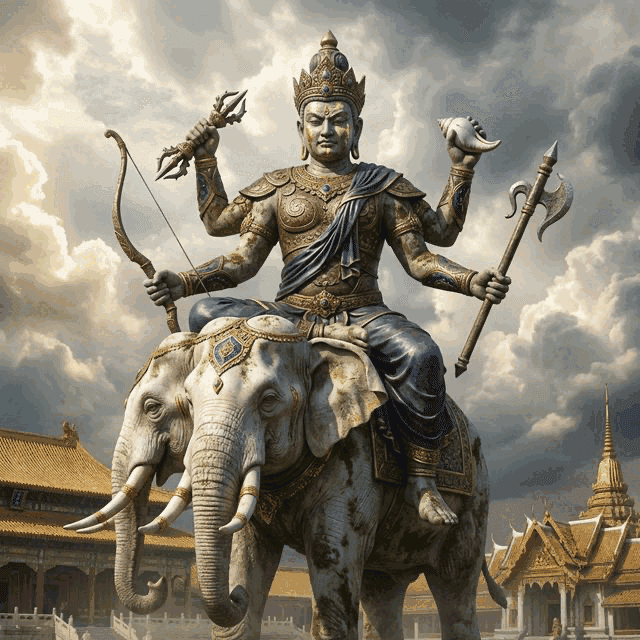
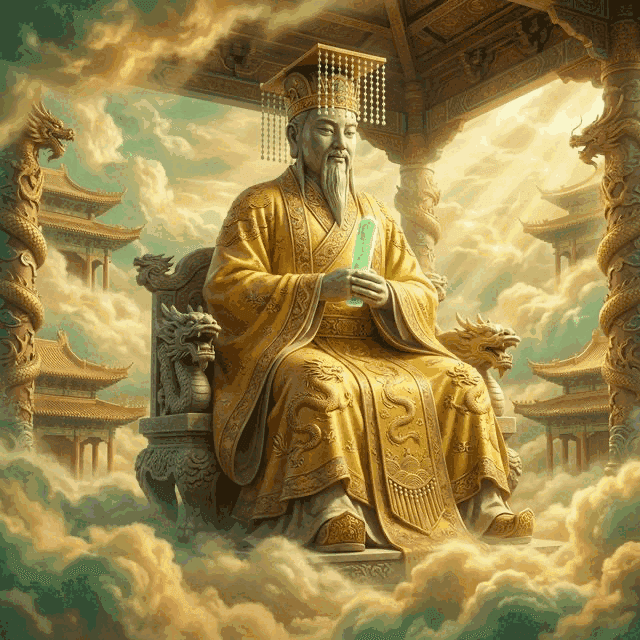
Symbolsthunderbolt, elephant, rainbowimperial robes, jade tablet, dragon throne, twelve-tiered crown
Also calledShakra, PurandaraYu Huang, Yu Di, Yu Huang Shangdi, Heavenly Grandfather

Where they meet

Both are associated with heaven.

Where they part

Only Indra

Associated with thunder, rain, storms, and war.

Only Jade Emperor

Associated with order, bureaucracy, justice, and sovereignty.

Why they are compared

Indra as king of the Devas parallels the Jade Emperor's role as king of the celestial realm.

How each was worshipped

Indra

Cult sites
Few living Hindu temples; Indra Jatra at Kathmandu; Vedic fire-altars rather than a house of his own
Festivals
Indra Jatra in Nepal; Vedic soma rites in the older layer

King of the Rigveda, then crowded out by the Trimurti. Nepal still raises his pole. In India the honest note is decline: weather and war moved to other names.

Jade Emperor

Cult sites
Jade Emperor temples across the Chinese-speaking world; Heavenly court shrines in city God complexes
Festivals
Jade Emperor's Birthday (ninth day of the first lunar month); Chinese New Year court audiences

Yuhuang Shangdi as bureaucratic heaven. Incense, paper offerings, and a birthday that opens the year. Folk religion treats him as a distant boss; Daoist liturgy gives him a full court. Both are the cult.

The two figures

Hindu Pantheon

Indra

King of the gods (Devas) and lord of heaven (Svarga). God of thunder, rain, and war. Slayer of the dragon Vritra. Rides the white elephant Airavata.

The Rigveda calls Indra a son of the sky god Dyaus; later texts name different mothers, among them Aditi. He became king of the gods by defeating the dragon Vritra. His weapon is the thunderbolt (Vajra).

Indra is the king of the **Devas** (gods) and ruler of **Svarga** (heaven). God of **thunder**, **rain**, and **war**, he was the most important deity in the Vedic period. He wields the thunderbolt **Vajra** and rides the white elephant **Airavata**.

Read the full Indra entry

Chinese Pantheon

Jade Emperor

The supreme ruler of Heaven and lord of all gods. He governs the cosmos through a vast celestial bureaucracy, determining the fate of mortals and immortals alike.

In the primordial age, a prince of the Blessed Kingdom of Pure Felicity renounced his throne to cultivate the Tao. Through 1,750 kalpas of moral cultivation and 3,000 tribulations, he achieved complete enlightenment and became worthy to rule Heaven.

The Jade Emperor (Yu Huang) reigns supreme over the entire Chinese pantheon from his magnificent palace in Heaven. Unlike many supreme deities who rule through raw power, the Jade Emperor governs through an elaborate celestial bureaucracy that mirrors the imperial Chinese government on Earth. He presides over ministries of thunder, rain, fire, and pestilence, promoting or demoting gods based on their performance.

Read the full Jade Emperor entry
About this comparison

Comparisons pair figures that play a similar role across traditions, or that the myths connect within one. A shared role does not, by itself, establish a shared origin.