Mythos Atlas

Side by sideRivals

Indra vs Usha

Indra
IndraHindu
Usha
UshaHindu

Indra and Usha are recorded as rivals in the Hindu Pantheon.

At a glance

Indra and Usha compared
IndraUsha
TraditionHindu PantheonHindu Pantheon
Domainsthunder, rain, storms, heaven, wardawn, awakening, renewal of days
Symbolsthunderbolt, elephant, rainbowred cows or horses, shining chariot, open doors of heaven
Also calledShakra, PurandaraUshas, Uṣas

Where they meet

The atlas records no domain or symbol that Indra and Usha share.

They are compared because of how the myths connect them, not because of what they rule.

Where they part

Only Indra

Associated with thunder, rain, storms, heaven, and war.

Only Usha

Associated with dawn, awakening, and renewal of days.

How each was worshipped

Indra

Cult sites
Few living Hindu temples; Indra Jatra at Kathmandu; Vedic fire-altars rather than a house of his own
Festivals
Indra Jatra in Nepal; Vedic soma rites in the older layer

King of the Rigveda, then crowded out by the Trimurti. Nepal still raises his pole. In India the honest note is decline: weather and war moved to other names.

Usha

Invoked in the Vedic morning sacrifice, when the fire is kindled at dawn; her hymns are recited in the morning litany of Soma ritual. She has no major temple cult in later Hinduism.

The two figures

Hindu Pantheon

Indra

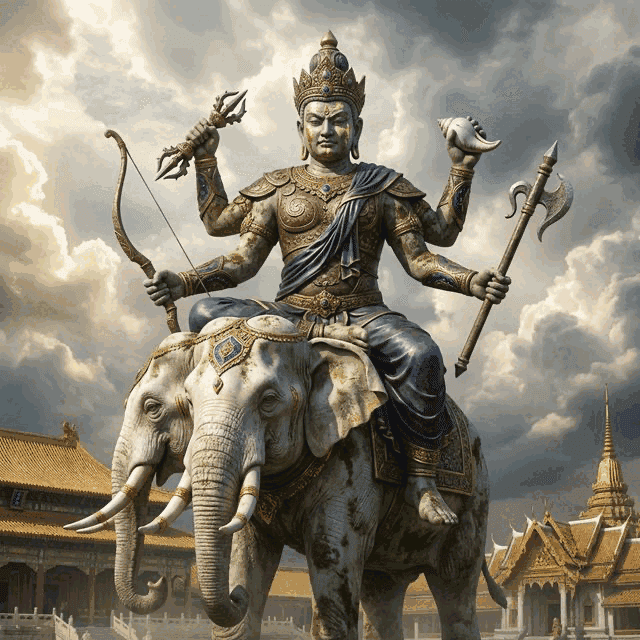
King of the gods (Devas) and lord of heaven (Svarga). God of thunder, rain, and war. Slayer of the dragon Vritra. Rides the white elephant Airavata.

Indra was born to the sky god Dyaus and earth goddess Prithvi. He became king of the gods by defeating the dragon Vritra. His weapon is the thunderbolt (Vajra).

Indra is the king of the **Devas** (gods) and ruler of **Svarga** (heaven). God of **thunder**, **rain**, and **war**, he was the most important deity in the Vedic period. He wields the thunderbolt **Vajra** and rides the white elephant **Airavata**.

Read the full Indra entry

Hindu Pantheon

Usha

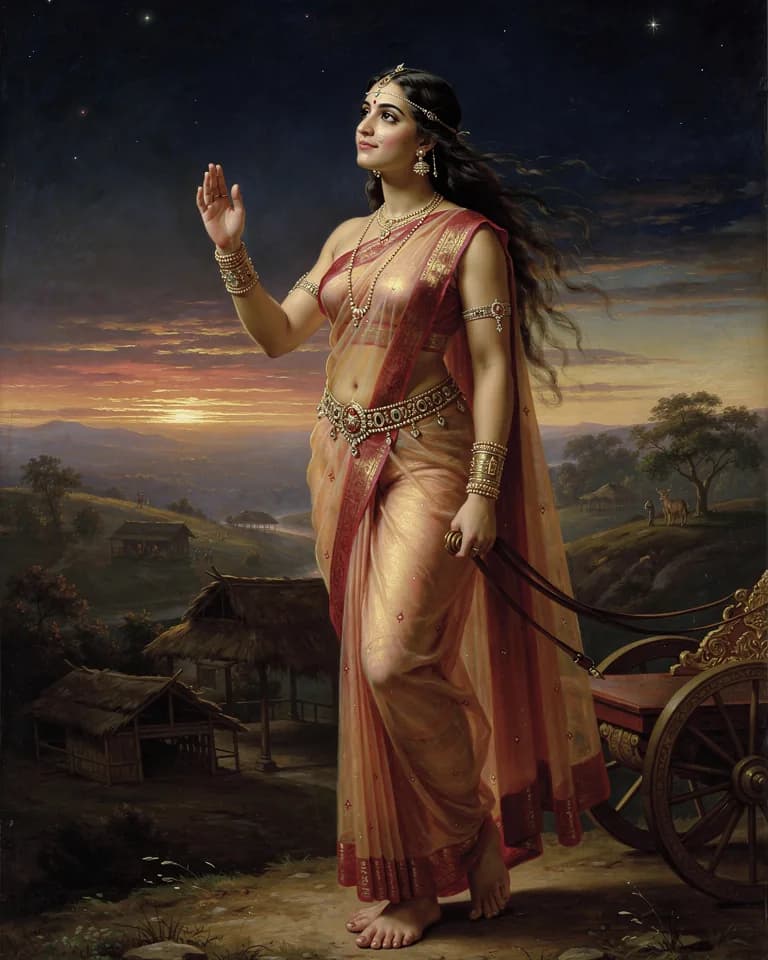
The Vedic goddess of dawn, praised in some twenty hymns of the Rigveda as a radiant young woman who drives away darkness, wakes every living creature, and returns each morning ever young while the generations of mortals pass away.

Usha is called the daughter of Dyaus (Heaven) and the sister of Ratri (Night), with whom she shares an unending path, the two alternating across the sky.

Usha is among the most celebrated goddesses of the Rigveda, which addresses about twenty hymns to her. She is the daughter of Heaven, sister of Night, and the brilliant maiden who unbars the doors of the sky. Her light rouses people to their work and to sacrifice: she causes Agni's fire to be kindled at the morning rite.

Read the full Usha entry
About this comparison

Comparisons pair figures that play a similar role across traditions, or that the myths connect within one. A shared role does not, by itself, establish a shared origin.