Mythos Atlas

Side by sideParallel across traditions

Hwanin vs Indra

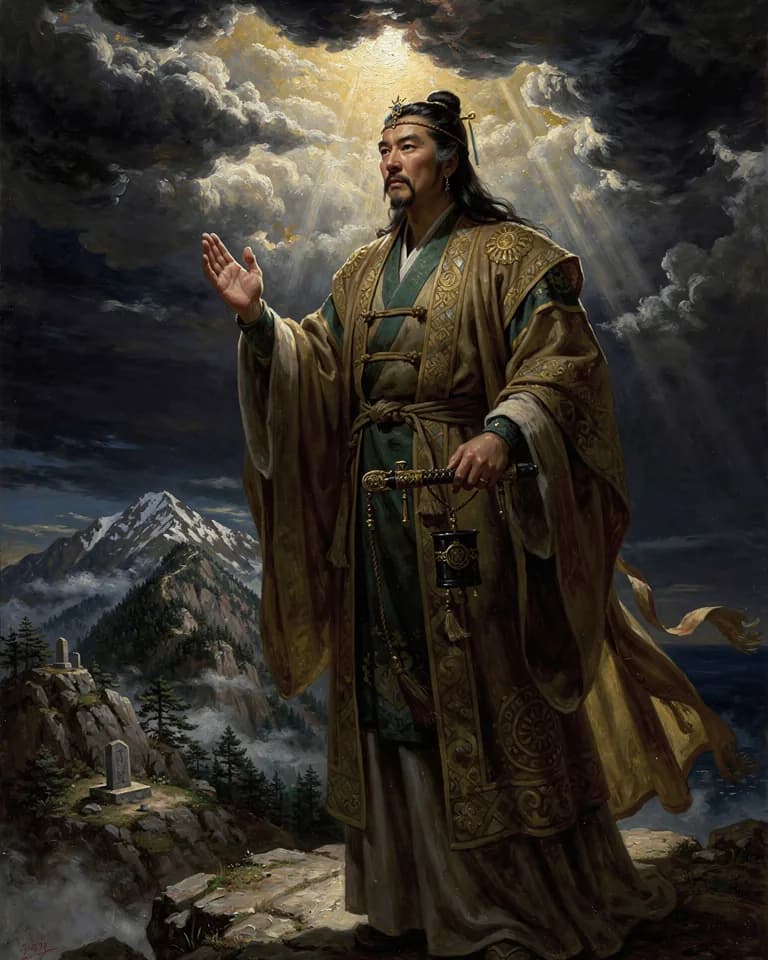
Hwanin
HwaninKorean
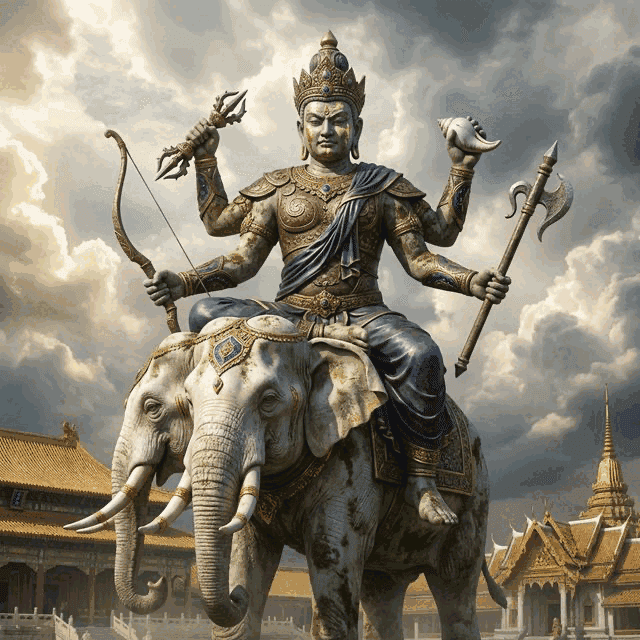
Indra
IndraHindu

Iryeon's thirteenth-century note identifies Hwanin with Jeseok (Śakra), the Buddhist name of Indra, king of the gods. The identification is a Buddhist monk's gloss, not evidence that the Korean sky-lord derives from Indra.

At a glance

Hwanin and Indra compared
HwaninIndra
TraditionKorean TraditionHindu Pantheon
Domainsheaven, sovereignty over the worldthunder, rain, storms, heaven, war
Symbolsthe three heavenly seals, the skythunderbolt, elephant, rainbow
Also calledJeseok (in Iryeon's gloss)Shakra, Purandara

Where they meet

Both are associated with heaven.

Where they part

Only Hwanin

Associated with sovereignty over the world.

Only Indra

Associated with thunder, rain, storms, and war.

How each was worshipped

Hwanin

Cult sites
Samseonggung and other shrines of Daejonggyo and related modern movements venerate Hwanin, Hwanung, and Dangun together.
Festivals
National Foundation Day (Gaecheonjeol, 3 October), celebrating the 'opening of heaven' when Hwanung descended and Dangun founded Joseon.

Honored chiefly as the heavenly origin of the Dangun lineage; the ideal of hongik ingan associated with his choice of Taebaek is cited in South Korean education law.

Indra

Cult sites
Few living Hindu temples; Indra Jatra at Kathmandu; Vedic fire-altars rather than a house of his own
Festivals
Indra Jatra in Nepal; Vedic soma rites in the older layer

King of the Rigveda, then crowded out by the Trimurti. Nepal still raises his pole. In India the honest note is decline: weather and war moved to other names.

The two figures

Korean Tradition

Hwanin

The Lord of Heaven in the Dangun myth, who sees that his son Hwanung longs for the human world, looks down on Mount Taebaek as a place where he could 'widely benefit humanity', and sends him down with three heavenly seals.

No origin is told; he is the ruler of heaven when the myth begins.

The Dangun myth in Iryeon's *Samguk Yusa* (c. 1281-1289), quoting an older 'Old Record' (*Gogi*), opens with Hwanin. His son by a secondary wife, Hwanung, often longed for the world below and desired human society. Knowing his son's wish, Hwanin looked down on Mount Taebaek among three high peaks, judged that it was a place where one could 'widely benefit humanity' (*hongik ingan*), and gave Hwanung three heavenly seals (*cheonbuin*) and sent him down to rule.

Read the full Hwanin entry

Hindu Pantheon

Indra

King of the gods (Devas) and lord of heaven (Svarga). God of thunder, rain, and war. Slayer of the dragon Vritra. Rides the white elephant Airavata.

Indra was born to the sky god Dyaus and earth goddess Prithvi. He became king of the gods by defeating the dragon Vritra. His weapon is the thunderbolt (Vajra).

Indra is the king of the **Devas** (gods) and ruler of **Svarga** (heaven). God of **thunder**, **rain**, and **war**, he was the most important deity in the Vedic period. He wields the thunderbolt **Vajra** and rides the white elephant **Airavata**.

Read the full Indra entry
About this comparison

Comparisons pair figures that play a similar role across traditions, or that the myths connect within one. A shared role does not, by itself, establish a shared origin.