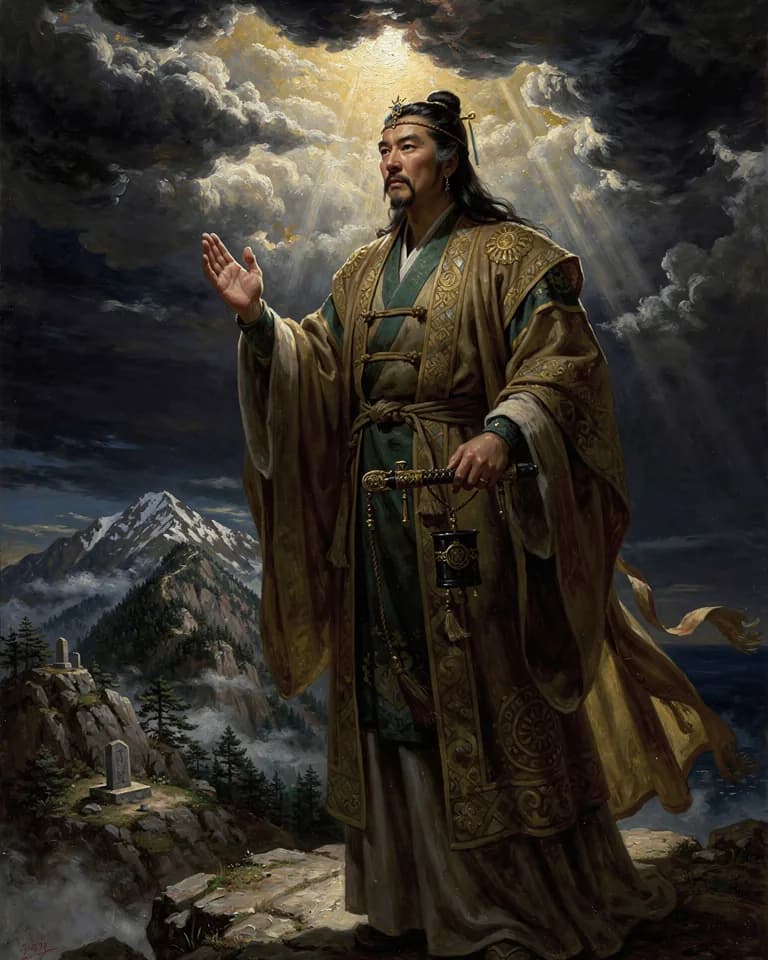
Hwanin
The Lord of Heaven in the Dangun myth, who sees that his son Hwanung longs for the human world, looks down on Mount Taebaek as a place where he could 'widely benefit humanity', and sends him down with three heavenly seals.
Divine domains
4 deities from 3 traditions whose entries in this atlas list heaven among their domains, grouped by tradition.
The Lord of Heaven in the Dangun myth, who sees that his son Hwanung longs for the human world, looks down on Mount Taebaek as a place where he could 'widely benefit humanity', and sends him down with three heavenly seals.
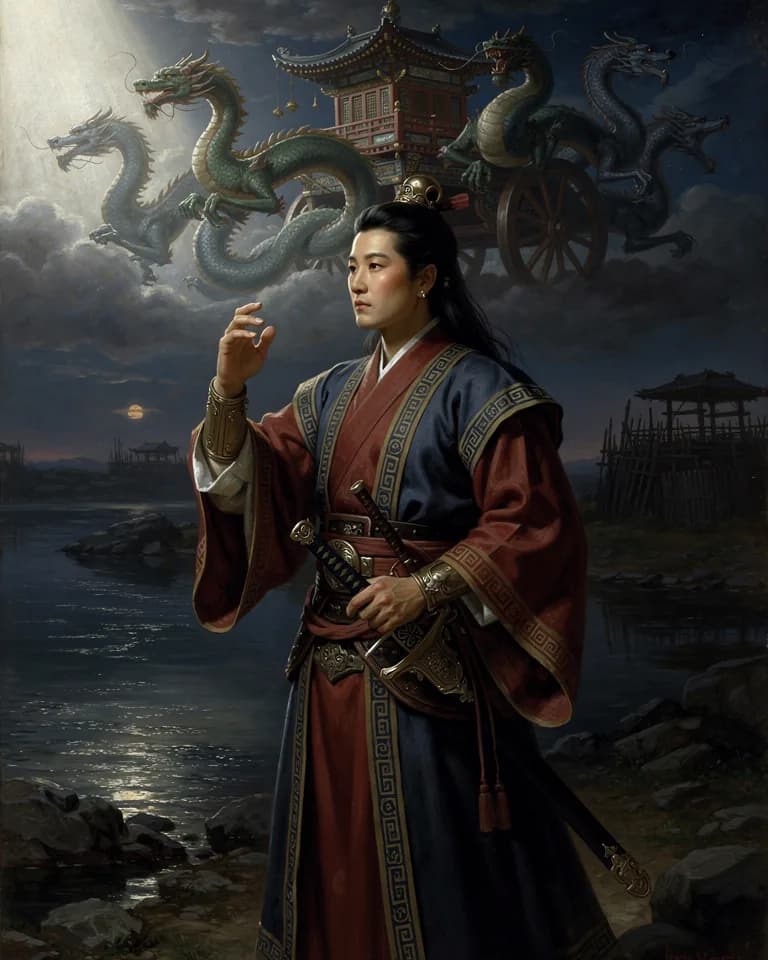
The Son of Heaven who descends in a five-dragon chariot, seduces Yuhwa, daughter of the River Earl, by the Amnok (Yalu) River, and becomes the father of Jumong, founder of Goguryeo.
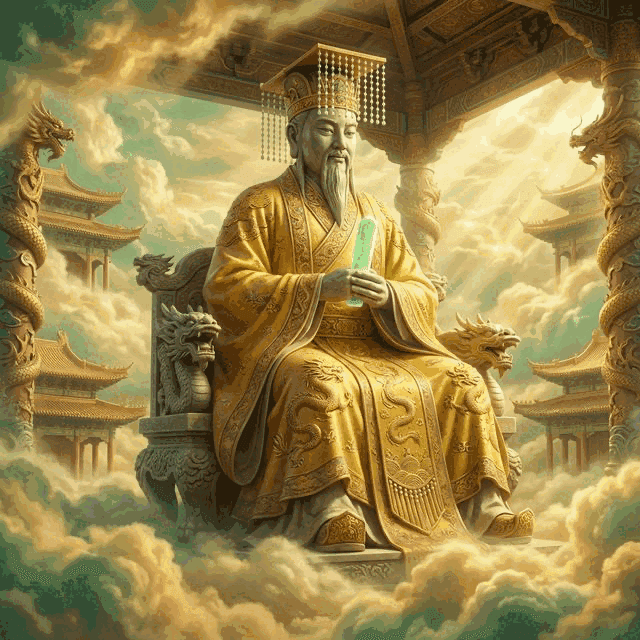
The supreme ruler of Heaven and lord of all gods. He governs the cosmos through a vast celestial bureaucracy, determining the fate of mortals and immortals alike.
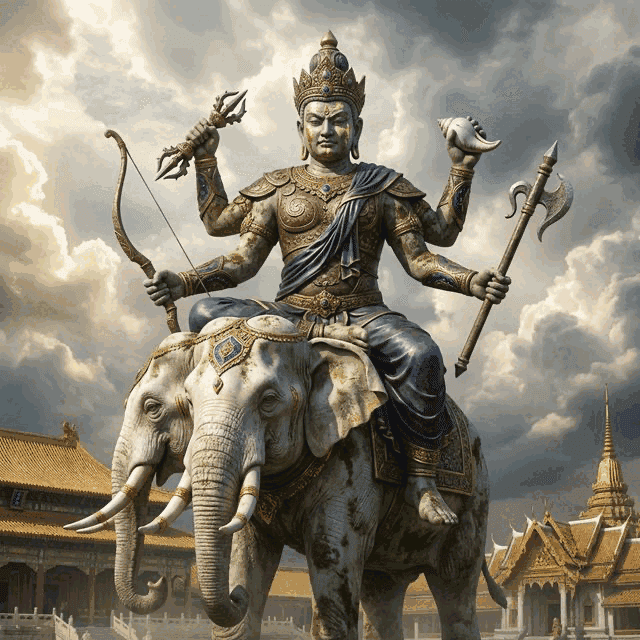
King of the gods (Devas) and lord of heaven (Svarga). God of thunder, rain, and war. Slayer of the dragon Vritra. Rides the white elephant Airavata.
Editorial comparisons recorded on these entries; a shared role does not establish a shared origin.
Indra (Hindu) and Jade Emperor (Chinese)
The Jade Emperor already lists Indra; both are the ruling sky-king who commands the weather and the pantheon
Compare Indra and Jade EmperorHwanin (Korean) and Indra (Hindu)
Iryeon's thirteenth-century note identifies Hwanin with Jeseok (Śakra), the Buddhist name of Indra, king of the gods. The identification is a Buddhist monk's gloss, not evidence that the Korean sky-lord derives from Indra.
Compare Hwanin and IndraBuilt from each deity's catalog entry. See every domain side by side on Divine Domains, or browse every cross-pantheon parallel.