Mythos Atlas

Side by sideParent and child

Hwanin vs Hwanung

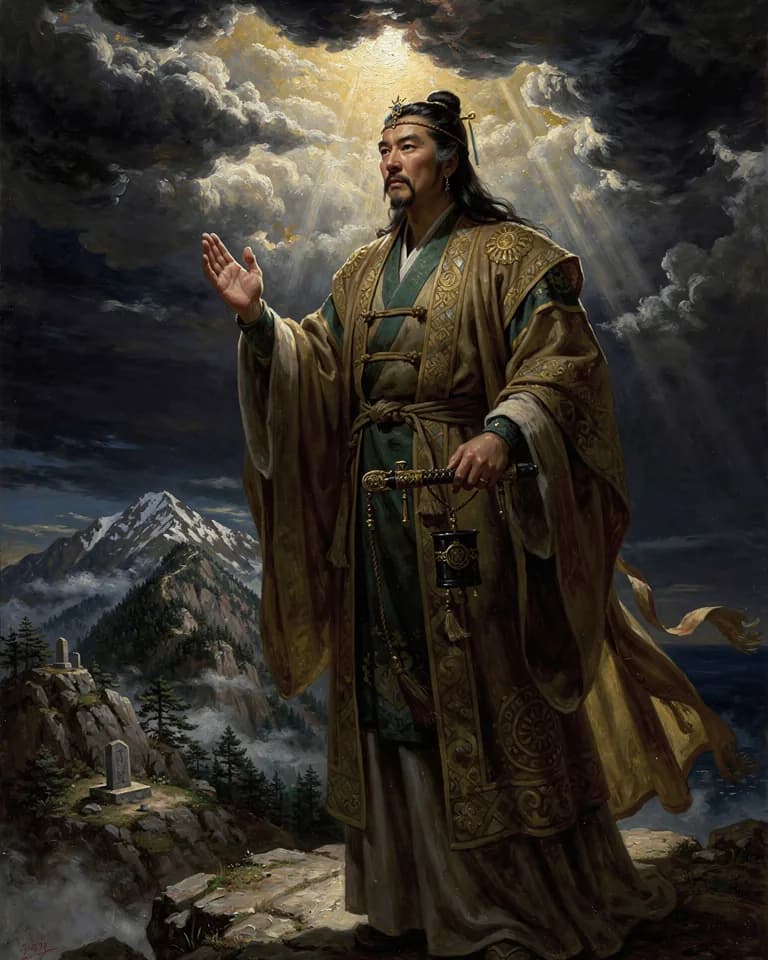
Hwanin
HwaninKorean
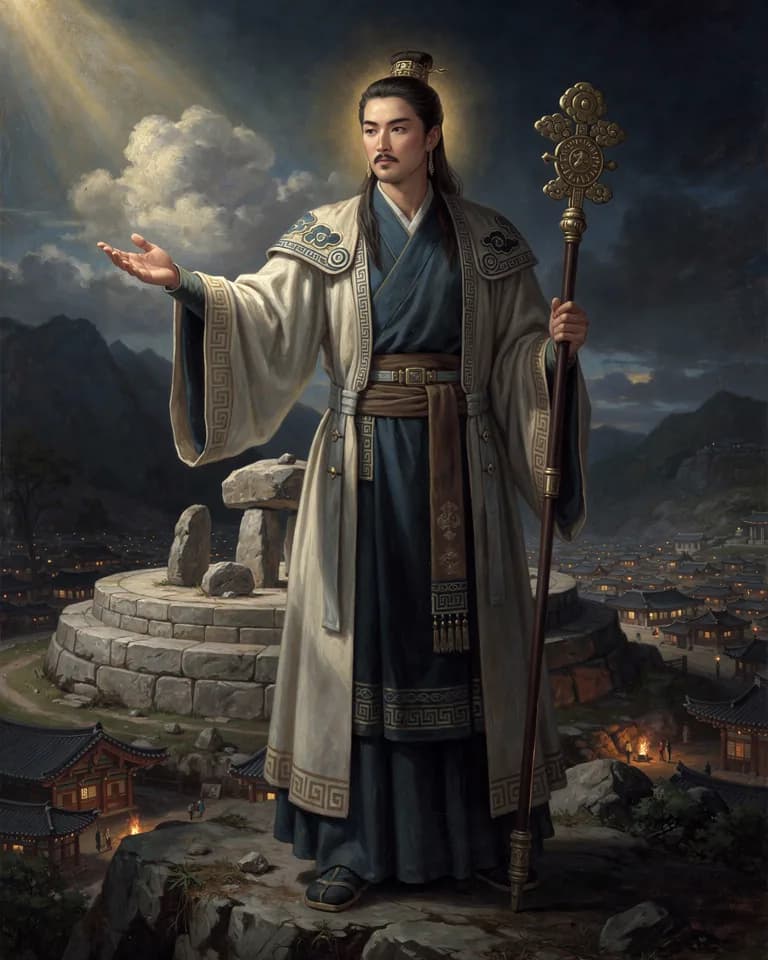
Hwanung
HwanungKorean

Hwanin and Hwanung are recorded as parent and child in the Korean Tradition.

At a glance

Hwanin and Hwanung compared
HwaninHwanung
TraditionKorean TraditionKorean Tradition
Domainsheaven, sovereignty over the worldheaven's rule on earth, agriculture, life and law
Symbolsthe three heavenly seals, the skythe sacred altar tree (Sindansu), the three heavenly seals, the Wind Earl, Rain Master, and Cloud Master
Also calledJeseok (in Iryeon's gloss)Hwanung Cheonwang (Heavenly King Hwanung)

Where they meet

They share a symbol: the three heavenly seals.

  • the three heavenly seals

Where they part

Only Hwanin

Associated with heaven and sovereignty over the world.

Only Hwanung

Associated with heaven's rule on earth, agriculture, and life and law.

How each was worshipped

Hwanin

Cult sites
Samseonggung and other shrines of Daejonggyo and related modern movements venerate Hwanin, Hwanung, and Dangun together.
Festivals
National Foundation Day (Gaecheonjeol, 3 October), celebrating the 'opening of heaven' when Hwanung descended and Dangun founded Joseon.

Honored chiefly as the heavenly origin of the Dangun lineage; the ideal of hongik ingan associated with his choice of Taebaek is cited in South Korean education law.

Hwanung

Cult sites
Honored with Hwanin and Dangun at shrines of Daejonggyo and in modern Dangun rites.
Festivals
National Foundation Day (Gaecheonjeol, 3 October), which commemorates the 'opening of heaven' by his descent.

Venerated in modern Dangun-centered religious movements; the sacred tree and mountain of his descent echo village guardian trees and mountain altars in Korean folk religion.

The two figures

Korean Tradition

Hwanin

The Lord of Heaven in the Dangun myth, who sees that his son Hwanung longs for the human world, looks down on Mount Taebaek as a place where he could 'widely benefit humanity', and sends him down with three heavenly seals.

No origin is told; he is the ruler of heaven when the myth begins.

The Dangun myth in Iryeon's *Samguk Yusa* (c. 1281-1289), quoting an older 'Old Record' (*Gogi*), opens with Hwanin. His son by a secondary wife, Hwanung, often longed for the world below and desired human society. Knowing his son's wish, Hwanin looked down on Mount Taebaek among three high peaks, judged that it was a place where one could 'widely benefit humanity' (*hongik ingan*), and gave Hwanung three heavenly seals (*cheonbuin*) and sent him down to rule.

Read the full Hwanin entry

Korean Tradition

Hwanung

The son of the Lord of Heaven who descends to Mount Taebaek with three thousand followers and the ministers of wind, rain, and clouds, founds the 'City of God' beneath the sacred altar tree, and fathers Dangun with the bear-woman Ungnyeo.

Son of Hwanin, the Lord of Heaven, by a secondary wife (Samguk Yusa, Book 1).

In the *Samguk Yusa* Dangun myth, Hwanung, son of the Lord of Heaven, receives three heavenly seals from his father and descends with three thousand followers to the summit of Mount Taebaek, beneath the sacred altar tree (*Sindansu*). He calls the place Sinsi, the 'City of God', and is called Heavenly King Hwanung. With the Wind Earl, the Rain Master, and the Cloud Master, he takes charge of grain, life, sickness, punishment, and good and evil, some three hundred and sixty human affairs in all, and rules and civilizes the world.

Read the full Hwanung entry
About this comparison

Comparisons pair figures that play a similar role across traditions, or that the myths connect within one. A shared role does not, by itself, establish a shared origin.