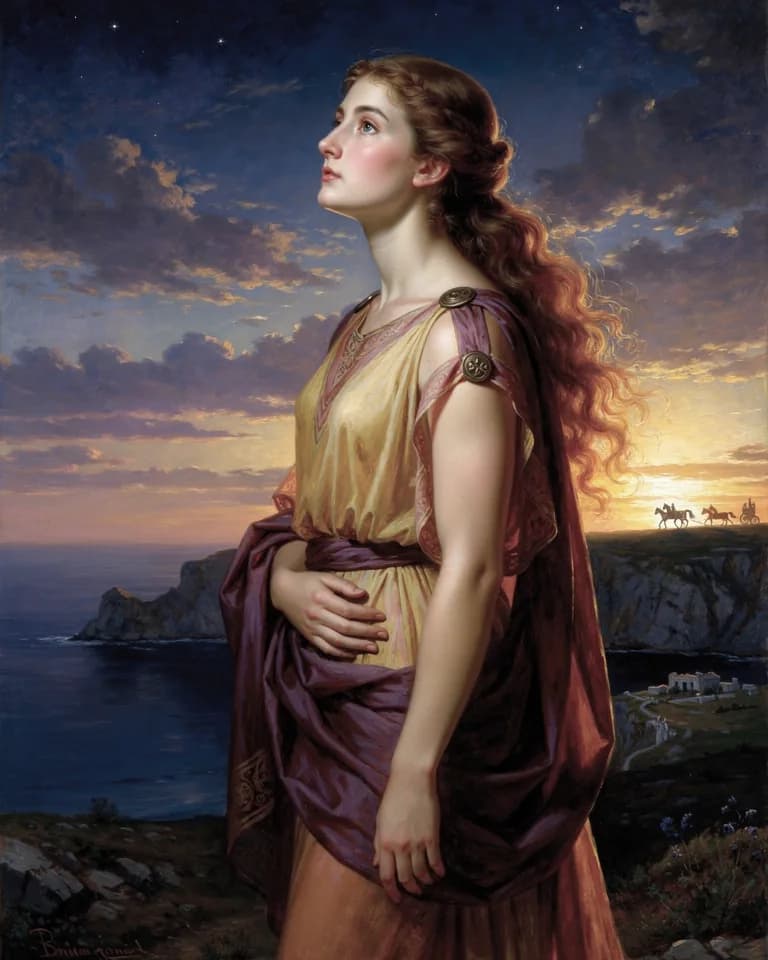
Eos
The goddess of dawn, sister of Helios and Selene, who rises each morning from the bed of her mortal consort Tithonus to bring light to gods and men. Homer's formula 'rosy-fingered Dawn' marks the start of countless days in the Iliad and Odyssey.
Divine domains
3 deities from 3 traditions whose entries in this atlas list dawn among their domains, grouped by tradition.
The goddess of dawn, sister of Helios and Selene, who rises each morning from the bed of her mortal consort Tithonus to bring light to gods and men. Homer's formula 'rosy-fingered Dawn' marks the start of countless days in the Iliad and Odyssey.
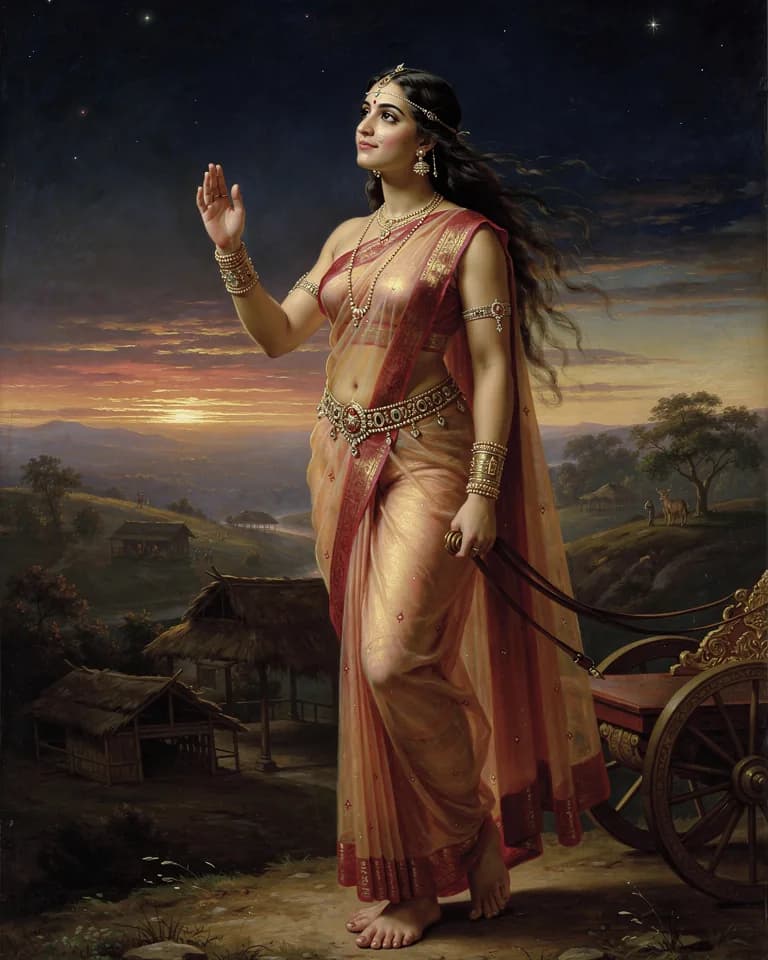
The Vedic goddess of dawn, praised in some twenty hymns of the Rigveda as a radiant young woman who drives away darkness, wakes every living creature, and returns each morning ever young while the generations of mortals pass away.
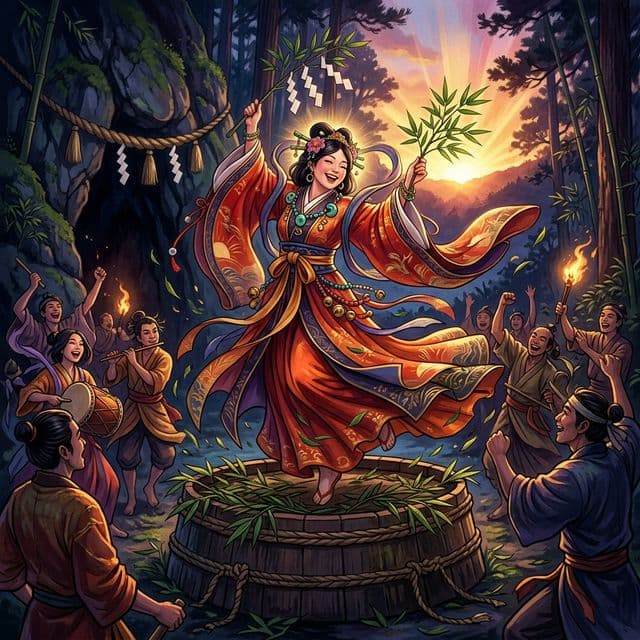
Goddess of dawn, mirth, and revelry. Her wild, comedic dance lured Amaterasu from the Heavenly Rock Cave, restoring light to the world. Ancestral deity of performing arts.
Editorial comparisons recorded on these entries; a shared role does not establish a shared origin.
Ame-no-Uzume (Japanese) and Eos (Greek)
Both are dawn goddesses, though Ame-no-Uzume's role centers more on restoring light through action
Compare Ame-no-Uzume and EosAme-no-Uzume (Japanese) and Usha (Hindu)
A thematic comparison of figures associated with dawn; this is not evidence of a shared origin or Indo-European influence on Japanese tradition.
Compare Ame-no-Uzume and UshaEos and Usha share an inherited Indo-European name and much of the same imagery of a youthful dawn who opens the sky
Compare Eos and UshaBuilt from each deity's catalog entry. See every domain side by side on Divine Domains, or browse every cross-pantheon parallel.