Mythos Atlas

Side by sideParallel across traditions

Ame-no-Uzume vs Eos

Ame-no-Uzume
Ame-no-UzumeJapanese
Eos
EosGreek

Both are dawn goddesses, though Ame-no-Uzume's role centers more on restoring light through action.

At a glance

Ame-no-Uzume and Eos compared
Ame-no-UzumeEos
TraditionJapanese PantheonGreek Pantheon
Domainsdawn, revelry, dance, performance, meditationdawn, morning light
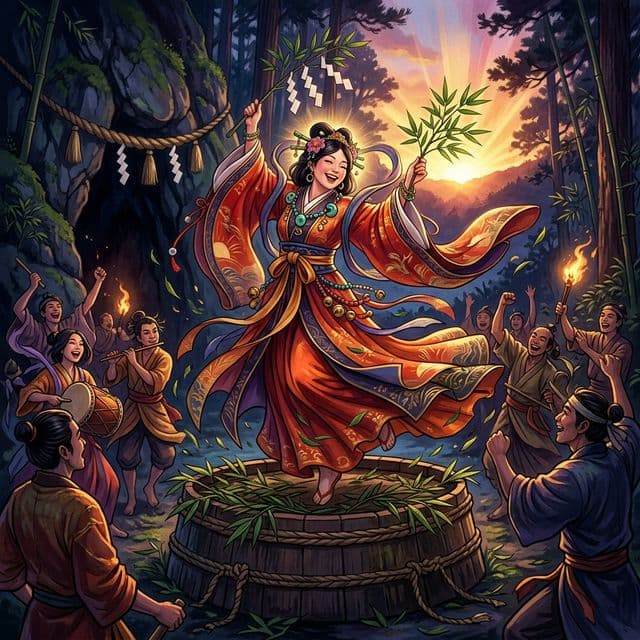
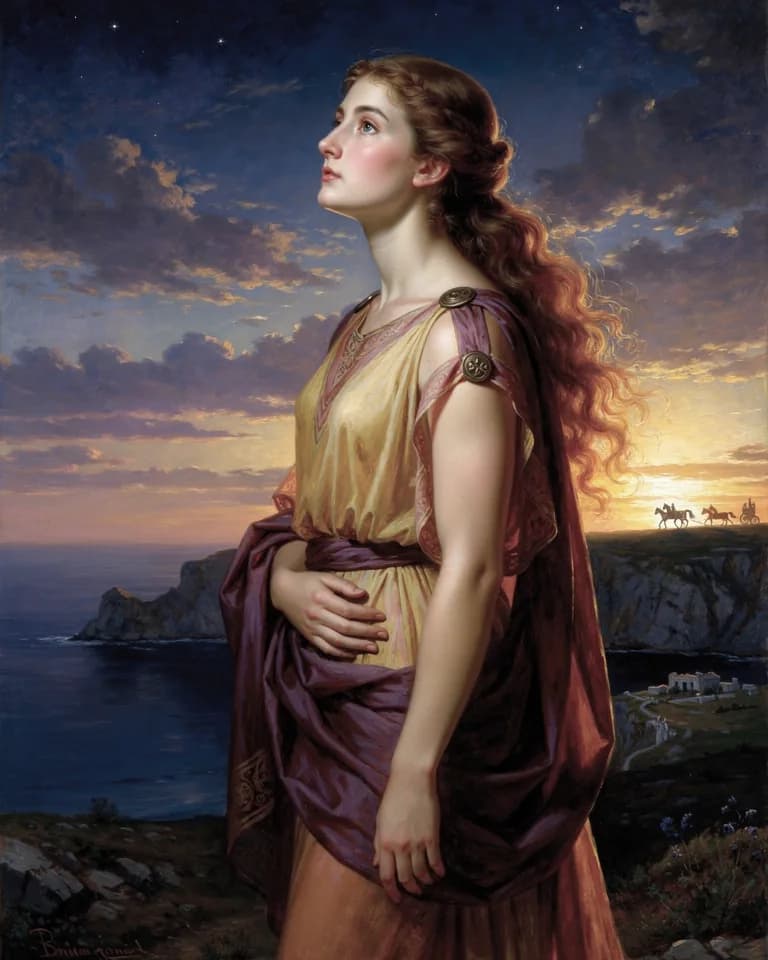
Symbolssacred dance, overturned tub, bamboo leaves, round smiling facesaffron robe, rosy fingers, chariot, wings (in art)
Also calledAme-no-Uzume-no-Mikoto, Uzume, OkameAurora (Roman)

Where they meet

Both are associated with dawn.

Where they part

Only Ame-no-Uzume

Associated with revelry, dance, performance, and meditation.

Only Eos

Associated with morning light.

Why they are compared

A thematic comparison only: Ame-no-Uzume's dance restores the sun's light, while Eos is the dawn itself.

How each was worshipped

Ame-no-Uzume

Cult sites
Kagura stages; the cave dance as origin of shrine performance

She danced the sun out of the cave. Shrine maidens and comic kagura inherit that file. The cult is performance, not a quiet inner hall.

Eos

No cult sites or festivals are recorded in the atlas.

The two figures

Japanese Pantheon

Ame-no-Uzume

Goddess of dawn, mirth, and revelry. Her wild, comedic dance lured Amaterasu from the Heavenly Rock Cave, restoring light to the world. Ancestral deity of performing arts.

When **Amaterasu** retreated into the Ama-no-Iwato cave and plunged the world into darkness, the eight million kami gathered in desperation. Ame-no-Uzume overturned a tub, stamped upon it, and performed an ecstatic, risque dance that provoked such uproarious laughter among the gods that Amaterasu's curiosity drew her forth.

**Ame-no-Uzume-no-Mikoto** holds one of the most pivotal roles in Japanese mythology. When Amaterasu withdrew into the Heavenly Rock Cave and darkness engulfed the world, it was Ame-no-Uzume's bold, outrageous performance that ultimately saved creation by drawing the sun goddess back into the light.

Read the full Ame-no-Uzume entry

Greek Pantheon

Eos

The goddess of dawn, sister of Helios and Selene, who rises each morning from the bed of her mortal consort Tithonus to bring light to gods and men. Homer's formula 'rosy-fingered Dawn' marks the start of countless days in the Iliad and Odyssey.

Eos was born to the Titans Hyperion and Theia with her siblings Helios and Selene. Each morning she rises from the streams of Ocean at the eastern edge of the world to announce the sun.

Eos is the dawn made divine. Hesiod names her with Helios and Selene as a child of Hyperion and Theia, and he also makes her mother of the winds and the stars by the Titan Astraeus. In Homer she is chiefly a time-marker: the formula of 'early-born, rosy-fingered Dawn' opens new days again and again in the *Iliad* and the *Odyssey*.

Read the full Eos entry
About this comparison

Comparisons pair figures that play a similar role across traditions, or that the myths connect within one. A shared role does not, by itself, establish a shared origin.