Mythos Atlas

Side by sideParent and child

Jumong vs Yuhwa

Jumong
JumongKorean
Yuhwa
YuhwaKorean

Jumong and Yuhwa are recorded as parent and child in the Korean Tradition.

At a glance

Jumong and Yuhwa compared
JumongYuhwa
TraditionKorean TraditionKorean Tradition
Domainsarchery, the founding of Goguryeo, kingshiprivers, motherhood, agriculture
Symbolsthe bow, the egg, the bridge of fish and turtlesthe willow, the egg, grain seeds carried by doves
Also calledKing Dongmyeong, Chumo, Go JumongLady Yuhwa, Buyeo-sin (the Buyeo goddess)

Where they meet

They share a symbol: the egg.

  • the egg

Where they part

Only Jumong

Associated with archery, the founding of goguryeo, and kingship.

Only Yuhwa

Associated with rivers, motherhood, and agriculture.

How each was worshipped

Jumong

Cult sites
The shrine of the founder in the Goguryeo capitals, to which later kings made offerings, according to the Samguk Sagi; the 'Gaodeng god' shrine described in Chinese histories.

Royal ancestor worship at the founder's shrine; the Goguryeo harvest festival of heaven (Dongmaeng) recorded in Chinese histories.

Yuhwa

Cult sites
A shrine built for her in East Buyeo by King Geumwa, according to the Samguk Sagi; the Goguryeo shrine of the 'Buyeo goddess' described in Chinese histories.

Honored by the Goguryeo court as the mother of the dynasty's founder, with a wooden image, according to seventh-century Chinese sources.

The two figures

Korean Tradition

Jumong

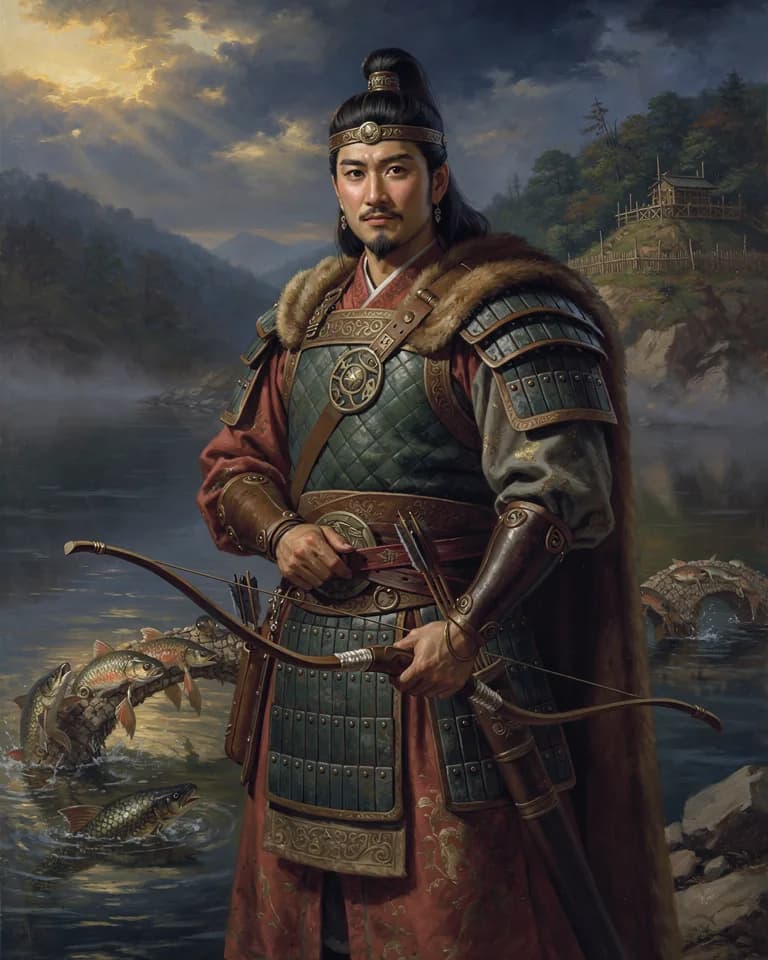
The egg-born son of Heaven and of the River Earl's daughter, a peerless archer who flees East Buyeo when fish and turtles rise to bridge a river for him, founds Goguryeo at Jolbon, and in the earliest account ascends to heaven on a yellow dragon.

Hatched from an egg laid by Yuhwa, daughter of Habaek, after she was touched by the sunlight of Heaven; son of Haemosu in Samguk Yusa and Yi Gyu-bo.

The Gwanggaeto Stele of 414 CE, the oldest written source for any Korean foundation myth, says that King Chumo, son of the Heavenly Emperor and the daughter of Habaek, broke from an egg; traveling south, he reached a great river and declared himself son of heaven and grandson of Habaek, and reeds joined and turtles surfaced to let him cross. He founded his capital on the mountain west of Holbon. Tired of the world, he was fetched by a yellow dragon sent from heaven and rose to heaven from a hill east of Holbon, standing on the dragon's head.

Read the full Jumong entry

Korean Tradition

Yuhwa

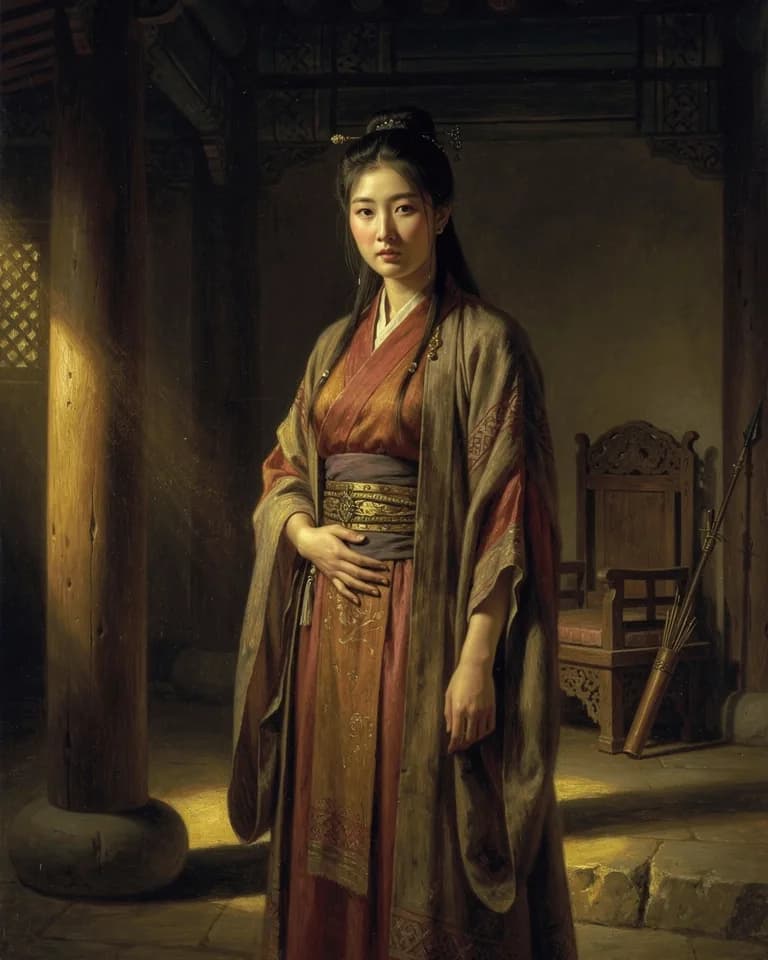
The daughter of Habaek, the River Earl, who is seduced and abandoned by Haemosu, banished by her parents, sheltered by King Geumwa of East Buyeo, and there lays the egg from which Jumong hatches; later worshipped by Goguryeo as a mother goddess.

Eldest daughter of Habaek, the River Earl (Samguk Sagi; Dongmyeongwang-pyeon).

In the *Samguk Sagi*, King Geumwa of East Buyeo finds Yuhwa south of Mount Taebaek at Ubalsu, where her parents have banished her after her union with Haemosu. He shuts her in a room, where sunlight follows her even when she moves away from it, and she conceives. She lays an egg as large as five measures of grain. Geumwa has it thrown to dogs and pigs, which will not eat it; left on the road, where horses and cattle step around it; and in the fields, where birds cover it with their wings. He cannot break it and returns it to her, and a boy breaks out: Jumong.

Read the full Yuhwa entry
About this comparison

Comparisons pair figures that play a similar role across traditions, or that the myths connect within one. A shared role does not, by itself, establish a shared origin.