Mythos Atlas

Side by sideParent and child

Kartikeya vs Shiva

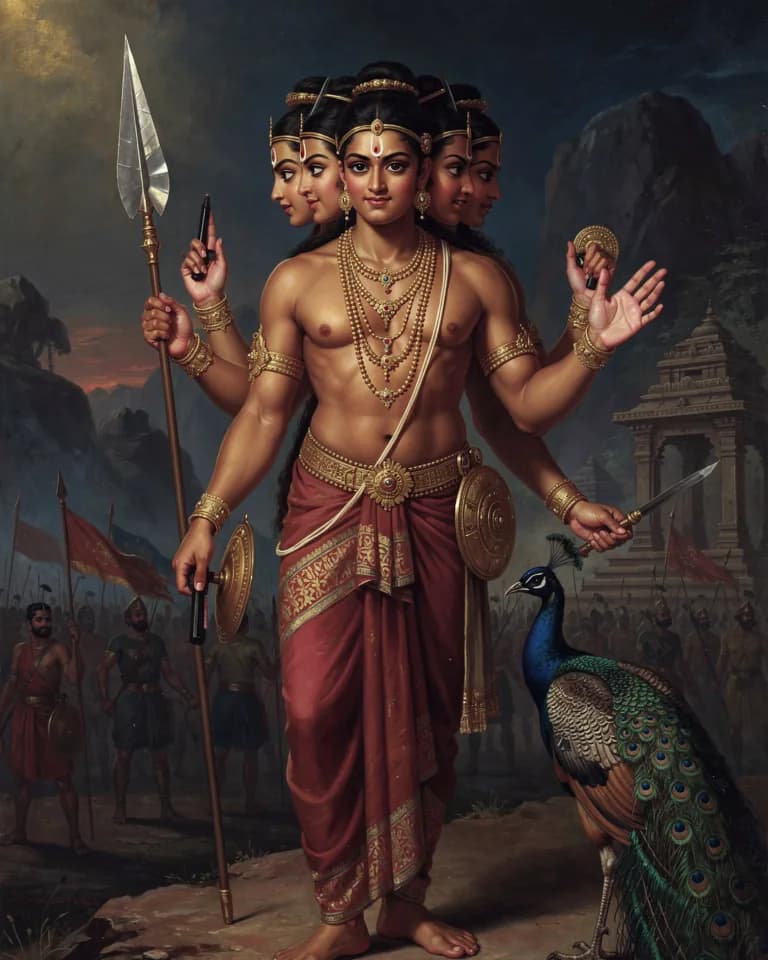
Kartikeya
KartikeyaHindu
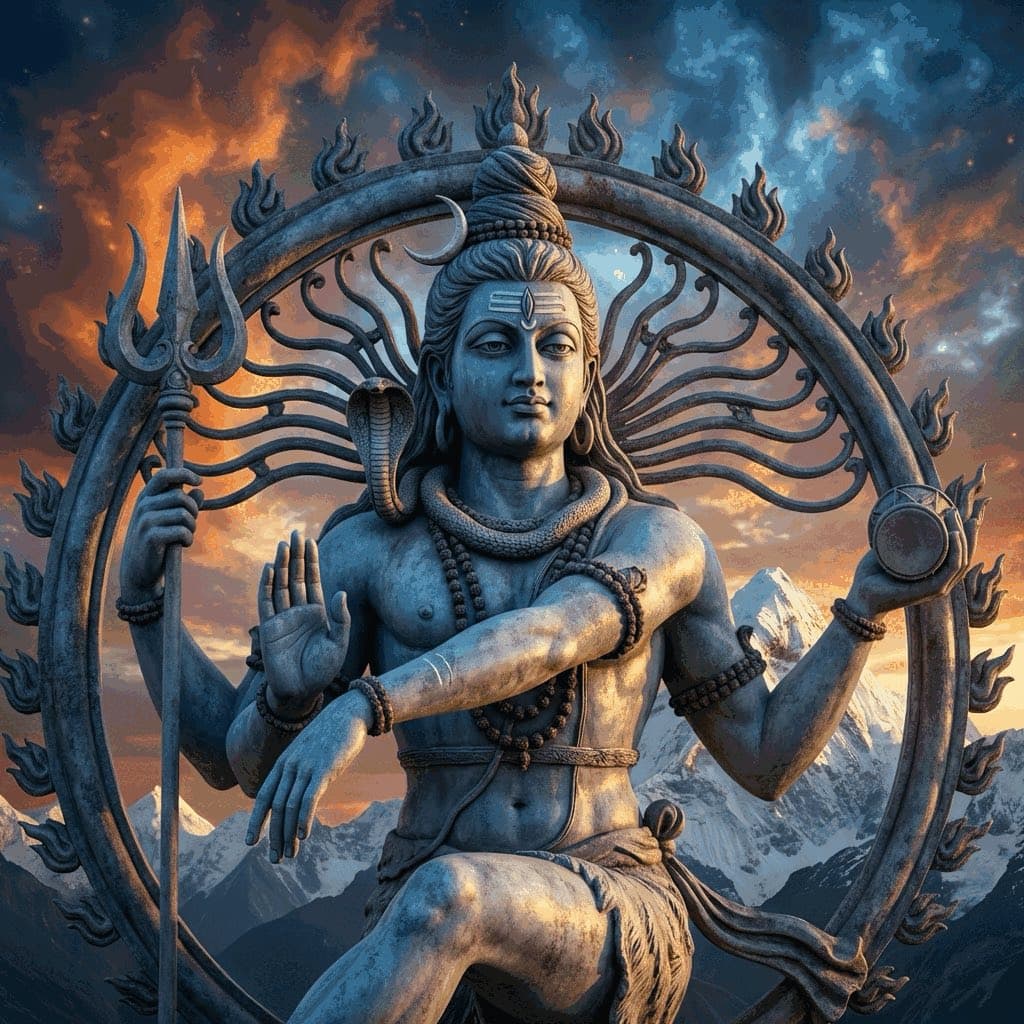
Shiva
ShivaHindu

Kartikeya and Shiva are recorded as parent and child in the Hindu Pantheon.

At a glance

Kartikeya and Shiva compared
KartikeyaShiva
TraditionHindu PantheonHindu Pantheon
Domainswar, leadership of the divine army, youth, victorydestruction, transformation, meditation, time, dance
Symbolsspear (vel or shakti), peacock mount, rooster banner, six facesthird eye, trident, crescent moon, snake, drum
Also calledSkanda, Murugan, Subrahmanya, Kumara, ShanmukhaMahadeva, Rudra, Nataraja, Maheshvara

Where they meet

The atlas records no domain or symbol that Kartikeya and Shiva share.

They are compared because of how the myths connect them, not because of what they rule.

Where they part

Only Kartikeya

Associated with war, leadership of the divine army, youth, and victory.

Only Shiva

Associated with destruction, transformation, meditation, time, and dance.

How each was worshipped

Kartikeya

Cult sites
Palani Murugan Temple, Tamil Nadu; Tiruchendur Murugan Temple, Tamil Nadu; Batu Caves, Malaysia
Festivals
Thaipusam; Skanda Shashti

Devotees carry kavadi (decorated burdens) in fulfillment of vows, especially at Thaipusam, and fast and recite his victories over the demons during Skanda Shashti.

Shiva

Cult sites
Kashi Vishwanath in Varanasi; Chidambaram Nataraja; The twelve Jyotirlinga shrines
Festivals
Maha Shivaratri; Pradosha

Linga, ashes, and the cremation ground. Householders and ascetics share him. Shivaratri is a night of waking and water on stone. He is destroyer only in the sense that every finished thing is his.

The two figures

Hindu Pantheon

Kartikeya

The god of war and commander of the gods' army, son of Shiva, born to destroy the demon Taraka. Raised by the six Krittikas (the Pleiades), he is often shown with six faces; in the Tamil south he is worshipped as Murugan, one of the most beloved gods of the region.

Born to end the demon Taraka, Kartikeya arose from the seed of Shiva, carried by Agni and the river Ganga, and was nursed by the six Krittikas. Parvati accepted him as her son, and the gods made him general of their army.

The gods, oppressed by the demon Taraka, learned that only a son of Shiva could destroy him. Tellings of the birth vary widely across the *Mahabharata*, the *Ramayana*, the Puranas, and Kalidasa's poem *Kumarasambhava*: Shiva's fiery seed passes through Agni and the river Ganga before the child is born in a bed of reeds and nursed by the six Krittikas, the stars of the Pleiades. From them he takes the name Kartikeya, and from nursing all six at once, his six faces.

Read the full Kartikeya entry

Hindu Pantheon

Shiva

The destroyer and transformer, third member of the Trimurti. Shiva destroys the universe at the end of each cosmic cycle to allow recreation. God of meditation, yoga, and the arts.

Shiva is eternal and was never born. He manifested in various forms throughout cosmic time. He lives on Mount Kailash with his consort Parvati. His meditation sustains the universe.

Shiva is the third god of the **Trimurti**, the cosmic destroyer who dissolves the universe at the end of each cycle to enable its recreation. Far from merely destructive, Shiva transforms and regenerates, making way for new creation.

Read the full Shiva entry
About this comparison

Comparisons pair figures that play a similar role across traditions, or that the myths connect within one. A shared role does not, by itself, establish a shared origin.