Mythos Atlas

Side by sideParallel across traditions

Longwang (the Dragon Kings) vs Poseidon

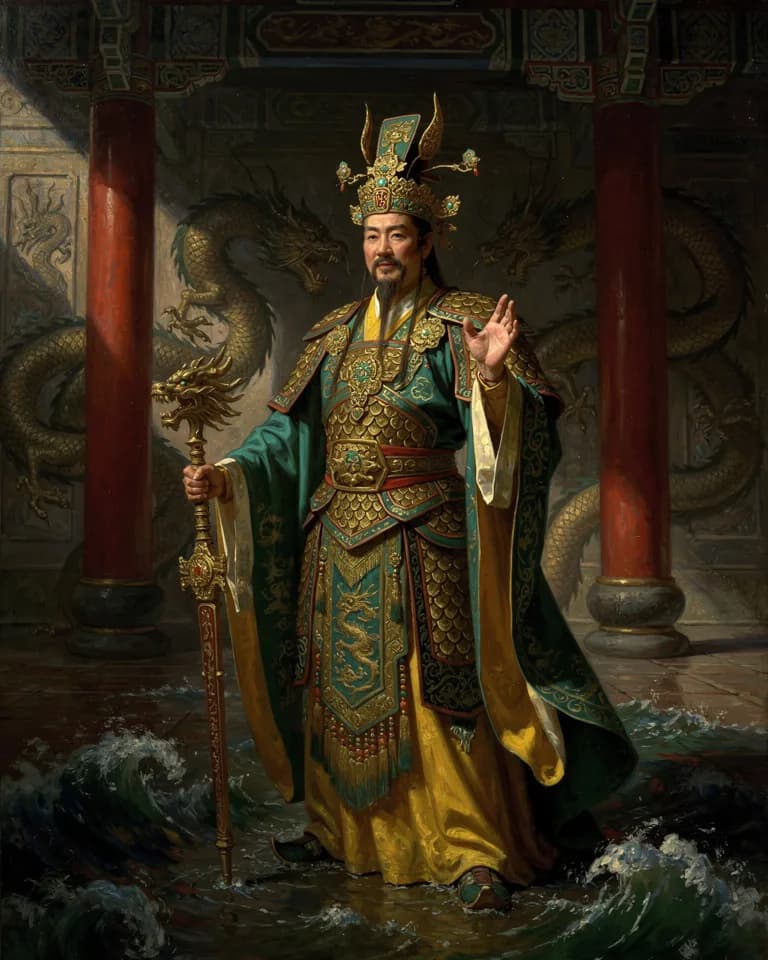
Longwang (the Dragon Kings)
Longwang (the Dragon Kings)Chinese
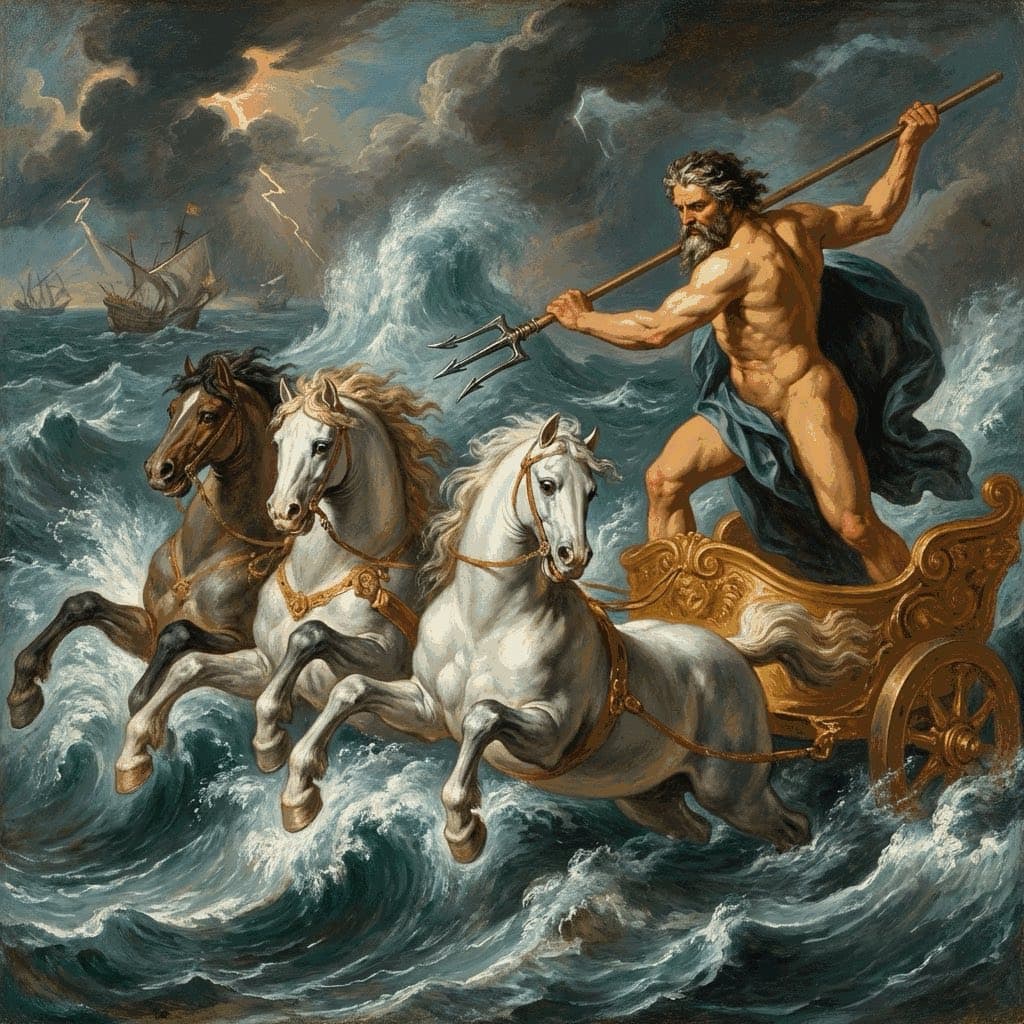
Poseidon
PoseidonGreek

Both are sovereigns of the sea who dwell in palaces beneath the waves.

At a glance

Longwang (the Dragon Kings) and Poseidon compared
Longwang (the Dragon Kings)Poseidon
TraditionChinese PantheonGreek Pantheon
Domainsseas, rivers, rain, weathersea, earthquakes, horses, storms
Symbolsdragon form, pearl, underwater crystal palace, tablet of officetrident, horse, dolphin, bull
Also calledDragon King, Dragon Kings of the Four Seas, Ao Guang (Dragon King of the Eastern Sea), Long WangNeptune

Where they meet

The atlas records no domain or symbol that Longwang (the Dragon Kings) and Poseidon share.

They are compared for the part each plays in their own tradition rather than for any attribute in common.

Where they part

Only Longwang (the Dragon Kings)

Associated with seas, rivers, rain, and weather.

Only Poseidon

Associated with sea, earthquakes, horses, and storms.

How each was worshipped

Longwang (the Dragon Kings)

Cult sites
Village Longwang temples throughout north China; Dragon King temples beside springs, wells, and rivers
Festivals
Rain prayers in drought; Dragon King's birthday observances (dates vary by region)

In drought, communities processed the Dragon King's image, offered sacrifice, and sometimes set the image in the sun to press him to send rain.

Poseidon

Cult sites
Sanctuary of Poseidon at Isthmia; Temple of Poseidon at Sounion; Onchestos in Boeotia
Festivals
Isthmian Games; Posideia

Horses, earthquakes, and the drowned coast are his working signs. Isthmia held games under his name. A bull often went to the sea. Inland Boeotia kept him as a horse god, not only a sailor's patron.

The two figures

Chinese Pantheon

Longwang (the Dragon Kings)

The dragon kings who rule the waters and send the rain, most famously the Dragon Kings of the Four Seas led by Ao Guang of the Eastern Sea. They govern as officials of the heavenly bureaucracy under the Jade Emperor, and their temples stood in villages across China wherever farmers prayed for rain.

The Dragon Kings grew from the ancient Chinese association of dragons with water and rain, combined after the arrival of Buddhism with the naga kings of Indian scripture. Popular religion made them officials appointed by the Jade Emperor over each body of water.

The belief that dragons control water and rain is ancient in China. With the arrival of Buddhism, the Indian naga kings of the sutras, serpent rulers of underwater palaces, merged with native dragon lore to produce the Dragon King (Longwang). By late imperial times every sea, river, lake, and well could have its dragon king, and the most prominent were the four kings of the Eastern, Southern, Western, and Northern Seas.

Read the full Longwang (the Dragon Kings) entry

Greek Pantheon

Poseidon

God of the sea, earthquakes, and horses. Brother of Zeus and Hades, ruler of the oceans and all waters.

Poseidon rules the vast oceans, earthquakes ("Earth-Shaker"), and horses. He is a moody and tempestuous god, much like the sea itself. Sailors prayed to him for safe passage, often sacrificing horses or bulls to appease his wrath.

Read the full Poseidon entry
About this comparison

Comparisons pair figures that play a similar role across traditions, or that the myths connect within one. A shared role does not, by itself, establish a shared origin.