Chinese Pantheon
Longwang (the Dragon Kings)
龍王(Lóngwáng)
Also known as Dragon King, Dragon Kings of the Four Seas, Ao Guang (Dragon King of the Eastern Sea), Long Wang
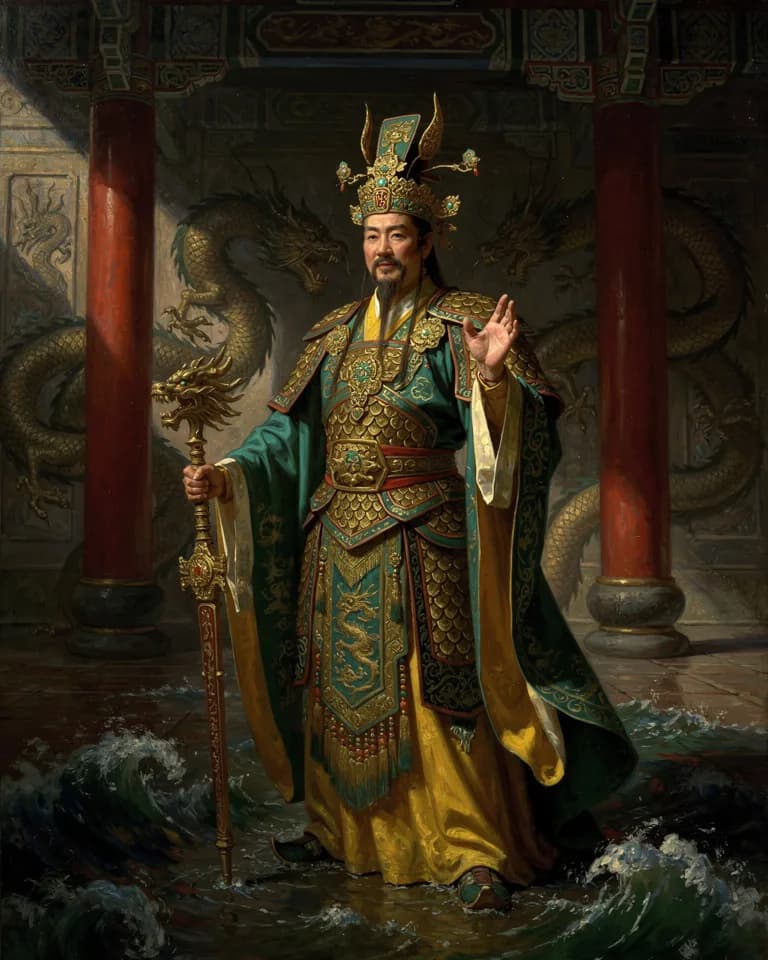
- seas
- rivers
- rain
- weather
The dragon kings who rule the waters and send the rain, most famously the Dragon Kings of the Four Seas led by Ao Guang of the Eastern Sea. They govern as officials of the heavenly bureaucracy under the Jade Emperor, and their temples stood in villages across China wherever farmers prayed for rain.
About Longwang (the Dragon Kings)
Rulers of the Waters
The belief that dragons control water and rain is ancient in China. With the arrival of Buddhism, the Indian naga kings of the sutras, serpent rulers of underwater palaces, merged with native dragon lore to produce the Dragon King (Longwang). By late imperial times every sea, river, lake, and well could have its dragon king, and the most prominent were the four kings of the Eastern, Southern, Western, and Northern Seas.
Officials of Heaven
In popular religion the Dragon Kings serve in the celestial bureaucracy. They send rain on the Jade Emperor's command and can be punished for disobedience. Journey to the West opens its episode of the Tang emperor with the Jing River Dragon King, who alters the amount of rain ordered by Heaven and is condemned to execution.
Ao Guang and the Monkey King
The novel's most famous scene has Sun Wukong visit Ao Guang's crystal palace beneath the Eastern Sea in search of a weapon. None suffices until he lifts the iron pillar once used to measure the sea, which shrinks at his command into the Ruyi Jingu Bang. The humiliated Dragon Kings complain to the Jade Emperor, one of the provocations that lead to Heaven's campaign against Sun Wukong. Ao Guang also appears in Investiture of the Gods, where the boy Nezha kills his son.
Rain Temples
Longwang temples were among the most common village shrines in north China. In droughts, communities carried his image in procession, and officials themselves performed rain prayers.
Origin story
The Dragon Kings grew from the ancient Chinese association of dragons with water and rain, combined after the arrival of Buddhism with the naga kings of Indian scripture. Popular religion made them officials appointed by the Jade Emperor over each body of water.
Across traditions
Parallel figures
Figures who play a role like Longwang (the Dragon Kings)'s in other traditions.
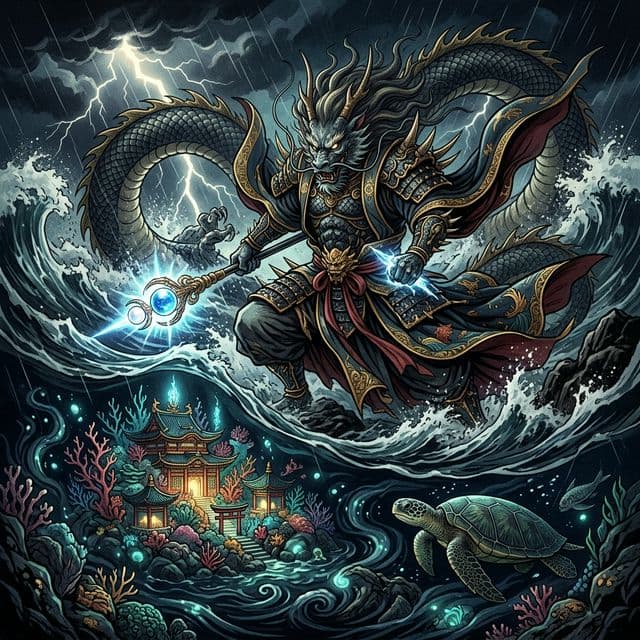 JapaneseRyujin
The Chinese Dragon Kings directly influenced Japanese Ryujin mythology through cultural exchange
Compare Longwang (the Dragon Kings) and Ryujin side by side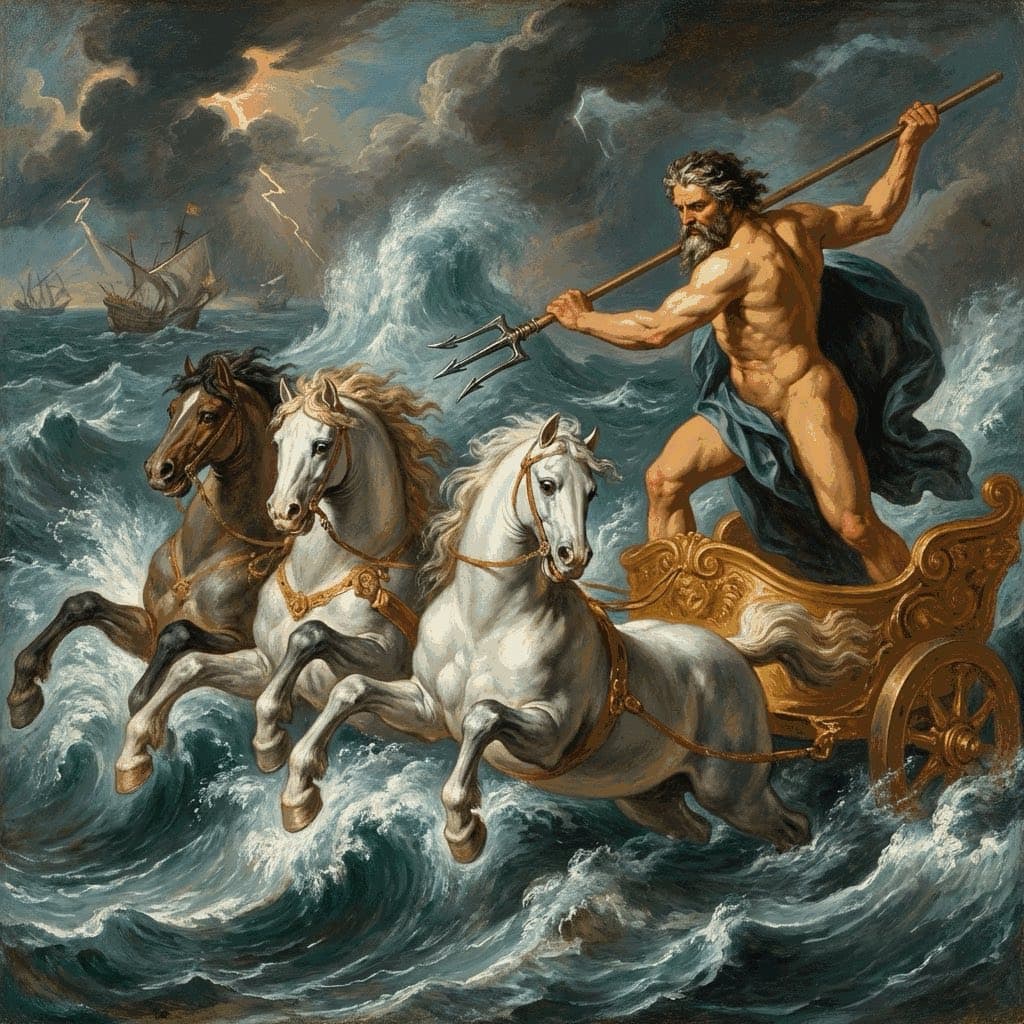 GreekPoseidon
Both are sovereigns of the sea who dwell in palaces beneath the waves
Compare Longwang (the Dragon Kings) and Poseidon side by side
Worship and cult
Temples, festivals, and practices recorded for Longwang (the Dragon Kings)
In drought, communities processed the Dragon King's image, offered sacrifice, and sometimes set the image in the sun to press him to send rain.
Sacred sites
- Village Longwang temples throughout north China
- Dragon King temples beside springs, wells, and rivers
Festivals
- Rain prayers in drought
- Dragon King's birthday observances (dates vary by region)
Sources and further reading
Source notes
These references are recorded in the catalog. Their passage wording and translation have not been checked, so quotations are not displayed here.
- Wu Cheng'en, Journey to the West, ch. 3 (paraphrase)
- Wu Cheng'en, Journey to the West, ch. 9-10 (paraphrase)
About this entry
By Elizabeth Stein for Mythos Atlas. About the author. Editorial notes are grounded in the site's cited sources and can be challenged through the contact page.
Parallels are editorial comparisons across traditions: a shared role does not, by itself, establish a shared origin.
Genealogy
Family tree
Longwang (the Dragon Kings)'s parents, consorts, children and rivals, as recorded in the atlas.