African TraditionsCreature
Adze
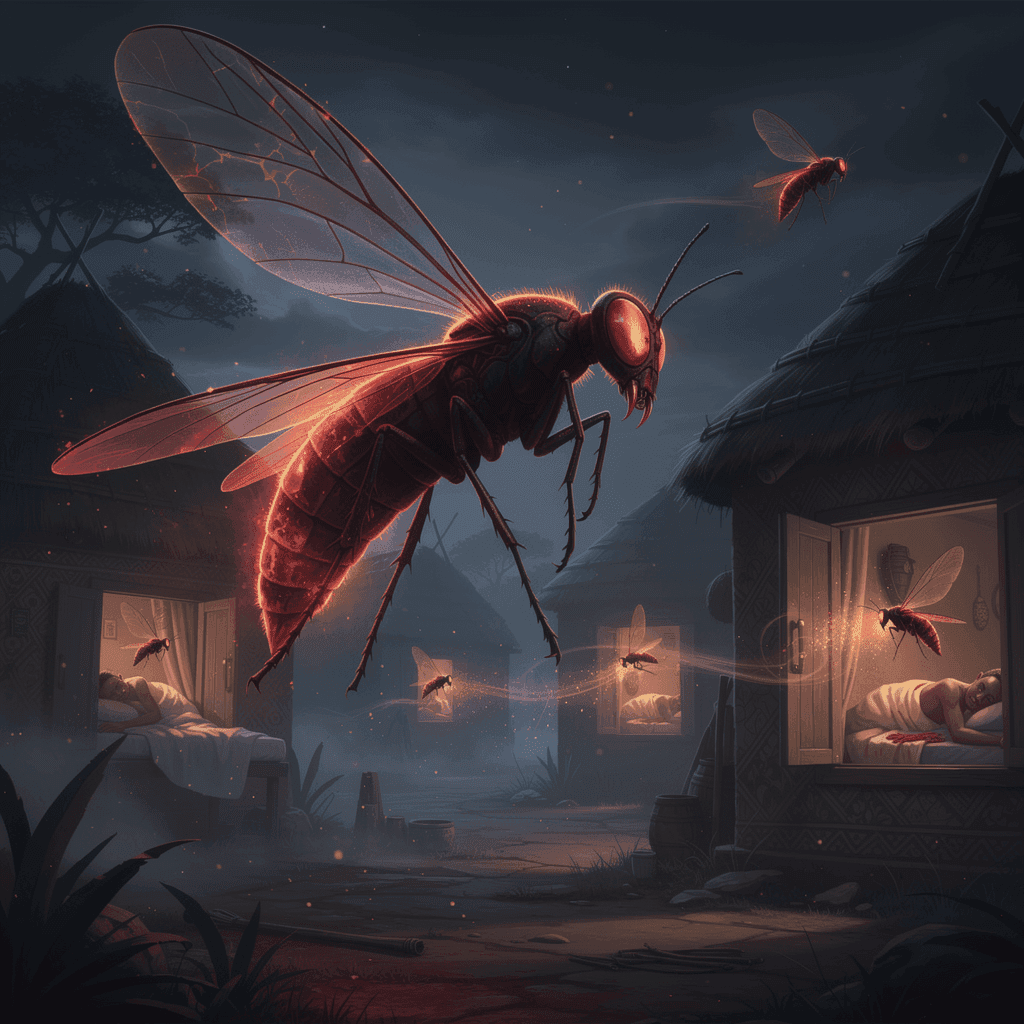
- Firefly Transformation
- Phasing Through Barriers
- Blood Draining
- Possession
A vampiric creature from Ewe folklore of Ghana and Togo that takes the form of a firefly. In its insect form, it can pass through any barrier and drink the blood of sleeping victims without waking them. If captured, it transforms into a humanoid form with hunched posture and talons.
About Adze
Firefly that Drinks
Ewe-speaking communities in Ghana and Togo know the adze as a witch's familiar that flies as a light, enters houses, and sucks blood or life. Captured, it may show a humanoid form. The notices are ethnographic (Spieth and later), not a written epic.
It sits with other West African night-harm beings; it is not a European vampire with a cape.
The firefly and the witch
In Ewe belief described by Jakob Spieth in Die Ewe-Stämme (1906) and later ethnographers, adze is associated with witchcraft: a witch is thought to possess or send an adze, which enters a home as a firefly to feed on the blood of children or on palm oil and coconut water. Captured, it can take a human shape. Ideas about adze have been used to explain illness, and accusations have had serious social consequences.
Quick answers about Adze
- What is Adze?
- A vampiric creature from Ewe folklore of Ghana and Togo that takes the form of a firefly. In its insect form, it can pass through any barrier and drink the blood of sleeping victims without waking them. If captured, it transforms into a humanoid form with hunched posture and talons.
- Where does Adze live?
- The atlas lists Adze's habitat as Villages and Forest Edges.
- What abilities does Adze have?
- The atlas lists these abilities for Adze: Firefly Transformation, Phasing Through Barriers, Blood Draining, and Possession.
Sources and further reading
Source notes
These references are recorded in the catalog. Their passage wording and translation have not been checked, so quotations are not displayed here.
- Ewe oral tradition (Ghana / Togo ethnographic record)
About this entry
By Elizabeth Stein for Mythos Atlas. About the author. Editorial notes are grounded in the site's cited sources and can be challenged through the contact page.
The danger rating is an editorial shorthand for how the myths portray the creature, not a claim made by the sources.
Keep exploring
One myth a week, with its sources in a short email. The sign-up form is just below.