Africa and the African diaspora
African Traditions
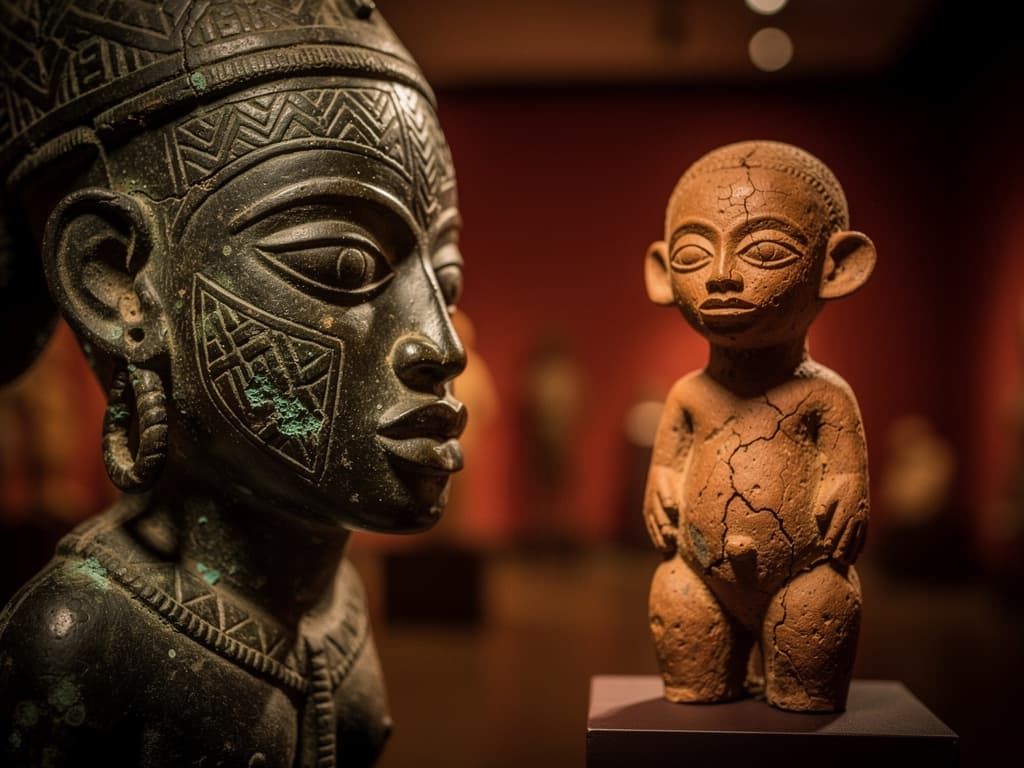
A regional collection, not a pantheon: beings from African traditions that do not yet have their own entry on this site. Yoruba orisha and Akan figures such as Nyame and Anansi now have their own pages.
History and context
A collection, not a pantheon
This page used to gather Yoruba orisha, Akan figures, and beings from several other African peoples under one heading. That grouping implied a shared religion that never existed, so the two best-documented traditions now have their own entries, and this page keeps only what remains: creatures and spirits from peoples whose traditions this site has not yet covered in depth. Nothing here implies a common origin, date, or cosmology.
Yoruba traditions
The orisha of the Yoruba of southwestern Nigeria and neighbouring Benin, with the creation at Ile-Ife, Ifa divination, and the diaspora religions that grew from them, are now on the Yoruba Tradition page.
Akan storytelling
Nyame, Asase Yaa, the river abosom, and Kwaku Ananse the spider, known largely through R. S. Rattray's recordings of Asante tellers in the 1920s, are now on the Akan Tradition page.
What stays here
The beings still listed on this page come from separate peoples and should be read that way: the tikoloshe from Zulu and Xhosa belief in South Africa, the popobawa from late-20th-century reports on Zanzibar and Pemba, the ninki-nanka from Mandinka and neighbouring traditions of the Gambia and Senegal, the adze from Ewe belief in Ghana and Togo, and the eloko from the Mongo of the Congo basin. Mami Wata is the exception: a water spirit venerated across West and Central Africa and the diaspora, whose modern image owes much to 19th- and 20th-century trade and print culture. Each entry names the people it belongs to, and none should be read as Yoruba or Akan.
Cosmology
Many Traditions, No Single Cosmos
This collection gathers beings from separate African peoples. They share no cosmology; the grouping below only sorts them by the places their own traditions associate them with.
 Adze
 Eloko
 Popobawa
 Mami Wata
 Tikoloshe
 Ninki Nanka
Sources
Works cited
UNESCO
Akua ’ba figure: Asante-Akan cultural context
The Metropolitan Museum of Art
R. S. Rattray, collector and translator · Tale 17 · pp. 54–59
About this guide
By Elizabeth Stein for Mythos Atlas. About the author. Editorial notes are grounded in the site's cited sources and can be challenged through the contact page.
The catalog period is the span of the sources this atlas draws on, not the age of the tradition itself. Many traditions are older than their first written record, and many are still practised.
Keep exploring
One myth a week, with its sources in a short email. The sign-up form is just below.