African TraditionsCreature
Tikoloshe
- Invisibility
- Size Manipulation
- Dream Invasion
- Curse Carrying
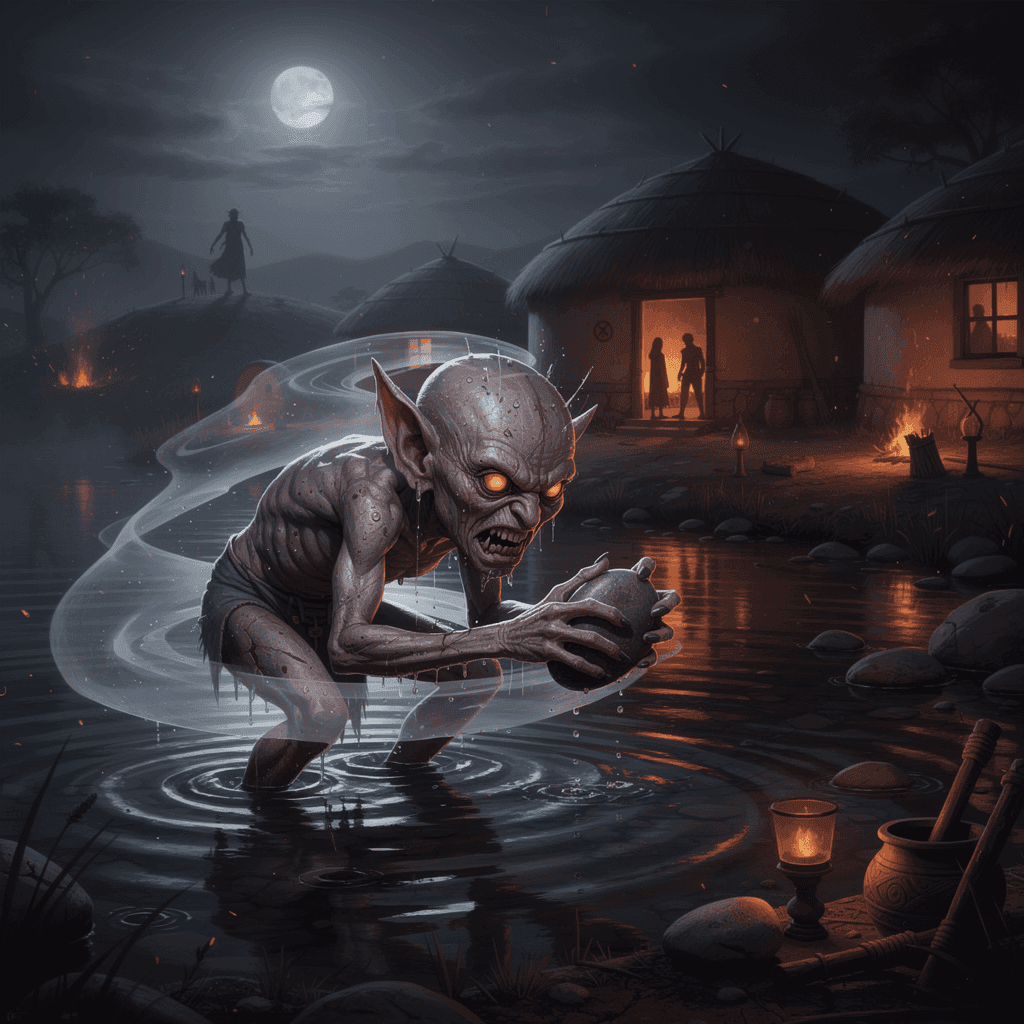
A mischievous and malevolent dwarf-like water spirit from Zulu and Xhosa mythology. Created by witches to cause harm, it can become invisible by drinking water or swallowing a pebble. People traditionally raise their beds on bricks to avoid its reach during the night.
About Tikoloshe
The Short Spirit under the Bed
Among Zulu and Xhosa speakers the tokoloshe / tikoloshe is a small water-linked being witches send to harm, or a household nuisance kept at bay by raising the bed on bricks. The record is oral and mission-era ethnography, not an epic.
Invisibility via a pebble or water is a common motif. The notices stay southern African; they are not a pan-continental demon.
In modern life
The tikoloshe remains widely known in South Africa, where raising beds on bricks is still associated with protection against it, and newspapers regularly report accusations involving it. That continuing presence has made it a subject for writers and artists, and it is part of the wider concern with witchcraft (ubuthakathi) in southern African communities rather than a figure of old stories alone.
Quick answers about Tikoloshe
- What is Tikoloshe?
- A mischievous and malevolent dwarf-like water spirit from Zulu and Xhosa mythology. Created by witches to cause harm, it can become invisible by drinking water or swallowing a pebble. People traditionally raise their beds on bricks to avoid its reach during the night.
- Where does Tikoloshe live?
- The atlas lists Tikoloshe's habitat as Near Water Sources and Human Dwellings.
- What abilities does Tikoloshe have?
- The atlas lists these abilities for Tikoloshe: Invisibility, Size Manipulation, Dream Invasion, and Curse Carrying.
Sources and further reading
Source notes
These references are recorded in the catalog. Their passage wording and translation have not been checked, so quotations are not displayed here.
- Zulu and Xhosa oral tradition (ethnographic record)
About this entry
By Elizabeth Stein for Mythos Atlas. About the author. Editorial notes are grounded in the site's cited sources and can be challenged through the contact page.
The danger rating is an editorial shorthand for how the myths portray the creature, not a claim made by the sources.
Keep exploring
One myth a week, with its sources in a short email. The sign-up form is just below.