African TraditionsCreature
Popobawa
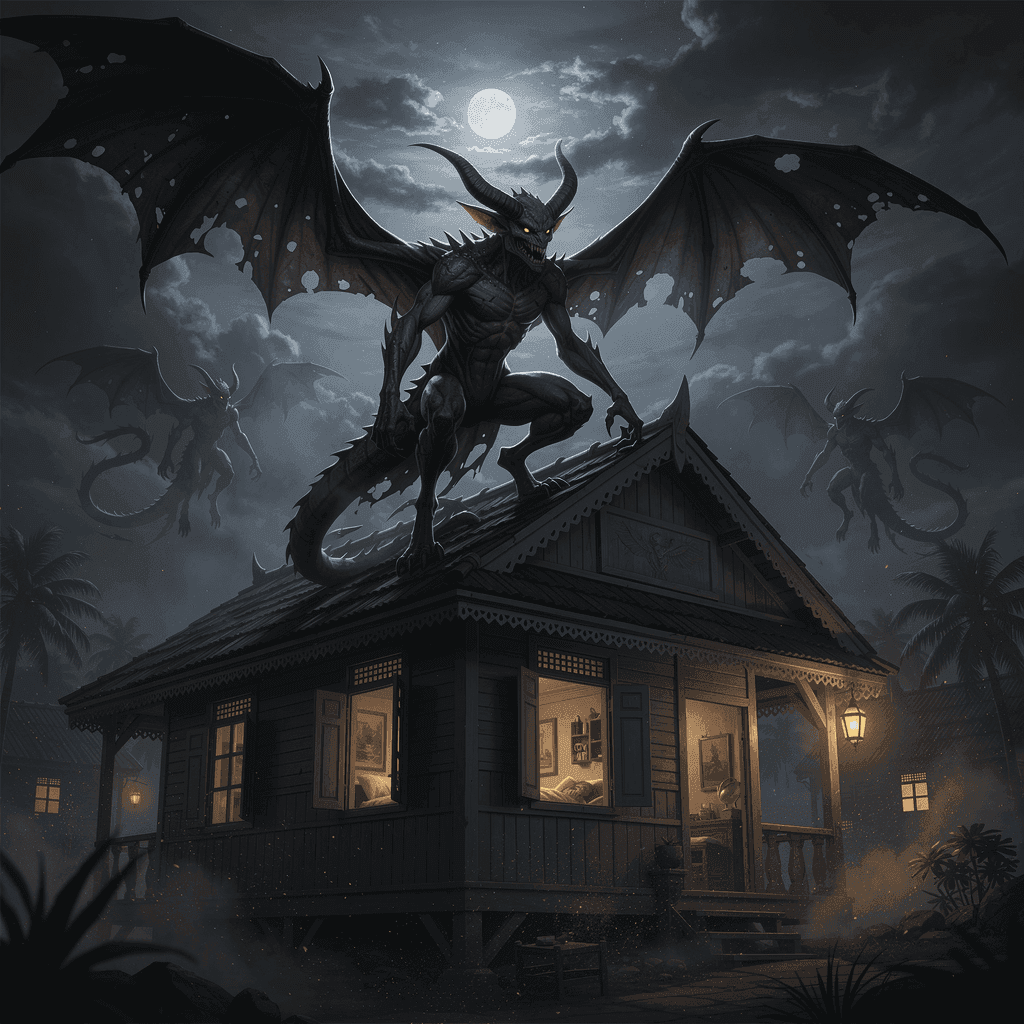
- Shapeshifting
- Night Attack
- Fear Inducement
- Supernatural Strength
A fearsome shapeshifting spirit from Zanzibar and the Swahili coast whose name means 'bat wing' in Swahili. It attacks people in their homes at night, particularly targeting skeptics who deny its existence. Victims are compelled to tell others of their encounter, spreading terror through communities.
About Popobawa
Bat-Wing, Modern Panic
Popobawa ('bat wing') is a Zanzibari incubus-panic documented especially from the 1960s and the 1995 outbreak. Victims report a shapeshifting night attacker and feel compelled to speak. There is no precolonial chronicle; the honest source is contemporary oral report and anthropology.
It belongs to modern Swahili-coast experience, not a recovered temple hymn. The 1995 panic is the thickest paper trail.
Reported symptoms
Anthropologists who studied the 1995 outbreak, among them Katrina Thompson, note that reports clustered on Pemba and Unguja during periods of political tension, and that some residents slept outside in groups to avoid attack. Explanations offered by researchers range from sleep paralysis to social anxiety expressed through a shared idiom; residents themselves often link the popobawa to sorcery.
Quick answers about Popobawa
- What is Popobawa?
- A fearsome shapeshifting spirit from Zanzibar and the Swahili coast whose name means 'bat wing' in Swahili. It attacks people in their homes at night, particularly targeting skeptics who deny its existence. Victims are compelled to tell others of their encounter, spreading terror through communities.
- Where does Popobawa live?
- The atlas lists Popobawa's habitat as Zanzibar and Coastal East Africa.
- What abilities does Popobawa have?
- The atlas lists these abilities for Popobawa: Shapeshifting, Night Attack, Fear Inducement, and Supernatural Strength.
Sources and further reading
Source notes
These references are recorded in the catalog. Their passage wording and translation have not been checked, so quotations are not displayed here.
- Zanzibar oral report (ethnographic record)
About this entry
By Elizabeth Stein for Mythos Atlas. About the author. Editorial notes are grounded in the site's cited sources and can be challenged through the contact page.
The danger rating is an editorial shorthand for how the myths portray the creature, not a claim made by the sources.
Keep exploring
One myth a week, with its sources in a short email. The sign-up form is just below.