Japanese PantheonCreature
Kappa
- Superhuman Strength (in water)
- Swimming Mastery
- Bone Extraction
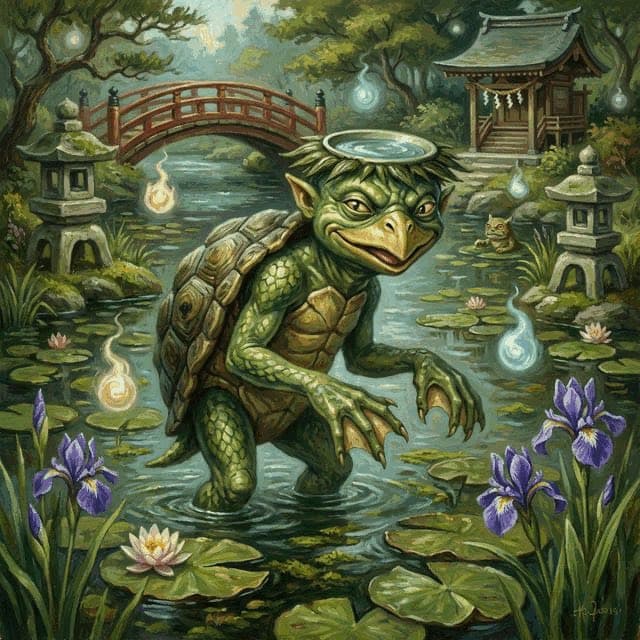
River imps with turtle shells, beaked faces, and a water-filled depression atop their heads. They are cunning tricksters who challenge travelers to sumo wrestling and can be defeated through politeness.
About Kappa
The River Child with a Dish of Water
Kappa appear in Edo encyclopedias and local river law: a child-sized turtle-backed being whose strength lives in the water-filled sara on its head. Bow, it bows, the water spills, it weakens. They drown horses, steal shirikodama, and keep cucumber offerings.
The corpus is folkloric and regional, not a Kojiki chapter.
Cucumbers and bargains
Kappa are said to love cucumbers, which is why cucumber-filled sushi rolls are called kappamaki, and in many local stories a captured kappa, spared, teaches its captor bone-setting or medicine, or promises never to drown anyone in that river again. Warning signs featuring kappa still stand beside rivers and ponds in parts of Japan, a continuation of the creature's old role as a warning to children about deep water.
Quick answers about Kappa
- What is Kappa?
- River imps with turtle shells, beaked faces, and a water-filled depression atop their heads. They are cunning tricksters who challenge travelers to sumo wrestling and can be defeated through politeness.
- Where does Kappa live?
- The atlas lists Kappa's habitat as Rivers and Ponds.
- What abilities does Kappa have?
- The atlas lists these abilities for Kappa: Superhuman Strength (in water), Swimming Mastery, and Bone Extraction.
Sources and further reading
Source notes
These references are recorded in the catalog. Their passage wording and translation have not been checked, so quotations are not displayed here.
- Wakan Sansai Zue; Japanese river folklore
About this entry
By Elizabeth Stein for Mythos Atlas. About the author. Editorial notes are grounded in the site's cited sources and can be challenged through the contact page.
The danger rating is an editorial shorthand for how the myths portray the creature, not a claim made by the sources.
Keep exploring
One myth a week, with its sources in a short email. The sign-up form is just below.