Japanese PantheonCreature
Tengu
- Martial Mastery
- Flight
- Wind Control
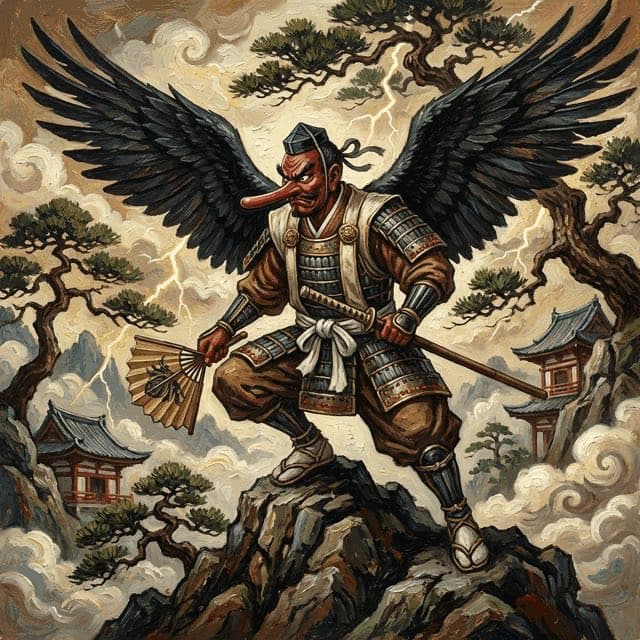
Supernatural beings with both avian and human features, known for their red faces and long noses. Once considered harbingers of war, they became protectors of mountains and masters of martial arts.
About Tengu
From Kite-Demon to Mountain Tutor
Early tengu (Nihon ryōiki, Heike) are disruptive kite-goblins who possess monks and start wars. Later yamabushi-tengu of Mt. Kurama teach sword work to Yoshitsune. The long nose and red face are medieval iconography, not Kojiki fauna.
Danger sits in the middle: they punish arrogance more often than they eat travelers.
Sōjōbō and Kurama
Tradition names Sōjōbō, the great tengu of Mount Kurama north of Kyoto, as the teacher who trained the young Minamoto no Yoshitsune in swordsmanship. Tengu were associated with the mountain ascetics called yamabushi, whose dress they share in art. Two main forms appear: the crow tengu (karasu-tengu) with a beak, and the long-nosed red-faced daitengu, the form fixed by later masks and prints.
Quick answers about Tengu
- What is Tengu?
- Supernatural beings with both avian and human features, known for their red faces and long noses. Once considered harbingers of war, they became protectors of mountains and masters of martial arts.
- Where does Tengu live?
- The atlas lists Tengu's habitat as Mountain Forests.
- What abilities does Tengu have?
- The atlas lists these abilities for Tengu: Martial Mastery, Flight, and Wind Control.
Sources and further reading
Source notes
These references are recorded in the catalog. Their passage wording and translation have not been checked, so quotations are not displayed here.
- Nihon ryoki; Heike Monogatari
About this entry
By Elizabeth Stein for Mythos Atlas. About the author. Editorial notes are grounded in the site's cited sources and can be challenged through the contact page.
The danger rating is an editorial shorthand for how the myths portray the creature, not a claim made by the sources.
Keep exploring
One myth a week, with its sources in a short email. The sign-up form is just below.