Hindu PantheonCreature
Naga

- Shapeshifting
- Water Control
- Treasure Guardianship
Divine serpent beings who rule the underworld kingdom of Patala. They guard treasures, control rain and rivers, and can take human or serpent form at will.
About Naga
Serpent Lords of Patala
Nagas are a people more than a single beast: Vasuki, Shesha, Takshaka. They hold Patala, marry humans, and guard jewels. The Mahabharata burns them in Janamejaya's snake-sacrifice; the Bhagavata Purana seats Shesha under Vishnu. Buddhist and Jain canons keep their own naga-kings.
Danger varies with the tale. Some nagas rain; some bite kings.
Churning and the snake-sacrifice
The naga king Vasuki serves as the rope in the churning of the ocean of milk, wrapped around Mount Mandara. The Mahabharata opens with the snake-sacrifice of King Janamejaya, avenging his father Parikshit's death from Takshaka's bite, until the sage Astika, himself half-naga, persuades him to stop it. In Buddhist tradition the naga Mucalinda shelters the meditating Buddha from a storm with his hood.
Quick answers about Naga
- What is Naga?
- Divine serpent beings who rule the underworld kingdom of Patala. They guard treasures, control rain and rivers, and can take human or serpent form at will.
- Where does Naga live?
- The atlas lists Naga's habitat as Patala (Underworld).
- What abilities does Naga have?
- The atlas lists these abilities for Naga: Shapeshifting, Water Control, and Treasure Guardianship.
In the museums
Naga in art
Real objects in public collections, released into the public domain by the museums that hold them. Dates refer to when each object was made. Objects made within the tradition come first, later depictions after.
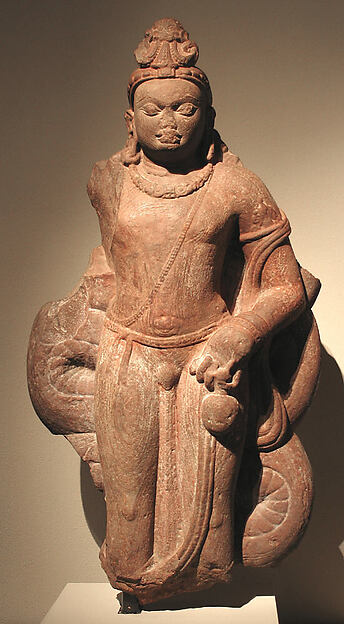 (opens the museum record)
Ancient object
Standing Nagaraja (Serpent King) (opens the museum record)
A Gupta-period red sandstone figure the museum titles Standing Nagaraja (Serpent King), a divine serpent-being whose cobra hood rises behind his head.
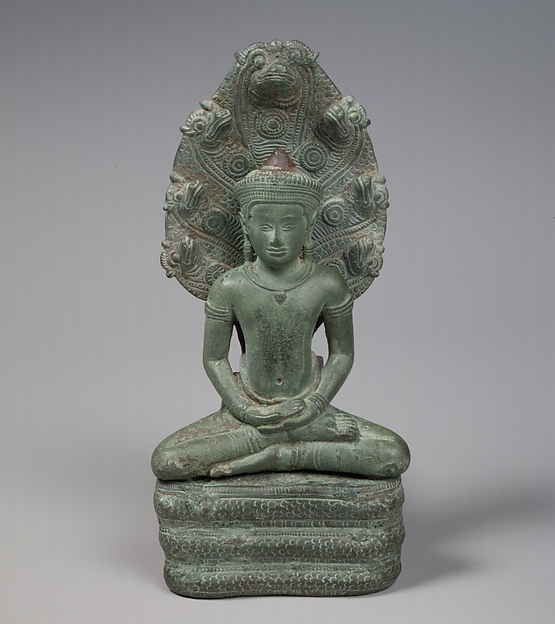 (opens the museum record)
Ancient object
Buddha Sheltered by a Naga (opens the museum record)
A Khmer bronze the museum titles Buddha Sheltered by a Naga, showing the multi-headed serpent Mucalinda protecting the meditating Buddha, a well-known episode from Buddhist legend.
Sources and further reading
Source notes
These references are recorded in the catalog. Their passage wording and translation have not been checked, so quotations are not displayed here.
- Mahabharata, Adi Parva
About this entry
By Elizabeth Stein for Mythos Atlas. About the author. Editorial notes are grounded in the site's cited sources and can be challenged through the contact page.
The danger rating is an editorial shorthand for how the myths portray the creature, not a claim made by the sources.
Keep exploring
One myth a week, with its sources in a short email. The sign-up form is just below.