Roman PantheonSacred Site
Palatine Hill and the Lupercal
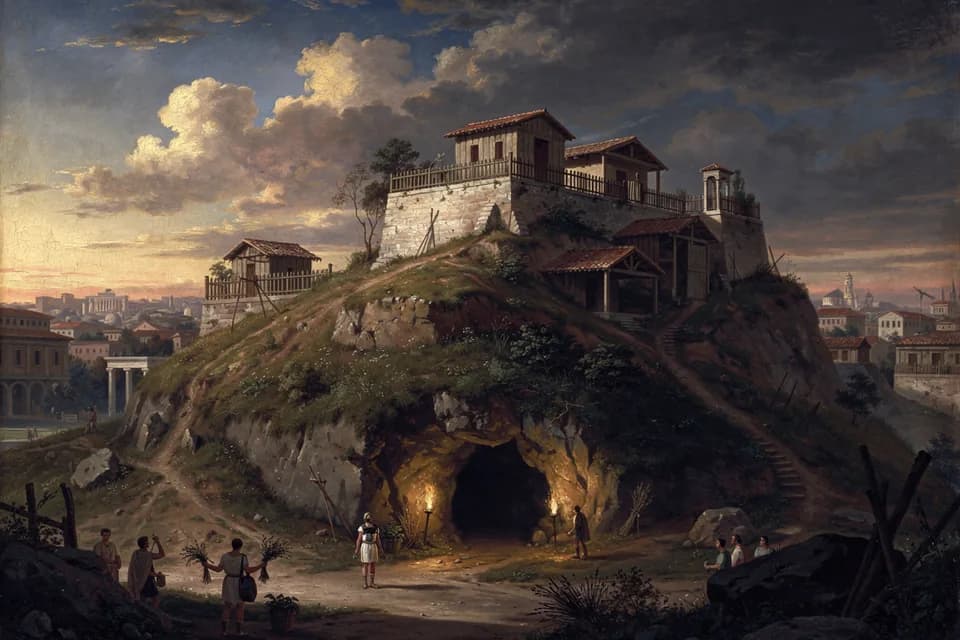
The hill where Romulus founded his city, with the Lupercal cave at its foot where tradition said the she-wolf nursed Romulus and Remus, and where the Lupercalia began each February.
About Palatine Hill and the Lupercal
Romulus's hill
In Livy's account (Book 1), the twins Romulus and Remus, exposed by order of the usurping king Amulius, are washed ashore at the foot of the Palatine, where a she-wolf finds and nurses them in a cave, the Lupercal. Grown, they quarrel over where to found their city; Romulus takes the auspices from the Palatine, fortifies it, and kills Remus when he leaps over the new wall. Rome's oldest traditions of kingship cling to the hill, and a hut said to be Romulus's own was preserved and repaired there into imperial times.
The Lupercalia
On 15 February the Luperci, young men in goatskins, ran from the Lupercal around the Palatine, striking those they met with thongs of hide, a rite believed to bring fertility. Ovid explains it in the Fasti (Book 2), and Mark Antony famously offered Caesar a crown while running as a Lupercus in 44 BCE.
House of emperors
Augustus chose to live on the Palatine beside Romulus's hut and the temple of Apollo, and later emperors built their palaces there, which is why the word palace comes from its name. A decorated underground chamber found in 2007 was proposed as the Lupercal; that identification is disputed.
On the map
Palatine Hill and the Lupercal among other places of the Roman Pantheon.
Sources and further reading
Source notes
These references are recorded in the catalog. Their passage wording and translation have not been checked, so quotations are not displayed here.
- Livy, Ab Urbe Condita 1.4–7
- Ovid, Fasti, Book 2
About this entry
By Elizabeth Stein for Mythos Atlas. About the author. Editorial notes are grounded in the site's cited sources and can be challenged through the contact page.
Coordinates mark where the myths place a site, or where the tradition locates it today. Mythic realms are left off the map or marked as symbolic placements.