Mythos Atlas

Side by sideRivals

Huallallo Carhuincho vs Pariacaca

Huallallo Carhuincho
Huallallo CarhuinchoInca and Andean
Pariacaca
PariacacaInca and Andean

Huallallo Carhuincho and Pariacaca are recorded as rivals in the Inca and Andean Tradition.

At a glance

Huallallo Carhuincho and Pariacaca compared
Huallallo CarhuinchoPariacaca
TraditionInca and Andean TraditionInca and Andean Tradition
Domainsfire, the hot lowland (yunca) world, an earlier agerain and storm, irrigation water, the snow mountain
Symbolsfire, the eaten child, the Amaru serpentfive eggs, five falcons, the snow peak, a golden staff
Also calledHuallallo Caruincho, Caruyuchu HuayalloParia Caca

Where they meet

The atlas records no domain or symbol that Huallallo Carhuincho and Pariacaca share.

They are compared because of how the myths connect them, not because of what they rule.

Where they part

Only Huallallo Carhuincho

Associated with fire, the hot lowland (yunca) world, and an earlier age.

Only Pariacaca

Associated with rain and storm, irrigation water, and the snow mountain.

How each was worshipped

Huallallo Carhuincho

The Huarochirí Manuscript associates him with the Huanca people of the Jauja valley; it gives no details of rites performed for him.

Pariacaca

Cult sites
Pariacaca mountain itself, on the watershed between the Lima and Junín regions of Peru, and shrines to his children and companions throughout Huarochirí province.
Festivals
An annual festival of Pariacaca in which the Checa and other ayllus gathered with offerings, described in the Huarochirí Manuscript (ch. 9).

Offerings of llamas, coca, and maize beer; the stone forms of figures in his stories, such as Choque Suso at the head of the Cupara irrigation channel, received their own offerings into the seventeenth century, as Ávila complains.

The two figures

Inca and Andean Tradition

Huallallo Carhuincho

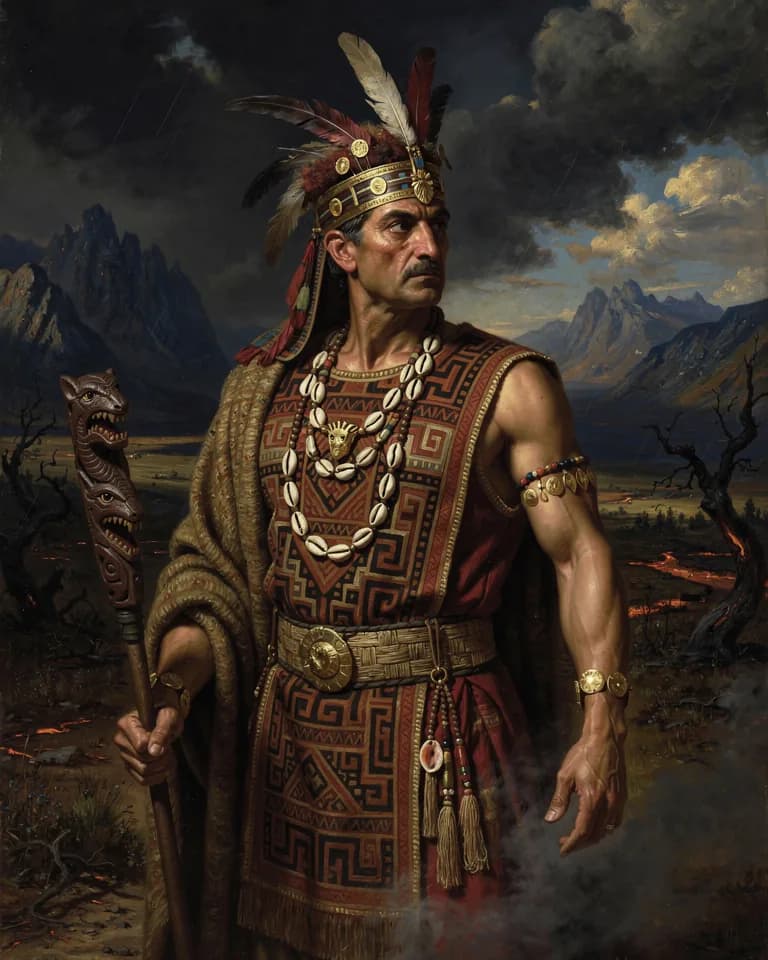
The fearsome earlier god of the Huarochirí stories, who ruled a hot lowland world and demanded one of every two children as food, until Pariacaca's storms drove him east into the Antis lowlands.

No origin is told; he is simply lord of the land after defeating the huacas Yanamca and Tutañamca (Huarochirí Manuscript, ch. 1).

The Huarochirí material opens with a world before the present one, when the province was hot lowland (*yunca*) country, the dead returned to life on the fifth day, and crops ripened in five days. Its lord was Huallallo Carhuincho, who had defeated the still earlier huacas Yanamca and Tutañamca. Ávila's retelling (1608) says he ordered that no woman should bear more than two children, one of whom was to be given him to eat.

Read the full Huallallo Carhuincho entry

Inca and Andean Tradition

Pariacaca

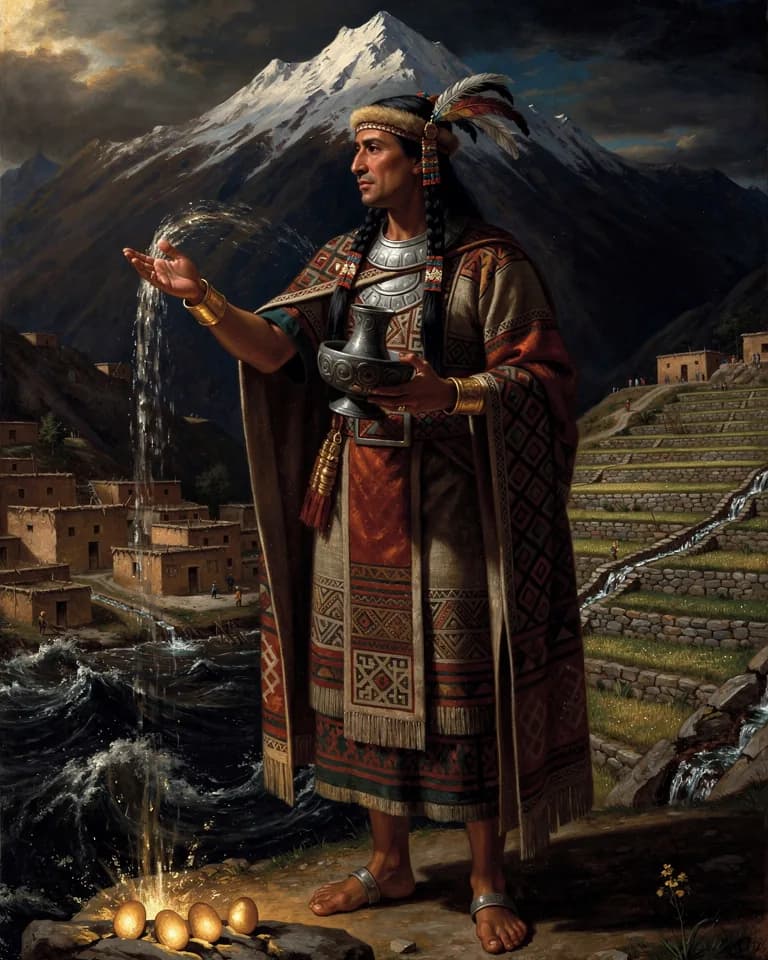
The snow-mountain god of the Huarochirí Manuscript, born from five eggs on Mount Condorcoto, who drowns a village that refused him drink, brings irrigation water to the fields of Cupara, and drives the fire-eating Huallallo Carhuincho out of the highlands.

Pariacaca appears on the mountain Condorcoto as five eggs, which hatch into five falcons and then five men (Huarochirí Manuscript, chs. 5-6).

The Quechua Huarochirí Manuscript (c. 1598-1608) makes Pariacaca the central huaca of the Checa and other peoples of Huarochirí province, in the mountains east of Lima. He appears on the mountain Condorcoto as five eggs; the eggs hatch as five falcons that become five persons, and the manuscript itself debates whether these were five brothers or Pariacaca and his children (ch. 16). His son Huatyacuri, a poor man who eats only half-cooked potatoes, prepares his coming by humbling a rich lord who claimed to be a god.

Read the full Pariacaca entry
About this comparison

Comparisons pair figures that play a similar role across traditions, or that the myths connect within one. A shared role does not, by itself, establish a shared origin.