Chinese PantheonCreature
Bai Ze
- Omniscient Lore
- Spirit Identification
- Counsel
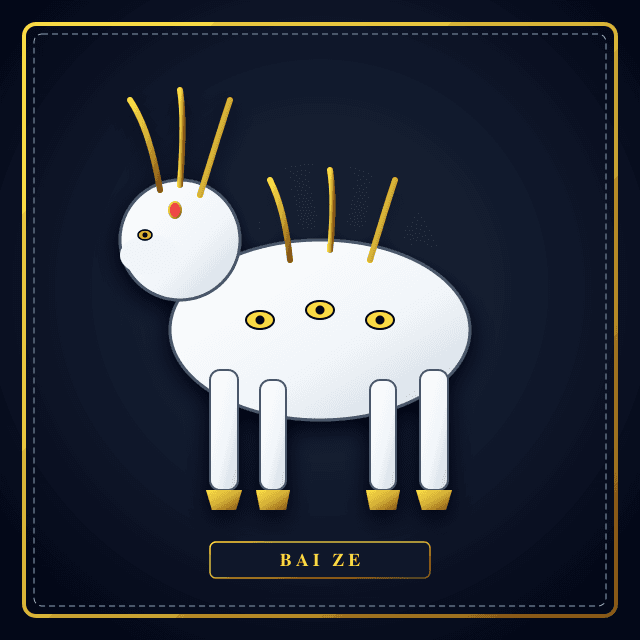
A wise white beast that taught the Yellow Emperor the names and natures of all supernatural creatures, knowledge used to protect humanity from spirits.
About Bai Ze
The White Marsh Informant
Baize (hakutaku in Japan) meets the Yellow Emperor and dictates a catalogue of spirits so humans can name and ward them. The Baize tu tradition is the paper trail: an illustrated demonography, much of it lost and reconstructed from citations.
Danger 1: the beast's gift is taxonomy. Later Japanese prints keep the ox-lion face.
The illustrated catalogue
The Baize tu, 'Diagrams of the Baize', is known from Tang manuscripts found at Dunhuang and from quotations in later encyclopaedias. It gave the names and appearances of strange beings so they could be identified and dispelled. In Edo Japan, images of hakutaku were hung or carried as charms against disease and bad luck, especially in years of epidemics.
Quick answers about Bai Ze
- What is Bai Ze?
- A wise white beast that taught the Yellow Emperor the names and natures of all supernatural creatures, knowledge used to protect humanity from spirits.
- Where does Bai Ze live?
- The atlas lists Bai Ze's habitat as Holy mountains and imperial courts of legend.
- What abilities does Bai Ze have?
- The atlas lists these abilities for Bai Ze: Omniscient Lore, Spirit Identification, and Counsel.
Sources and further reading
Source notes
These references are recorded in the catalog. Their passage wording and translation have not been checked, so quotations are not displayed here.
- Baize tu tradition (Chinese demonography)
About this entry
By Elizabeth Stein for Mythos Atlas. About the author. Editorial notes are grounded in the site's cited sources and can be challenged through the contact page.
The danger rating is an editorial shorthand for how the myths portray the creature, not a claim made by the sources.
Keep exploring
One myth a week, with its sources in a short email. The sign-up form is just below.