Chinese PantheonCreature
Nian
- Seasonal Raid
- Fear Aura
- Great Strength
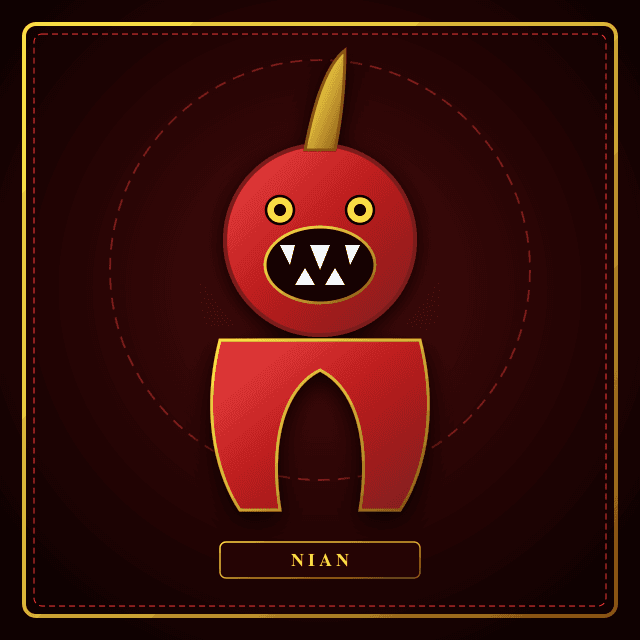
A mountain and sea beast that once terrorized villages at the turn of the year. Driven off by loud noise, fire, and the color red, the origin of Lunar New Year customs.
About Nian
The Year-Beast of Noisy Red
The nian beast that raids at the turn of the year is a late folk etiology for New Year firecrackers, red paper, and noise. It is not in the early classics. Qing and modern popular retellings fix the plot: an old man or a village learns that scarlet and sound drive the beast off. Custom comes first in the record; the named monster is later etiology.
The customs it explains
The practices the story explains are old in their own right: red paper couplets (chunlian) descend from peach-wood charms hung at the New Year in the Han dynasty, and firecrackers grew from the practice of burning bamboo to crack noisily and drive off evil. The phrase for celebrating the New Year, guo nian, 'passing the year', is folk-explained by the story as 'getting past the Nian'.
Quick answers about Nian
- What is Nian?
- A mountain and sea beast that once terrorized villages at the turn of the year. Driven off by loud noise, fire, and the color red, the origin of Lunar New Year customs.
- Where does Nian live?
- The atlas lists Nian's habitat as Mountains and coastal depths.
- What abilities does Nian have?
- The atlas lists these abilities for Nian: Seasonal Raid, Fear Aura, and Great Strength.
Sources and further reading
Source notes
These references are recorded in the catalog. Their passage wording and translation have not been checked, so quotations are not displayed here.
- Chinese New Year folk etiology (late imperial–modern)
About this entry
By Elizabeth Stein for Mythos Atlas. About the author. Editorial notes are grounded in the site's cited sources and can be challenged through the contact page.
The danger rating is an editorial shorthand for how the myths portray the creature, not a claim made by the sources.
Keep exploring
One myth a week, with its sources in a short email. The sign-up form is just below.