Roman PantheonCreature
Lares
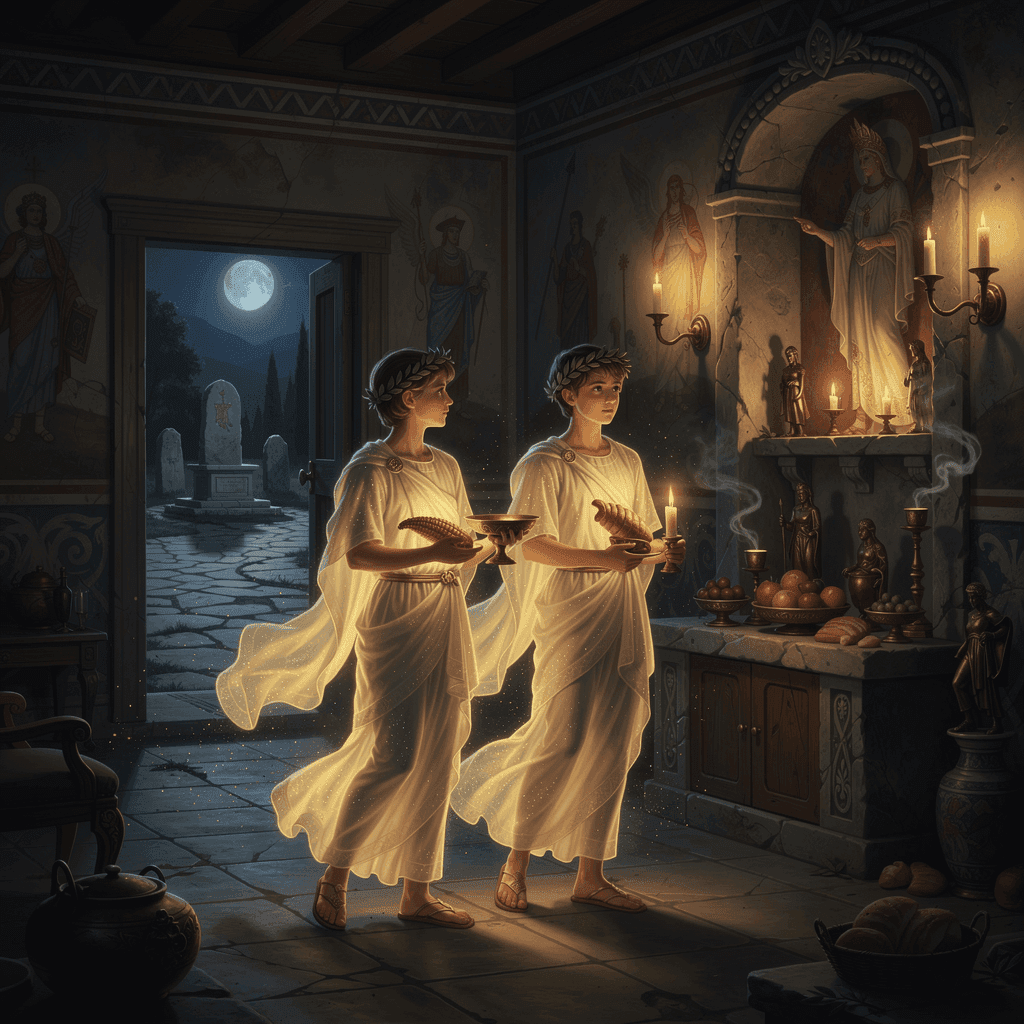
- Home Protection
- Family Blessing
- Travel Guidance
Benevolent household spirits who protected the home and family. Each Roman household maintained a lararium shrine where offerings were made to these guardian deities. They were honored at crossroads and watched over travelers.
About Lares
Gods of the Cupboard and the Crossroads
Lares are Roman household and neighborhood gods, not monsters. The lararium received daily offerings; Lares Compitales watched the compita. Plautus, Cato, and countless inscriptions treat them as protective kin-spirits. Augustan religion publicized the Lares Augusti.
Danger 1 is correct: they harm the neglected household, not the passerby as a beast would.
The Lar Familiaris
Plautus's comedy Aulularia is spoken by the household Lar himself, who has guarded a buried pot of gold for generations. Surviving lararia at Pompeii and Herculaneum show the Lares as dancing young men holding a drinking horn and a bowl, flanking the genius of the head of the household, with serpents below. Augustus reorganised the neighbourhood cult in 7 BCE, pairing the Lares with his own genius.
Quick answers about Lares
- What is Lares?
- Benevolent household spirits who protected the home and family. Each Roman household maintained a lararium shrine where offerings were made to these guardian deities. They were honored at crossroads and watched over travelers.
- Where does Lares live?
- The atlas lists Lares's habitat as Roman Households and Crossroads.
- What abilities does Lares have?
- The atlas lists these abilities for Lares: Home Protection, Family Blessing, and Travel Guidance.
Sources and further reading
Source notes
These references are recorded in the catalog. Their passage wording and translation have not been checked, so quotations are not displayed here.
- Plautus, Aulularia; Roman lararium inscriptions
About this entry
By Elizabeth Stein for Mythos Atlas. About the author. Editorial notes are grounded in the site's cited sources and can be challenged through the contact page.
The danger rating is an editorial shorthand for how the myths portray the creature, not a claim made by the sources.
Keep exploring
One myth a week, with its sources in a short email. The sign-up form is just below.