Roman PantheonCreature
Strix
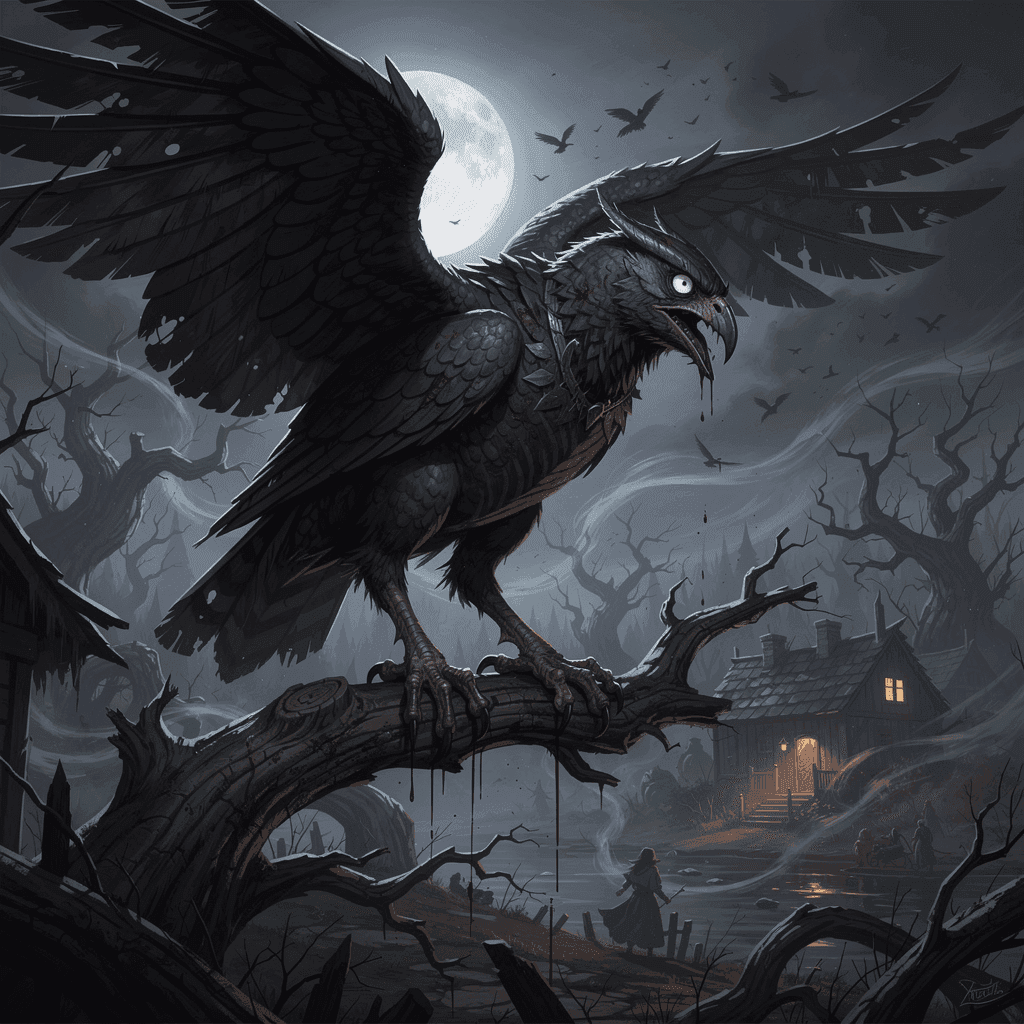
- Flight
- Blood Draining
- Shapeshifting
- Death Omen
A terrifying owl-like creature that fed on human flesh and blood, particularly targeting infants. These nocturnal predators were believed to be either transformed witches or beings of ill omen, and their appearance presaged death.
About Strix
Owl of the Cradle
Roman poets (Ovid, Pliny, Petronius) know the strix as a screech-owl witch-bird that attacks infants and drinks blood. Festus and later lexica keep the scare. It sits between omen-bird and shapeshifted woman; the natural-historical and the folkloric are not separated.
Medieval Latin carried the word toward 'witch.' The pagan dossier is already violent.
Proca in the cradle
Ovid (Fasti 6.131-168) tells how striges attacked the infant Proca, future king of Alba, tearing at his chest, until the nymph Crane (Cranaë) saved him with arbutus branches, a whitethorn charm, and an offering of a pig's entrails. Pliny the Elder admits he does not know what bird the strix is. The word lived on in Italian strega and Romanian strigoi.
Quick answers about Strix
- What is Strix?
- A terrifying owl-like creature that fed on human flesh and blood, particularly targeting infants. These nocturnal predators were believed to be either transformed witches or beings of ill omen, and their appearance presaged death.
- Where does Strix live?
- The atlas lists Strix's habitat as Night Skies and Shadowed Places.
- What abilities does Strix have?
- The atlas lists these abilities for Strix: Flight, Blood Draining, Shapeshifting, and Death Omen.
Sources and further reading
Source notes
These references are recorded in the catalog. Their passage wording and translation have not been checked, so quotations are not displayed here.
- Ovid, Fasti; Pliny, Natural History 11
About this entry
By Elizabeth Stein for Mythos Atlas. About the author. Editorial notes are grounded in the site's cited sources and can be challenged through the contact page.
The danger rating is an editorial shorthand for how the myths portray the creature, not a claim made by the sources.
Keep exploring
One myth a week, with its sources in a short email. The sign-up form is just below.