Roman PantheonCreature
Lemures
- Intangibility
- Fear Inducement
- Haunting Presence
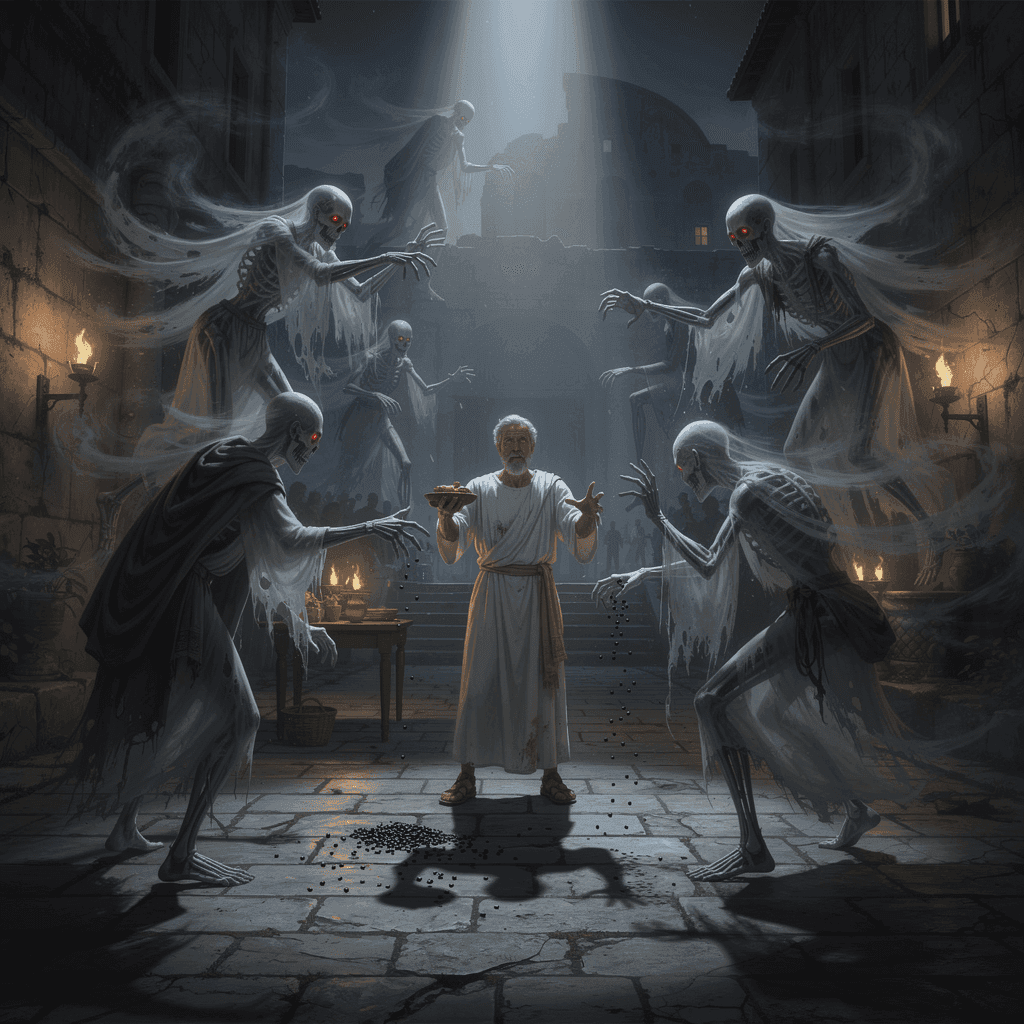
Restless spirits of the dead who wandered the earth, often the ghosts of those who died without proper burial or lived wicked lives. During the festival of Lemuria in May, Romans performed rituals to appease these troubled shades.
About Lemures
Unquiet Dead in May
Ovid's Fasti describes Lemuria: the householder rises at midnight, casts black beans, and nine times bids the lemures depart. They are restless shades, often contrasted with the honored di Manes. The rite is domestic apotropaia, not a bestiary hunt.
Later Christian writers moralize them as demons. Ovid still knows a calendar job.
The Lemuria rite
Ovid (Fasti 5.419-492) describes the father of the household rising at midnight on 9, 11, and 13 May, barefoot, making a sign with thumb and fingers, washing his hands, and throwing black beans behind him while saying nine times, 'With these I redeem me and mine.' He then clashes bronze and asks the ghosts to leave. Ovid traces the festival's name to Remuria, the appeasement of Romulus's murdered brother Remus.
Quick answers about Lemures
- What is Lemures?
- Restless spirits of the dead who wandered the earth, often the ghosts of those who died without proper burial or lived wicked lives. During the festival of Lemuria in May, Romans performed rituals to appease these troubled shades.
- Where does Lemures live?
- The atlas lists Lemures's habitat as The Mortal Realm (wandering).
- What abilities does Lemures have?
- The atlas lists these abilities for Lemures: Intangibility, Fear Inducement, and Haunting Presence.
Sources and further reading
Source notes
These references are recorded in the catalog. Their passage wording and translation have not been checked, so quotations are not displayed here.
- Ovid, Fasti 5 (Lemuria)
About this entry
By Elizabeth Stein for Mythos Atlas. About the author. Editorial notes are grounded in the site's cited sources and can be challenged through the contact page.
The danger rating is an editorial shorthand for how the myths portray the creature, not a claim made by the sources.
Keep exploring
One myth a week, with its sources in a short email. The sign-up form is just below.