Roman Pantheon
Mars
Also known as Mars Gradivus, Mars Ultor
- war
- military
- agriculture
- spring
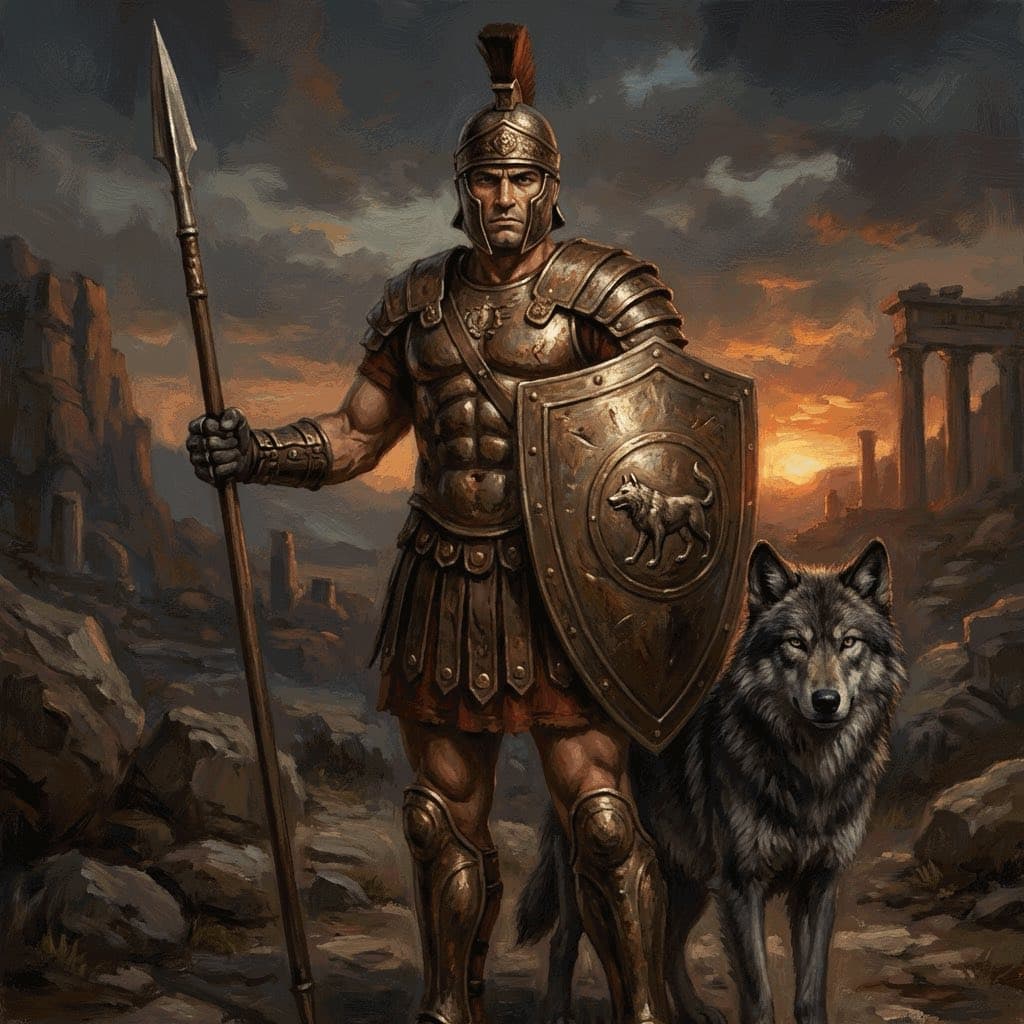
God of war and guardian of Rome. More prominent in Roman religion than his Greek counterpart Ares, Mars was also a god of agriculture and fertility. Father of Romulus and Remus, legendary founders of Rome.
About Mars
Mars, father of the city
Mars is a war god, and he is also something Ares almost never is: an ancestor. With the Vestal Rhea Silvia he fathered Romulus and Remus, which makes him divine grandfather of the Roman people. The Campus Martius, the army's field, carried his name. So did the month of March, when campaigning weather returned and the Salii danced with the sacred shields.
Agriculture and arms
Before he is only a soldier, Mars is a god of the land's edge: fields that must be defended, spring that must be opened. Cato's farmer prayed to him to keep disease, disaster, and barrenness off the property. The October Horse, sacrificed after the year's last races, belongs to this older Mars as much as to the legionary one.
Not a lesser Ares
Greek Ares is chaotic and often disliked. Roman Mars is honorable, ancestral, and politically useful. Augustus's Temple of Mars Ultor in the Forum Augustum made him the avenger of Caesar and the sponsor of recovered standards, a civic weapon rather than a personification of bloodlust.
Origin story
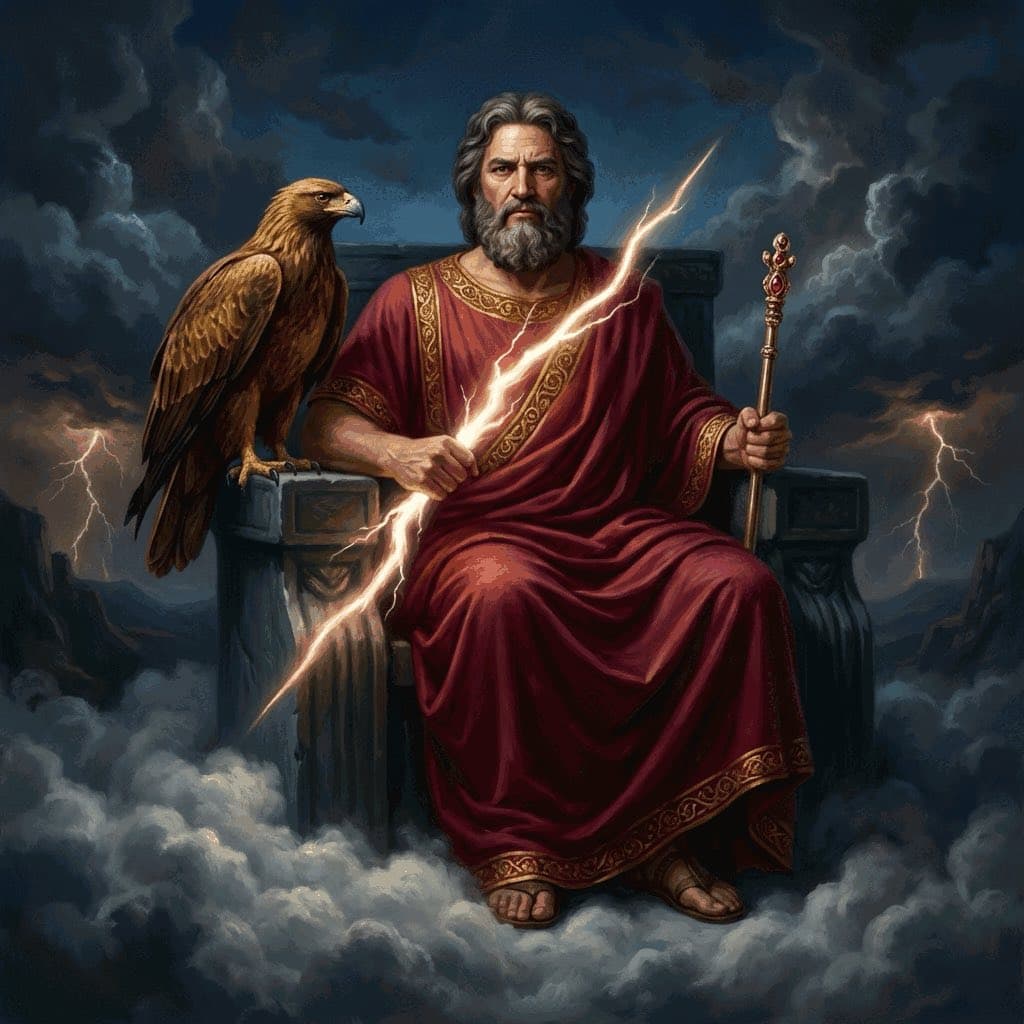
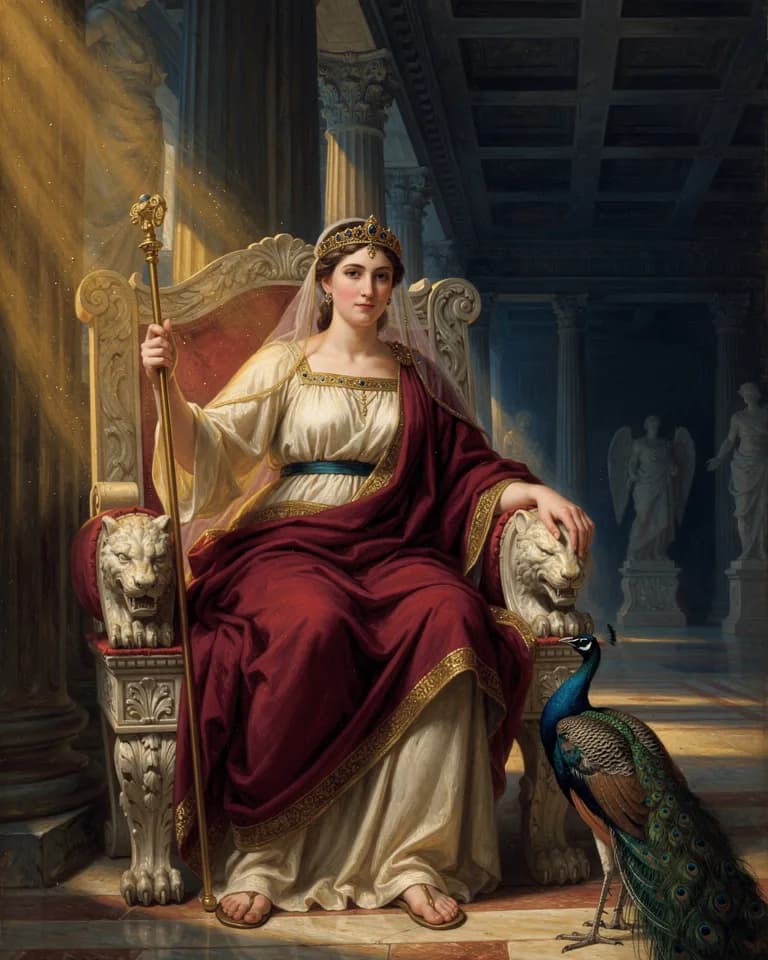
Mars was the son of Jupiter and Juno. He fathered Romulus and Remus with the Vestal Virgin Rhea Silvia, making him the divine ancestor of the Roman people.
Across traditions
Parallel figures
Figures who play a role like Mars's in other traditions.
 GreekAresIllustration
Ares is the direct Greek equivalent, god of war
Compare Mars and Ares side by side
Worship and cult
Temples, festivals, and practices recorded for Mars
The Salii danced with the ancilia in March and October. The flamen Martialis kept his cult. The October Horse was a chariot race whose right-hand horse was killed and its head fought over by neighborhoods. Mars is agriculture's guard as much as the legion's.
Sacred sites
- Temple of Mars Ultor in the Forum of Augustus
- Altar and later temple in the Campus Martius
- Outside the pomerium in early Rome, where an army god belonged
Festivals
- Equirria
- Quinquatrus (19 March)
- October Horse
- Armilustrium
Family
In the atlas
Where Mars appears
In the museums
Mars in art
Real objects in public collections, released into the public domain by the museums that hold them. Dates refer to when each object was made. Objects made within the tradition come first, later depictions after.
 (opens the museum record)
Later European depiction
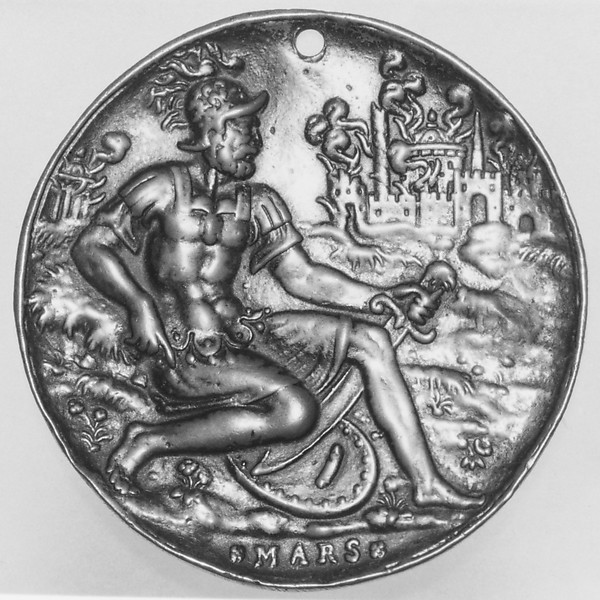
Mars (opens the museum record)
A bronze plaquette of about 1610 by the French goldsmith François Briot depicting Mars with shield and sword, tagged by the museum with the god's name. Plaquettes like this were decorative collectors' objects modeled on classical armed figures.
Sources and further reading
Source notes
These references are recorded in the catalog. Their passage wording and translation have not been checked, so quotations are not displayed here.
- Virgil, Aeneid, Book VIII (trans. Dryden)
About this entry
By Elizabeth Stein for Mythos Atlas. About the author. Editorial notes are grounded in the site's cited sources and can be challenged through the contact page.
Parallels are editorial comparisons across traditions: a shared role does not, by itself, establish a shared origin.
Family relationships come from the atlas's kinship records. Ancient sources often disagree on divine genealogy.
Keep exploring
One myth a week, with its sources in a short email. The sign-up form is just below.
Genealogy
Family tree
Mars's parents, consorts, children and rivals, as recorded in the atlas.