Greek PantheonCreature
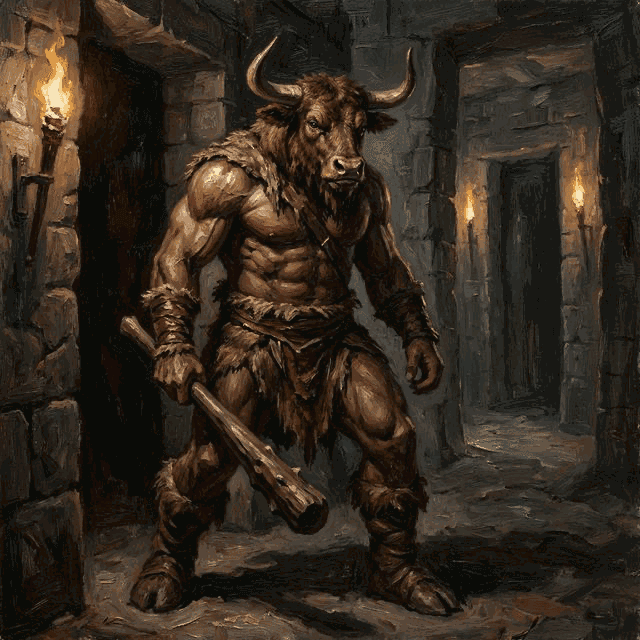
Minotaur
- Superhuman Strength
- Labyrinth Navigation
- Berserker Rage
A creature with the body of a man and head of a bull, born from Queen Pasiphae and the Cretan Bull. Imprisoned in the Labyrinth of Daedalus and fed Athenian youths until slain by Theseus.
About Minotaur
Asterion in the House of the Double Axe
Pasiphae, cursed by Poseidon, bore a bull-headed son whom Minos hid in Daedalus's labyrinth. Athens sent youths and maidens as tribute until Theseus, with Ariadne's thread, killed the creature. Apollodorus and Plutarch give the political frame: Cretan thalassocracy remembered as a cannibal tax.
The name Minotauros is 'bull of Minos'; Asterion is the rarer personal name.
The tribute and the thread
Athens paid the tribute, seven youths and seven maidens, in punishment for the death of Minos's son Androgeos. Plutarch's Life of Theseus records rationalising versions already in antiquity, including one in which the 'Minotaur' was a cruel general named Taurus. The palace of Knossos, with its many rooms, double-axe symbols (labrys), and bull-leaping frescoes, is often read as the real building behind the labyrinth story, though that connection is modern inference.
Quick answers about Minotaur
- What is Minotaur?
- A creature with the body of a man and head of a bull, born from Queen Pasiphae and the Cretan Bull. Imprisoned in the Labyrinth of Daedalus and fed Athenian youths until slain by Theseus.
- Where does Minotaur live?
- The atlas lists Minotaur's habitat as The Labyrinth of Crete.
- What abilities does Minotaur have?
- The atlas lists these abilities for Minotaur: Superhuman Strength, Labyrinth Navigation, and Berserker Rage.
In the museums
Minotaur in art
Real objects in public collections, released into the public domain by the museums that hold them. Dates refer to when each object was made. Objects made within the tradition come first, later depictions after.
 (opens the museum record)
Ancient object
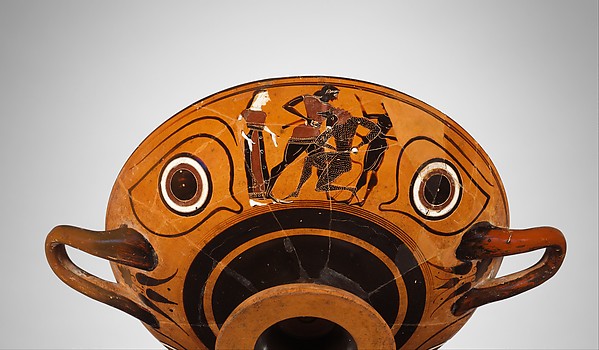
Terracotta kylix: eye-cup (drinking cup) (opens the museum record)
Between painted eyes, Theseus confronts the Minotaur, with youths and maidens as spectators. The scene appears on both sides of the cup.
 (opens the museum record)
Ancient object
Terracotta skyphos (deep drinking cup) (opens the museum record)
Theseus appears on one side and the Minotaur on the other. The museum describes the figures as separate protagonists rather than a continuous narrative.
Sources and further reading
Source notes
These references are recorded in the catalog. Their passage wording and translation have not been checked, so quotations are not displayed here.
- Apollodorus, Library 3.1.4
About this entry
By Elizabeth Stein for Mythos Atlas. About the author. Editorial notes are grounded in the site's cited sources and can be challenged through the contact page.
The danger rating is an editorial shorthand for how the myths portray the creature, not a claim made by the sources.
Keep exploring
One myth a week, with its sources in a short email. The sign-up form is just below.