Korean TraditionMountain
Mount Myohyang (Taebaek of the Dangun myth)
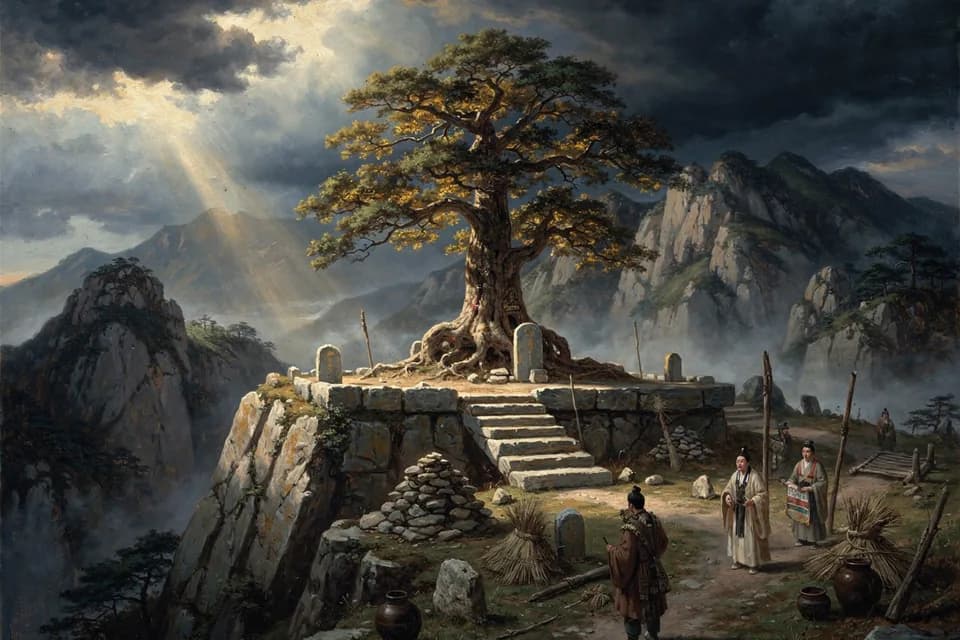
The mountain in North Korea that Iryeon's thirteenth-century note identifies as Mount Taebaek, where Hwanung descended beneath the sacred altar tree; other traditions place Taebaek at Baekdusan or at Taebaeksan in the south.
About Mount Myohyang (Taebaek of the Dangun myth)
Iryeon's identification
The Dangun myth in the Samguk Yusa says Hwanung descended to the summit of Mount Taebaek, beneath the sacred altar tree. At that point Iryeon adds a short note: Taebaek is 'the present Myohyangsan', a mountain range in what is now North Pyongan Province, North Korea. That thirteenth-century identification is the one pinned here.
Other Taebaeks
Taebaek ('great white') is a name several mountains have borne. Many Koreans today associate the myth with Baekdusan (Changbaishan), the volcano on the China-North Korea border, and South Korea's Taebaeksan in Gangwon Province has an altar, Cheonjedan, where rites to heaven and to Dangun are held on National Foundation Day. None of these can be shown to be the mountain the original teller meant.
Myohyangsan today
Myohyangsan is famous for the Buddhist temple Bohyeonsa, founded in the eleventh century, and for its scenery, and it hosts the International Friendship Exhibition of gifts to North Korea's leaders. A cave on the mountain is traditionally called Dangun's cave.
On the map
Mount Myohyang (Taebaek of the Dangun myth) among other places of the Korean Tradition.
Sources and further reading
Source notes
These references are recorded in the catalog. Their passage wording and translation have not been checked, so quotations are not displayed here.
- Iryeon, Samguk Yusa, Book 1, 'Gojoseon', with Iryeon's note (paraphrase)
About this entry
By Elizabeth Stein for Mythos Atlas. About the author. Editorial notes are grounded in the site's cited sources and can be challenged through the contact page.
Coordinates mark where the myths place a site, or where the tradition locates it today. Mythic realms are left off the map or marked as symbolic placements.