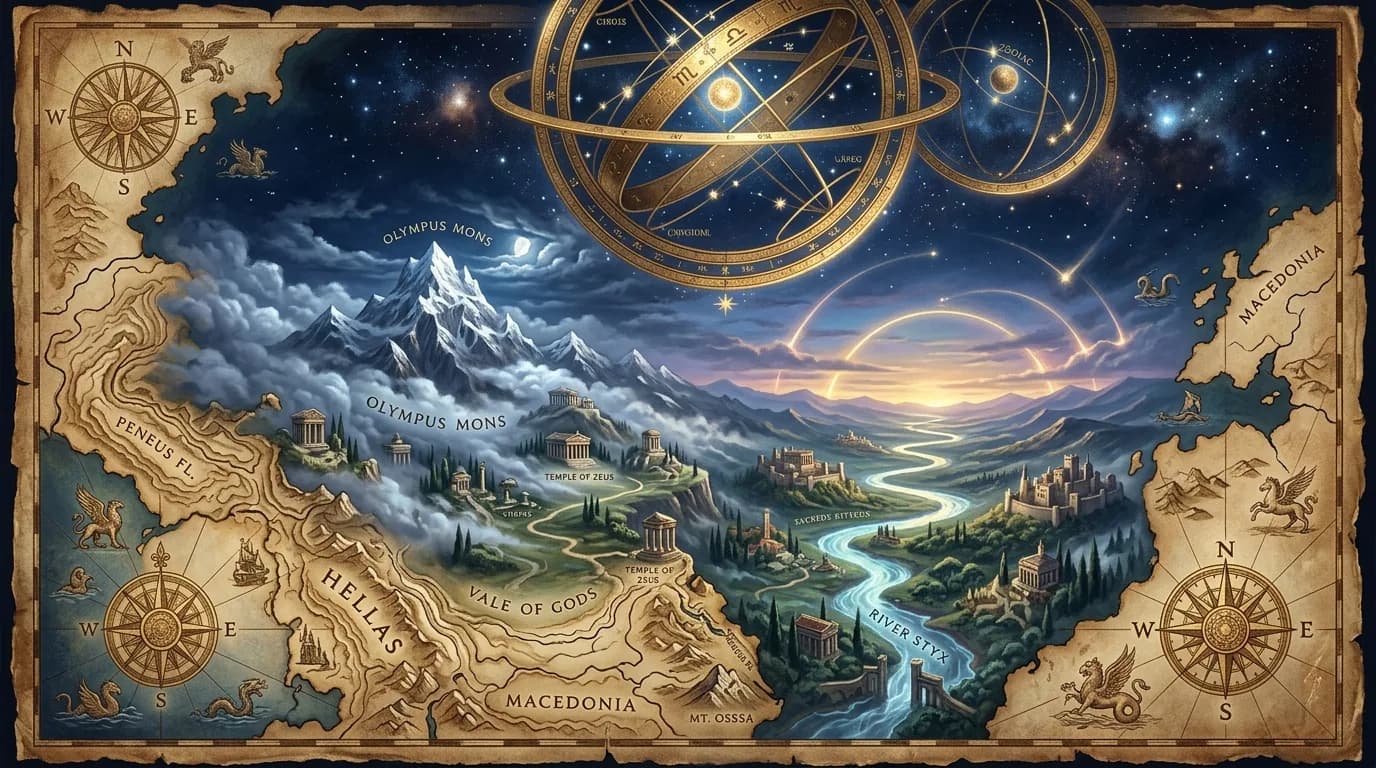
Catalog pictures are illustrations, not historical artworks. About our images
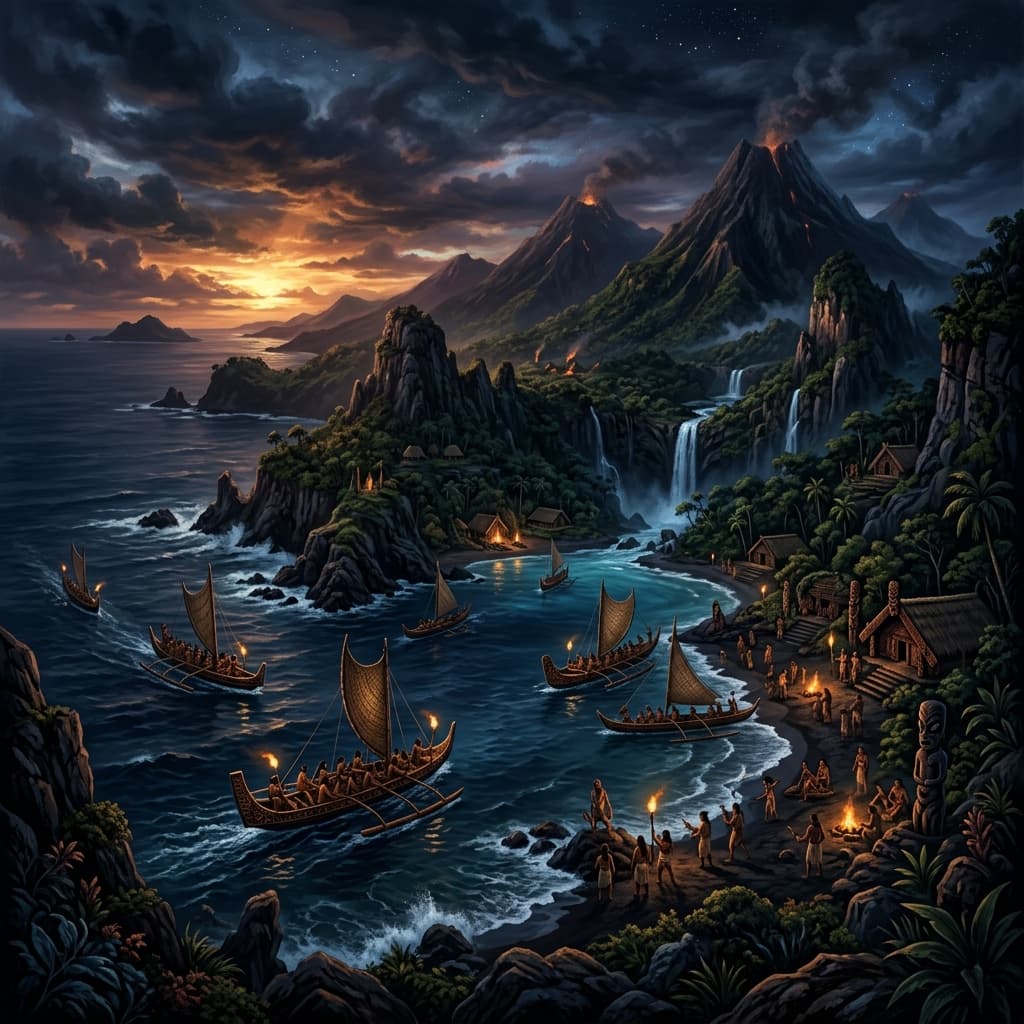
Mythic realm
Polynesian
Realm
The legendary ancestral homeland of the Polynesian peoples, from which the great voyaging canoes departed to settle the Pacific islands. Hawaiki is both a physical place (possibly in the Society Islands) and a spiritual realm where souls return after death.
Polynesian
Sacred site
The home of Pele, goddess of volcanoes, located on the Big Island of Hawaii. The Halemaumau crater within Kilauea is considered Pele's residence, where she creates new land through volcanic eruptions. One of the most active volcanoes on Earth.
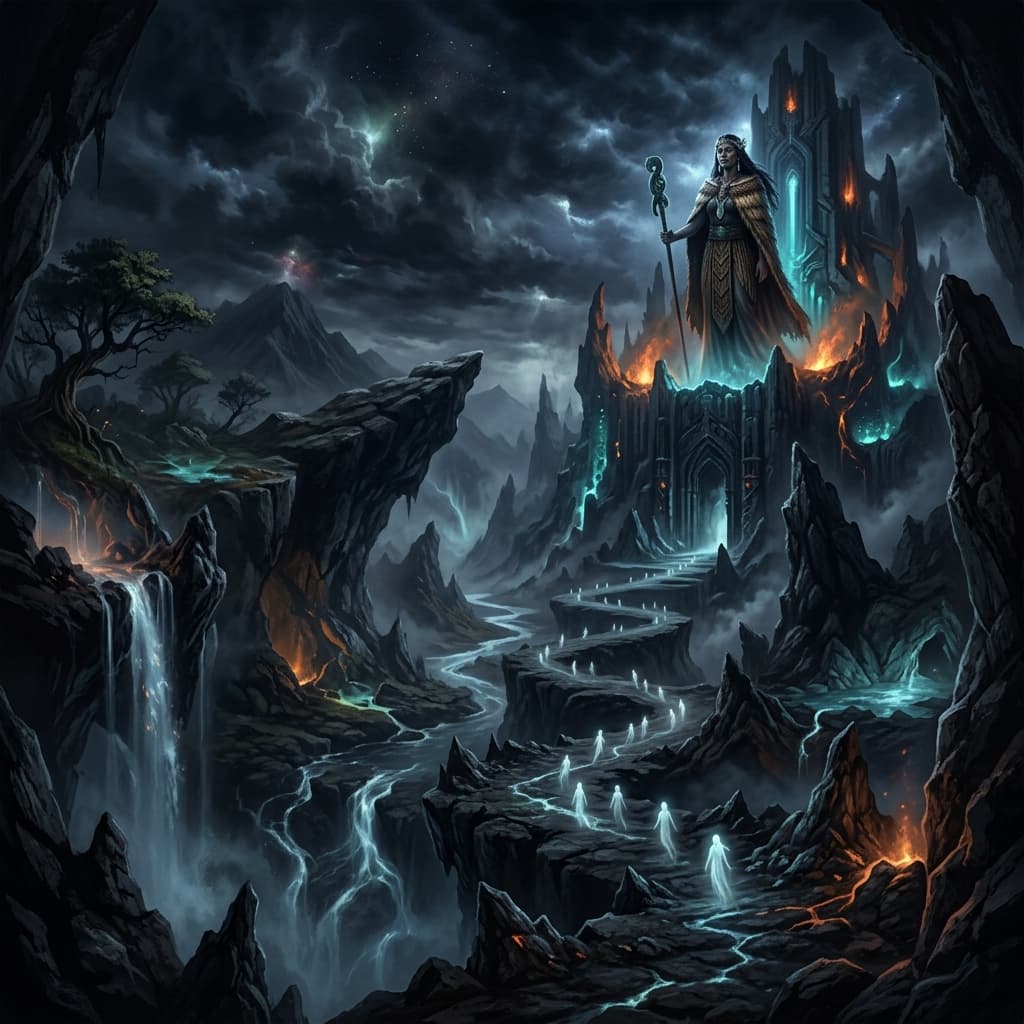
Mythic realm
Polynesian
Underworld
The Polynesian realm of darkness and the dead, ruled by Hine-nui-te-po, the goddess of death. Te Po is where souls journey after death, a shadowy realm contrasting with Te Ao (the world of light). Maui died attempting to conquer Te Po.
Polynesian
Mountain
The tallest mountain in Hawaii and home of Poliahu, the snow goddess. Its summit, often covered with snow, is considered sacred and represents the realm of ice that opposes Pele's volcanic fire. The name means 'White Mountain.'
Polynesian
Sacred site
The 'House of the Sun' on the island of Maui, where according to Hawaiian tradition, Maui captured and beat the sun to slow its passage across the sky. The massive volcanic crater is one of Hawaii's most sacred sites.
Polynesian
Sacred site
The northernmost tip of New Zealand, where Maori tradition holds that the spirits of the dead depart for the afterlife. Souls travel north along the island, descend an ancient pohutukawa tree, and slide down its roots into the sea to journey to Hawaiki.
Polynesian
Sacred site
An island in the Society Islands group, traditionally considered one of the most sacred places in Polynesia. The marae (temple) of Taputapuatea was a center of religious and political power, from which voyaging canoes departed to settle distant islands.
Yoruba
Sacred site
The holiest city in Yoruba religion, where Obatala first descended from heaven and created land from the primordial waters. Known as 'the navel of the world' and the place where creation began. The city remains the spiritual center of Yoruba tradition, and its kings trace descent from the Orishas.
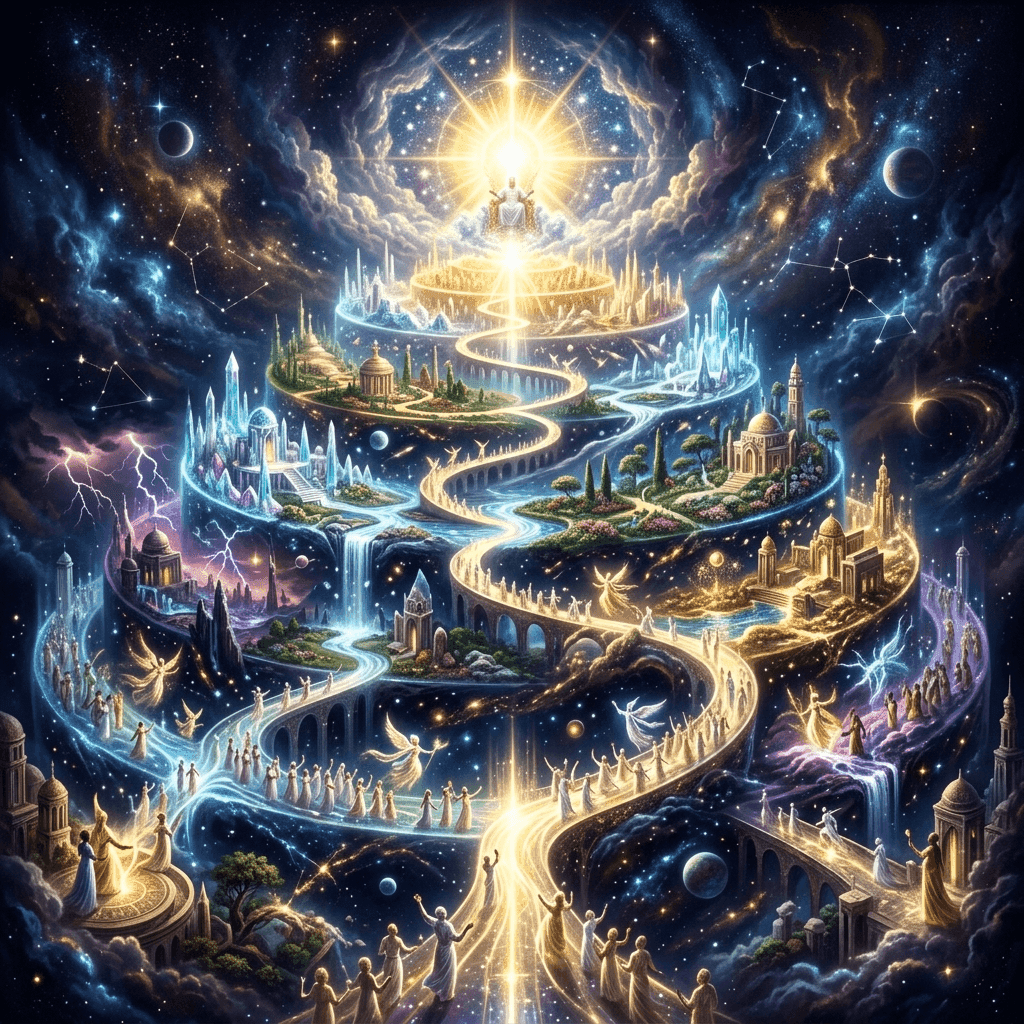
Mythic realm
Yoruba
Realm
The heavenly realm where Olodumare and the Orishas dwell. Orun exists in layers, with the supreme being at the highest level. It is also the destination of righteous souls after death, where they join the ancestors and may eventually be reborn into the earthly realm (Aye).
Yoruba
Sacred site
A UNESCO World Heritage Site and the most important shrine to the goddess Oshun. Located along the Osun River in Nigeria, the grove contains ancient sculptures, shrines, and sanctuaries. The annual Osun-Osogbo Festival draws hundreds of thousands of worshippers from around the world.
Yoruba
City
The capital of the ancient Oyo Empire and the city where Shango ruled as the fourth Alaafin (king). After his tragic death and deification, Oyo became a center of Shango worship. The city represents the intersection of historical kingship and divine mythology in Yoruba tradition.
Mythic realm
Yoruba
Sacred site
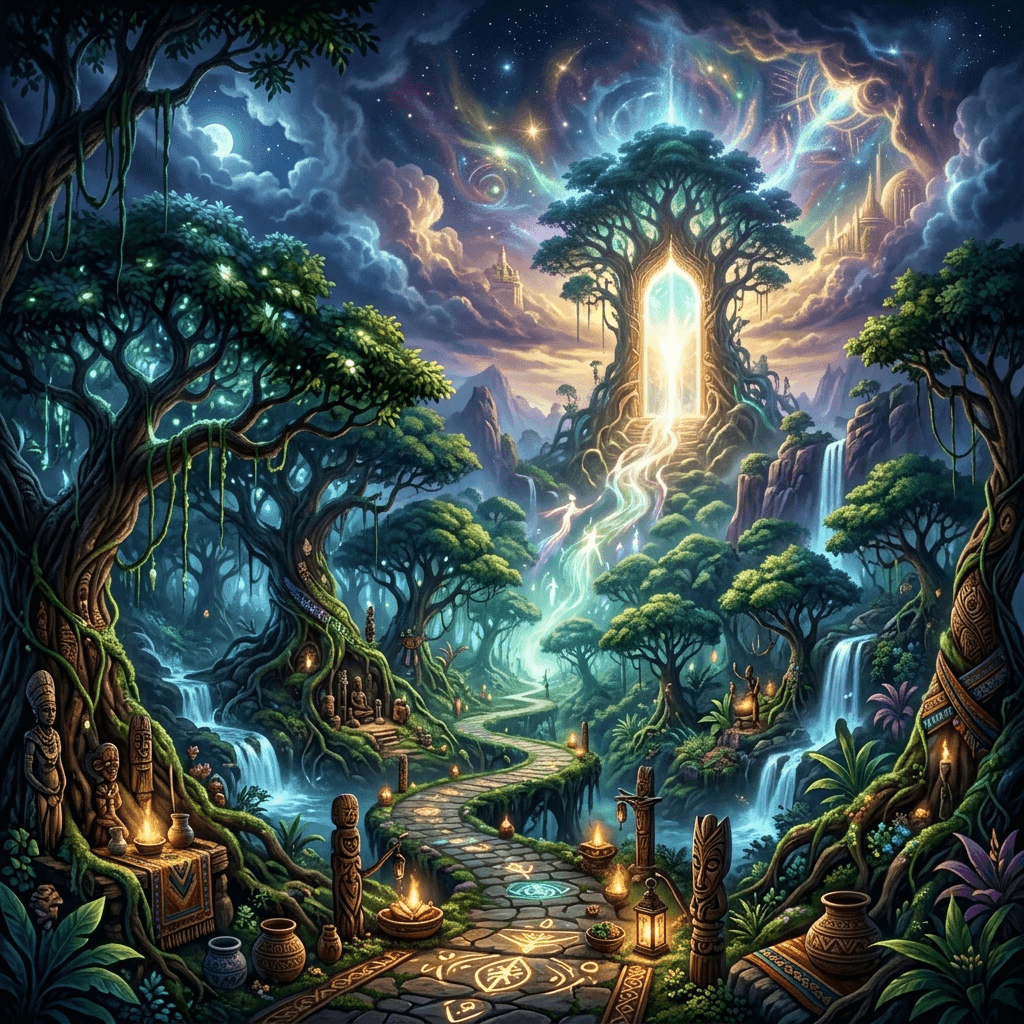
A sacred forest believed to be a physical connection point between the earthly realm (Aye) and the heavenly realm (Orun). Such forests throughout Yorubaland are protected as dwelling places of the Orishas and sites for important rituals and initiations.
Mythic realm
Yoruba
Sacred site
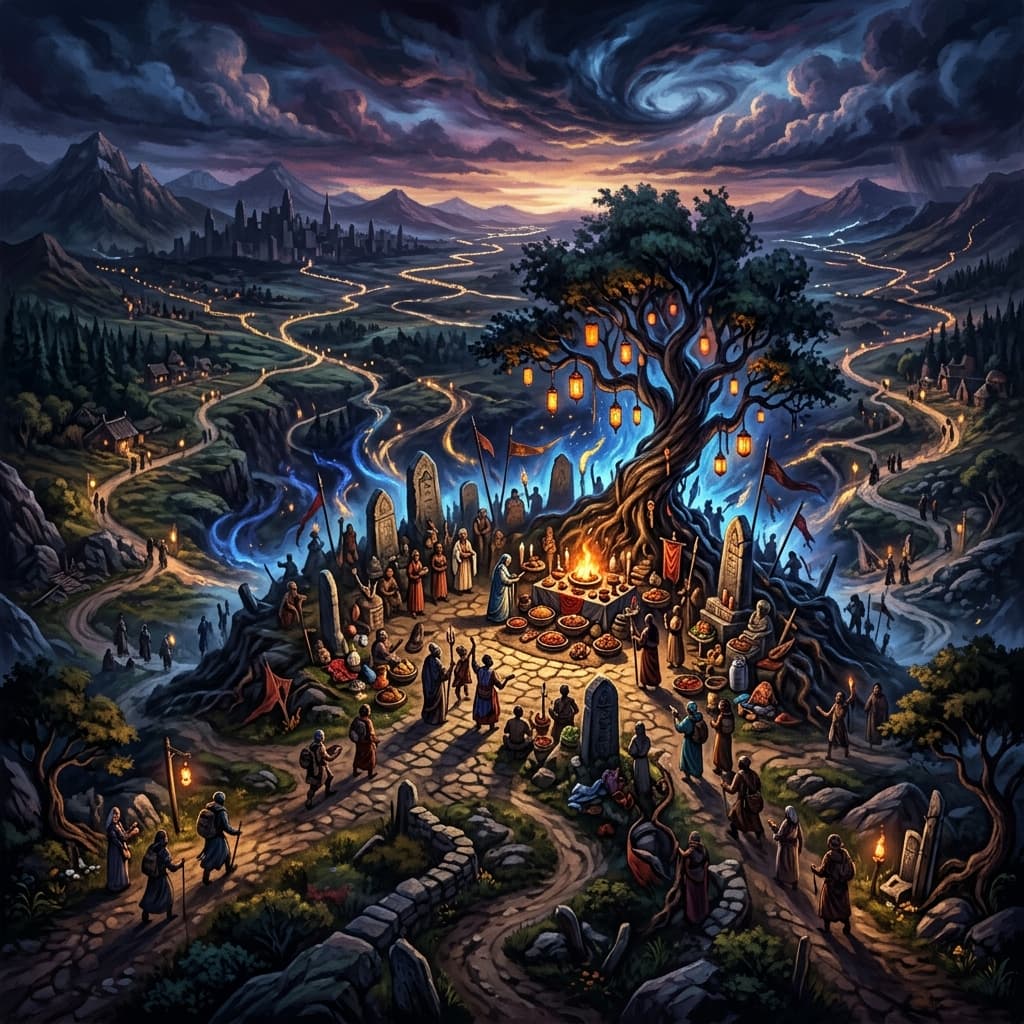
Not a single location but every place where paths meet. The crossroads is the domain of Eshu, where decisions are made and fates are determined. Offerings to Eshu are placed at crossroads, and all Yoruba rituals must honor Eshu at the crossroads before proceeding to other Orishas.
Greek
Coast
The Thracian coast of the Cicones at Ismarus, where Odysseus's fleet made its first raid after Troy and lost men when the crews lingered and the inland Cicones counterattacked (Odyssey 9).
Greek
Island
The unnamed shore in Odyssey 9 where people live on the honey-sweet lotus, whose fruit made Odysseus's scouts forget their homecoming until he dragged them back to the ships in tears.
Greek
Cave
The cave of the Cyclops Polyphemus in Odyssey 9, where Odysseus, calling himself Nobody, blinded the one-eyed son of Poseidon and escaped beneath his sheep; later tradition placed it in Sicily.
Greek
Island
Aeolia, the floating island with a bronze wall where Aeolus, keeper of the winds, gave Odysseus the storm-winds tied in a bag, which his crew opened within sight of Ithaca (Odyssey 10).
Greek
Harbor
The enclosed harbour of the giant Laestrygonians in Odyssey 10, where the giants speared Odysseus's men and smashed eleven of his twelve ships; only his own ship, moored outside, escaped.
Greek
Island
Aeaea, the island of the goddess Circe in Odyssey 10, where her drugs turned Odysseus's men into pigs until Hermes gave him the herb moly, and where he stayed a year before seeking the dead.
Greek
Strait
The waters of the Sirens in Odyssey 12, whose song promised knowledge and lured sailors to their deaths; Odysseus heard it bound to the mast while his crew rowed with wax-stopped ears.
Greek
Strait
The narrow passage of Odyssey 12 between six-headed Scylla on her cliff and the whirlpool Charybdis, later identified with the Strait of Messina; Odysseus chose Scylla and lost six men.
Greek
Island
The island of the sun god Helios in Odyssey 12, pasture of his immortal cattle, where Odysseus's starving crew slaughtered the herds and were destroyed by Zeus's thunderbolt at sea.
Greek
Island
Ogygia, the wooded island of the nymph Calypso in Odyssey 5, where she kept Odysseus seven years and offered him immortality until Hermes brought Zeus's order to let him go.
Greek
Island
Scheria, land of the seafaring Phaeacians in Odyssey 6 to 13, where Nausicaa found the shipwrecked Odysseus and King Alcinous heard his tale before a magic ship carried him home to Ithaca.