Side by sideRivals

Jade Emperor vs Sun Wukong

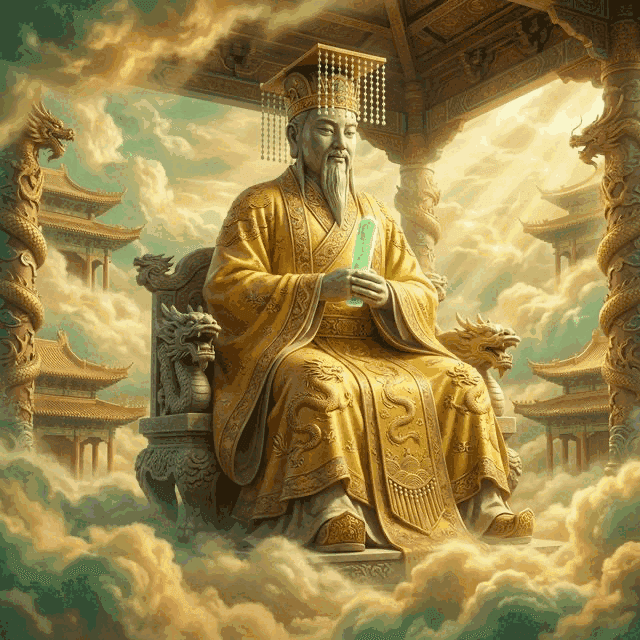
Jade Emperor
Jade EmperorChinese
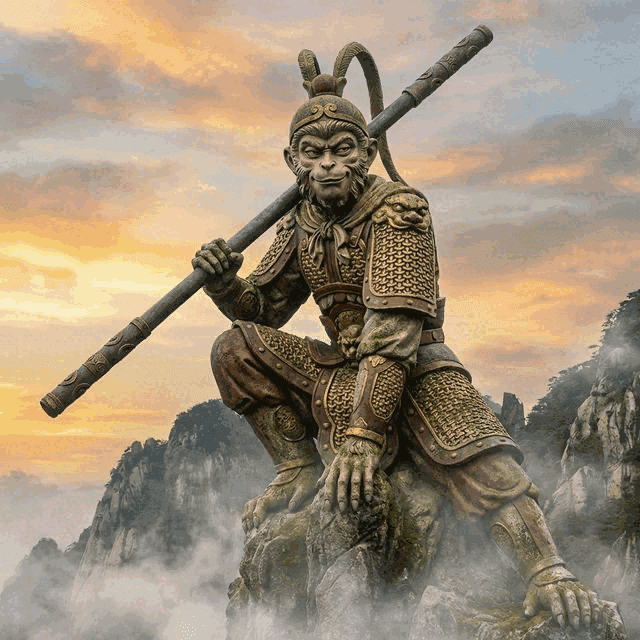
Sun Wukong
Sun WukongChinese

Jade Emperor and Sun Wukong are recorded as rivals in the Chinese Pantheon.

At a glance

Jade Emperor and Sun Wukong compared
Jade EmperorSun Wukong
TraditionChinese PantheonChinese Pantheon
Domainsheaven, order, bureaucracy, justice, sovereigntytrickery, strength, fighting, rebellion, transformation, immortality
Symbolsimperial robes, jade tablet, dragon throne, twelve-tiered crownRuyi Jingu Bang (golden cudgel), golden fillet (headband), cloud-walking boots, phoenix-feather cap
Also calledYu Huang, Yu Di, Yu Huang Shangdi, Heavenly GrandfatherMonkey King, Great Sage Equal to Heaven, Victorious Fighting Buddha, Beautiful Monkey King

Where they meet

The atlas records no domain or symbol that Jade Emperor and Sun Wukong share.

They are compared because of how the myths connect them, not because of what they rule.

Where they part

Only Jade Emperor

Associated with heaven, order, bureaucracy, justice, and sovereignty.

Only Sun Wukong

Associated with trickery, strength, fighting, rebellion, transformation, and immortality.

How each was worshipped

Jade Emperor

Cult sites
Jade Emperor temples across the Chinese-speaking world; Heavenly court shrines in city God complexes
Festivals
Jade Emperor's Birthday (ninth day of the first lunar month); Chinese New Year court audiences

Yuhuang Shangdi as bureaucratic heaven. Incense, paper offerings, and a birthday that opens the year. Folk religion treats him as a distant boss; Daoist liturgy gives him a full court. Both are the cult.

Sun Wukong

Cult sites
Great Sage temples in Fujian, Taiwan, Singapore, and Malaysia; Side halls in some Buddhist monasteries
Festivals
Great Sage birthday festivals

Monkey, staff, and the novel made a god people actually visit. Mediums, opera, and fruit. This is living cult from literature, which is a normal Chinese outcome, not a category error.

The two figures

Chinese Pantheon

Jade Emperor

The supreme ruler of Heaven and lord of all gods. He governs the cosmos through a vast celestial bureaucracy, determining the fate of mortals and immortals alike.

In the primordial age, a prince of the Blessed Kingdom of Pure Felicity renounced his throne to cultivate the Tao. Through 1,750 kalpas of moral cultivation and 3,000 tribulations, he achieved complete enlightenment and became worthy to rule Heaven.

The Jade Emperor (Yu Huang) reigns supreme over the entire Chinese pantheon from his magnificent palace in Heaven. Unlike many supreme deities who rule through raw power, the Jade Emperor governs through an elaborate celestial bureaucracy that mirrors the imperial Chinese government on Earth. He presides over ministries of thunder, rain, fire, and pestilence, promoting or demoting gods based on their performance.

Read the full Jade Emperor entry

Chinese Pantheon

Sun Wukong

A monkey born from a magical stone who acquired supernatural powers through Taoist cultivation. After wreaking havoc in Heaven, he was imprisoned for 500 years before redeeming himself as the protector of the monk Tang Sanzang on the journey to retrieve Buddhist scriptures.

On the Mountain of Flowers and Fruit, a magical stone nourished by heaven and earth for eons produced a stone egg. When the wind blew upon it, the egg transformed into a stone monkey with golden eyes. This monkey would become Sun Wukong, the Great Sage Equal to Heaven.

Sun Wukong is China's most beloved mythological figure, a trickster hero who combines irreverent rebellion with ultimate redemption. Born from a stone egg nourished by heaven and earth, he embodies the tension between chaos and order, individual freedom and cosmic duty.

Read the full Sun Wukong entry
About this comparison

Comparisons pair figures that play a similar role across traditions, or that the myths connect within one. A shared role does not, by itself, establish a shared origin.