
Mythos Atlas

Side by sideParallel across traditions

Ryujin vs Sedna (the Sea Woman)

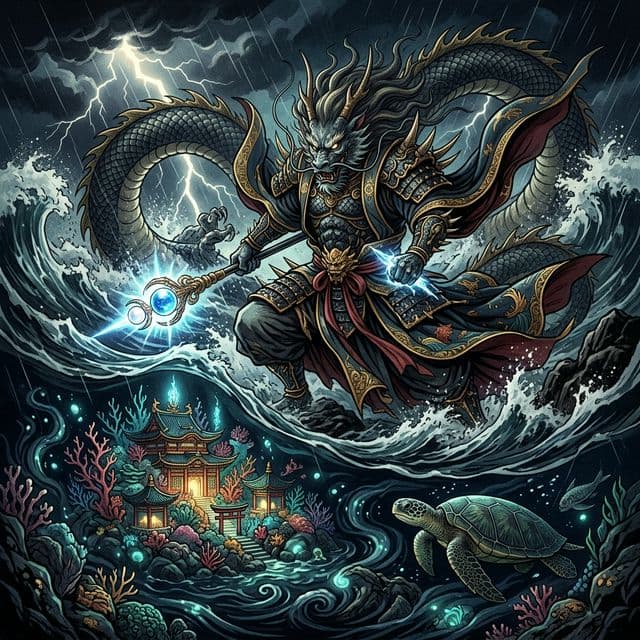
Ryujin
RyujinJapanese
Sedna (the Sea Woman)
Sedna (the Sea Woman)Inuit

Both are powers beneath the sea who control the sea's creatures and bounty; the Sea Woman's relationship with hunters and taboos is distinctively Inuit, and the comparison is typological only.

At a glance

Ryujin and Sedna (the Sea Woman) compared
RyujinSedna (the Sea Woman)
TraditionJapanese PantheonInuit Tradition
Domainssea, ocean, dragons, storms, rainthe sea and its animals, the success or failure of hunting, the observance of taboos
Symbolsdragon, tide jewels, coral palace, sea turtleseals, walrus, and whales, tangled hair, fingerless hands
Also calledWatatsumi, Owatatsumi-no-kami, Dragon King of the SeaNuliajuk (Netsilingmiut), Takannaaluk or Takanaaluk arnaaluk (Iglulik), Uinigumasuittuq (Iglulik, 'the one who did not want a husband'), Sassuma Arnaa (West Greenland, 'mother of the deep'), Arnarquagssaq (Greenland), Sanna / Sedna (Baffin Island)

Where they meet

The atlas records no domain or symbol that Ryujin and Sedna (the Sea Woman) share.

They are compared for the part each plays in their own tradition rather than for any attribute in common.

Where they part

Only Ryujin

Associated with sea, ocean, dragons, storms, and rain.

Only Sedna (the Sea Woman)

Associated with the sea and its animals, the success or failure of hunting, and the observance of taboos.

How each was worshipped

Ryujin

Cult sites
Sea shrines; Ryugu in story; Coastal jinja that house a dragon king

Tide jewels and the undersea palace. Fishermen more than courtiers. The cult is the weather of the catch.

Sedna (the Sea Woman)

Festivals
Autumn Sedna feasts recorded by Boas in Baffin Island in the 1880s

This is part of a living tradition. Inuit relationships with these figures today range from continued respect and storytelling to Christian faith that sets older practice aside, and they vary by family and community; this site does not describe angakkuq (shamanic) practice beyond what elders and Inuit-led publishers have chosen to make public.

The two figures

Japanese Pantheon

Ryujin

Dragon god of the sea who dwells in an underwater palace made of red and white coral. Ruler of all sea creatures and controller of the tides through his magical tide jewels.

Ryujin emerged as a kami of the ocean depths in early Shinto belief. According to the **Kojiki**, he is the father of **Toyotama-hime**, who married the hunter Hoori and became grandmother to Japan's first emperor Jimmu. His coral palace **Ryugu-jo** lies beneath the waves, where time flows differently than on land.

**Ryujin** (also called Watatsumi) is the dragon deity who rules the ocean from his magnificent coral palace **Ryugu-jo** beneath the waves. He commands all sea creatures—fish, turtles, jellyfish, and other marine life serve as his messengers and attendants. His kingdom exists in a realm where time moves differently; what seems like days underwater may be centuries on the surface.

Read the full Ryujin entry

Inuit Tradition

Sedna (the Sea Woman)

The woman at the bottom of the sea who keeps the seals, walrus, and whales, known by different names across the Arctic (Sedna on Baffin Island, Nuliajuk among the Netsilingmiut, Takannaaluk in Iglulik, Sassuma Arnaa in Greenland); when people break taboos, the animals are held back until an angakkuq combs her hair.

Across the Inuit Arctic there is a woman who lives at the bottom of the sea and keeps the sea mammals on which people depend. Her names differ by region, and so do her stories. Franz Boas recorded her as Sedna in Cumberland Sound, Baffin Island, in the 1880s, and that is the name most outsiders know; the Netsilingmiut call her Nuliajuk; in Iglulik she is Takannaaluk and, in the telling of elders interviewed for Nunavut Arctic College, Uinigumasuittuq, "the one who did not want a husband"; in West Greenland she is Sassuma Arnaa, "mother of the deep". This site uses "Sedna" only as the most widely recognised name.

Read the full Sedna (the Sea Woman) entry
About this comparison

Comparisons pair figures that play a similar role across traditions, or that the myths connect within one. A shared role does not, by itself, establish a shared origin.