Mythos Atlas

Side by sideParallel across traditions

Tarhunna (the Storm-god of Hatti) vs Thor

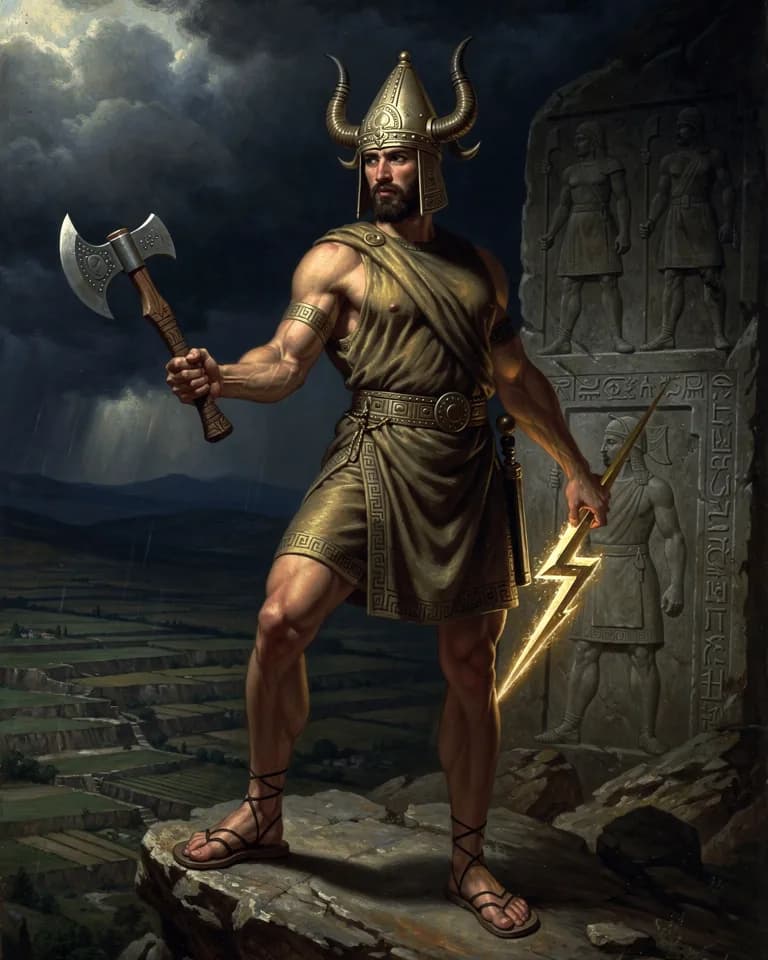
Tarhunna (the Storm-god of Hatti)
Tarhunna (the Storm-god of Hatti)Hittite
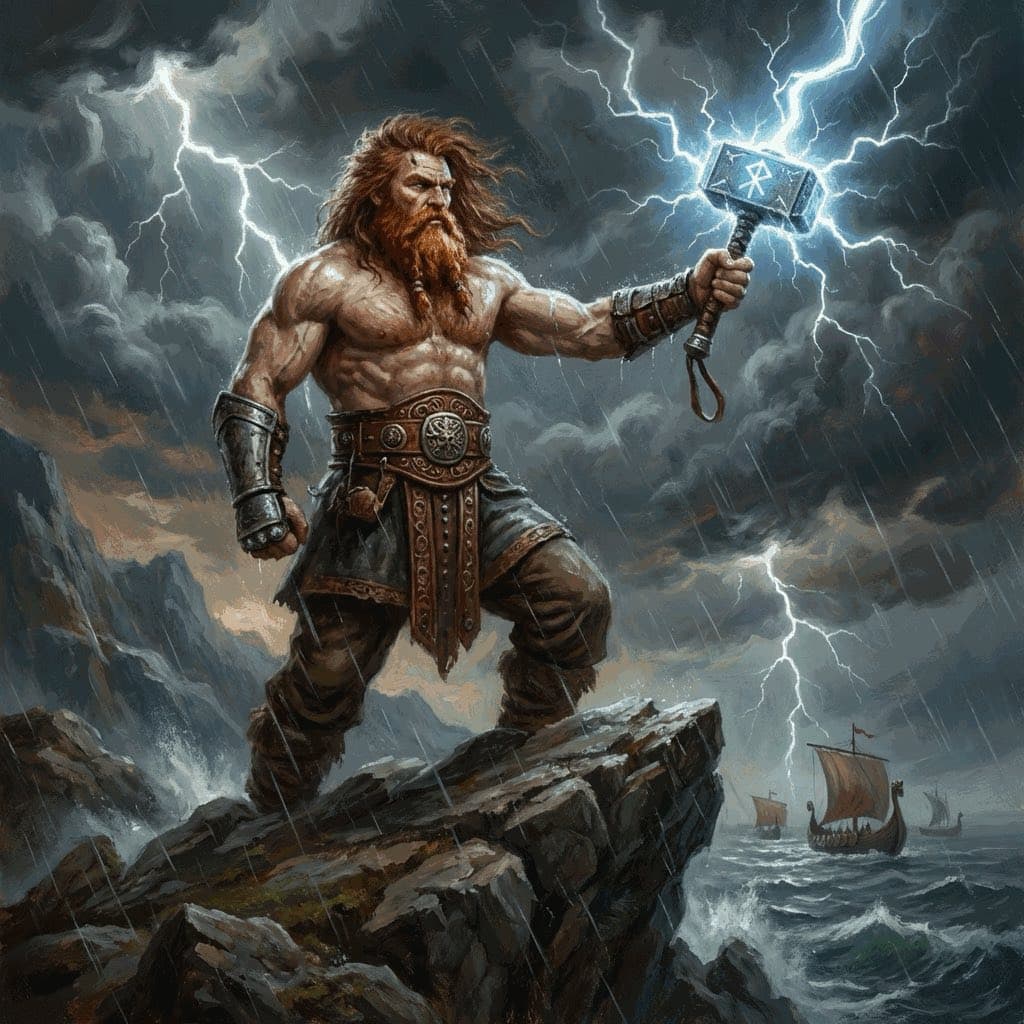
Thor
ThorNorse

Both are storm-gods whose defining myth is combat with a great serpent (Illuyanka, Jörmungandr); the resemblance belongs to a widespread storm-god-versus-serpent pattern, not a shared text.

At a glance

Tarhunna (the Storm-god of Hatti) and Thor compared
Tarhunna (the Storm-god of Hatti)Thor
TraditionHittite PantheonNorse Pantheon
Domainsstorms, rain, kingship, the fertility of the landthunder, lightning, strength, protection, storms
Symbolsbull, mace and lightning, mountainhammer Mjolnir, belt Megingjord, iron gloves, goats, red beard
Also calledStorm-god of Hatti, Teššub (Hurrian), Taru (Hattian), Tarḫunt (Luwian), TeshubDonar, Thunder God

Where they meet

Both are associated with storms.

Where they part

Only Tarhunna (the Storm-god of Hatti)

Associated with rain, kingship, and the fertility of the land.

Only Thor

Associated with thunder, lightning, strength, and protection.

How each was worshipped

Tarhunna (the Storm-god of Hatti)

Cult sites
Great Temple (Temple 1) at Hattusa, shared with the Sun-goddess of Arinna; Temple of the Storm-god of Nerik at Oymaağaç Höyük
Festivals
Purulli festival at Nerik; AN.TAḪ.ŠUM (spring) and nuntarriyašḫa (autumn) state festivals

The king served as the storm-god's priest and steward, offering bread, beer, and animals at state festivals; the Illuyanka story was recited at the Purulli festival of Nerik.

Thor

Cult sites
Uppsala temple beside Odin and Freyr; Wayside hammers and holy oaks more than a single great fane
Festivals
Thursday observances; Hammer-blessings of marriages and land

The most popular of the North's gods in the settlement period. Miniature hammers, Thursday, and oak. He fights giants and blesses the farm. Adam puts him in the high seat at Uppsala; farmers put him over the door.

The two figures

Hittite Pantheon

Tarhunna (the Storm-god of Hatti)

The chief god of the Hittite state: a storm-god of rain and thunder who gives the land its fertility, fights the serpent Illuyanka, and, under his Hurrian name Teššub, wins kingship in heaven in the Kumarbi cycle.

Hittite scribes usually wrote the storm-god's name with a Sumerian word-sign (dU or dIŠKUR, "the Storm-god"), so the Hittite reading is partly reconstructed; Tarḫunna is the most widely accepted reading, and the Luwian form Tarḫunt survived into the first millennium BCE. The same logogram covered the Hattian storm-god Taru and, from the fifteenth century onward, the Hurrian storm-god Teššub, whom the later Hittite royal family, closely tied to Hurrian Kizzuwatna, promoted to the head of the state cult. On this site these are treated as one entry because the Hittite sources themselves write them with one sign, but readers should know that the Hattian, Hittite, and Hurrian storm-gods had separate origins and were brought together by scribes and kings.

Read the full Tarhunna (the Storm-god of Hatti) entry

Norse Pantheon

Thor

Son of Odin and the earth goddess Jord. God of thunder, lightning, and storms. Protector of mankind and the gods, wielding the mighty hammer Mjolnir.

Thor was born to Odin, the Allfather, and Jord, the personification of the earth itself. This union of sky and earth made Thor one of the mightiest beings in existence. From birth, he displayed incredible strength - as an infant, he could lift ten loads of bearskins. He grew quickly into the powerful protector of both gods and mortals. He married Sif, the golden-haired goddess, and with her had a daughter named Thrud. With the giantess Jarnsaxa, he fathered Magni and Modi, who will inherit Mjolnir after Ragnarok.

Thor is the defender of Asgard and Midgard, wielding the mighty hammer **Mjolnir**. Unlike the cunning Odin, Thor is straightforward, strong, and short-tempered, but fiercely loyal.

Read the full Thor entry
About this comparison

Comparisons pair figures that play a similar role across traditions, or that the myths connect within one. A shared role does not, by itself, establish a shared origin.