Mythos Atlas

Side by sideParallel across traditions

Tarhunna (the Storm-god of Hatti) vs Zeus

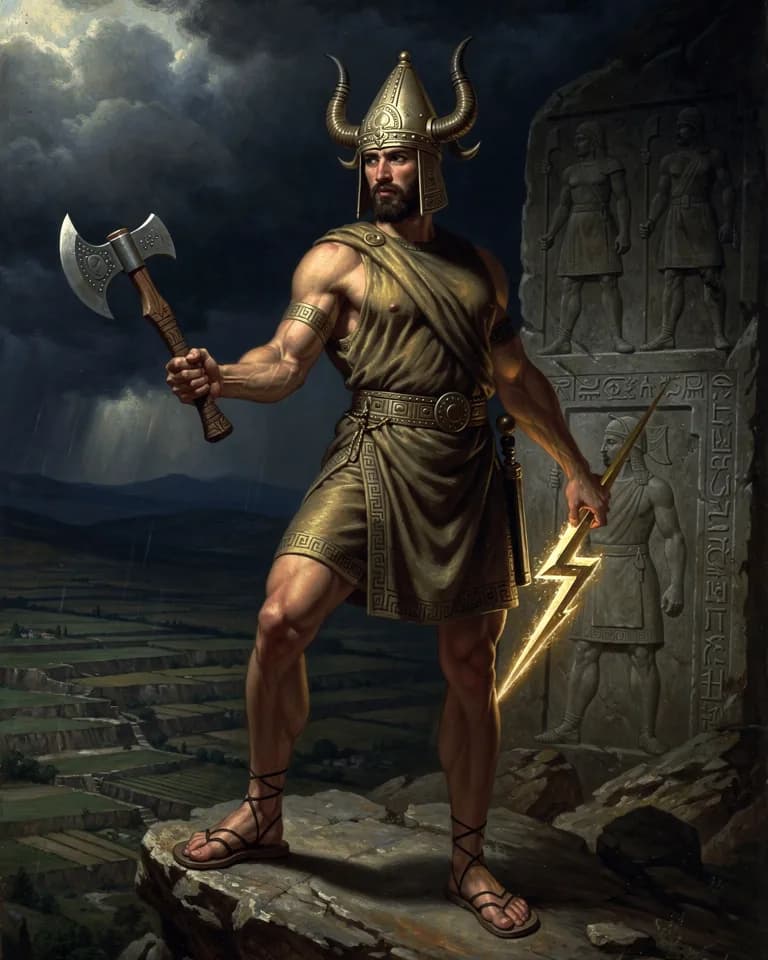
Tarhunna (the Storm-god of Hatti)
Tarhunna (the Storm-god of Hatti)Hittite
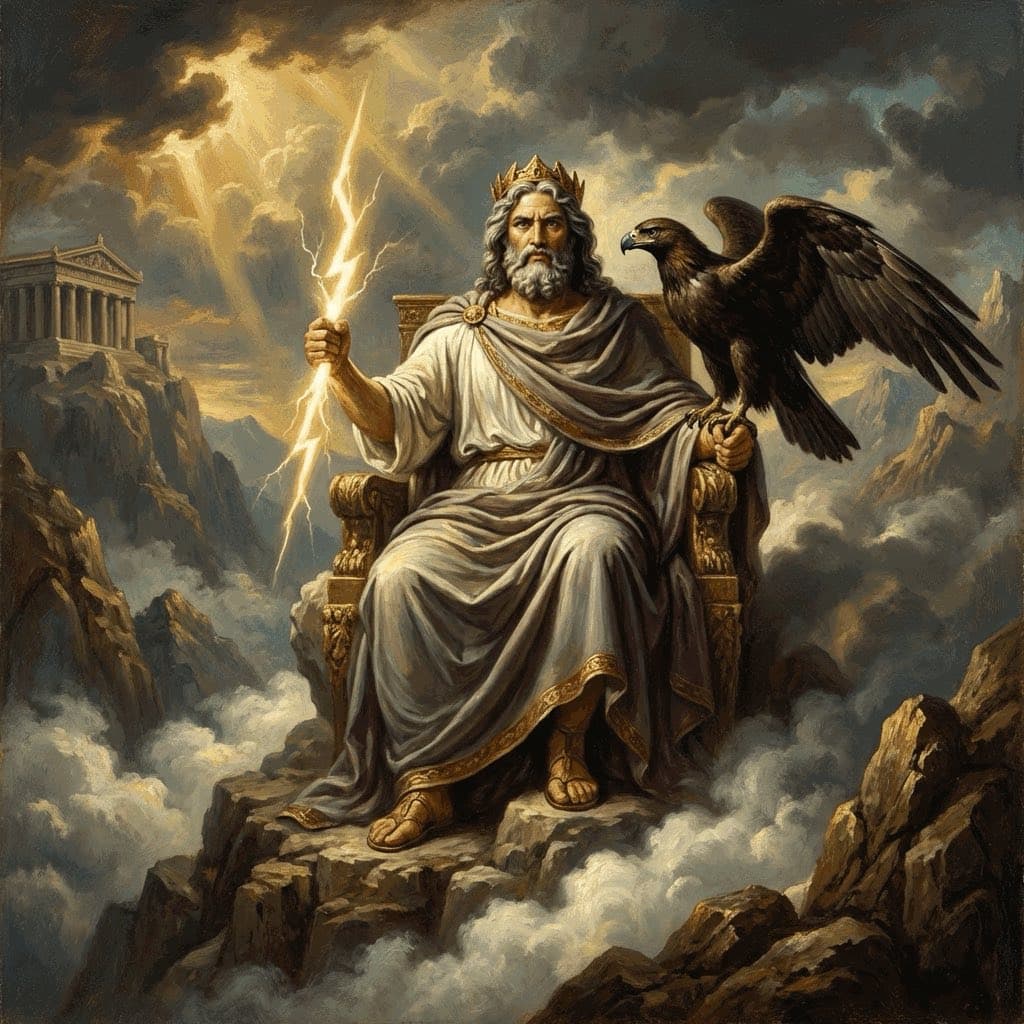
Zeus
ZeusGreek

Both are storm-kings who win rule in heaven after a succession struggle; the Kumarbi cycle is the closest Near Eastern parallel to the succession myth of Hesiod's Theogony.

At a glance

Tarhunna (the Storm-god of Hatti) and Zeus compared
Tarhunna (the Storm-god of Hatti)Zeus
TraditionHittite PantheonGreek Pantheon
Domainsstorms, rain, kingship, the fertility of the landsky, thunder, lightning, law, order
Symbolsbull, mace and lightning, mountainthunderbolt, eagle, oak tree, bull
Also calledStorm-god of Hatti, Teššub (Hurrian), Taru (Hattian), Tarḫunt (Luwian), TeshubJupiter, Jove

Where they meet

They share a symbol: bull.

  • bull

Where they part

Only Tarhunna (the Storm-god of Hatti)

Associated with storms, rain, kingship, and the fertility of the land.

Only Zeus

Associated with sky, thunder, lightning, law, and order.

How each was worshipped

Tarhunna (the Storm-god of Hatti)

Cult sites
Great Temple (Temple 1) at Hattusa, shared with the Sun-goddess of Arinna; Temple of the Storm-god of Nerik at Oymaağaç Höyük
Festivals
Purulli festival at Nerik; AN.TAḪ.ŠUM (spring) and nuntarriyašḫa (autumn) state festivals

The king served as the storm-god's priest and steward, offering bread, beer, and animals at state festivals; the Illuyanka story was recited at the Purulli festival of Nerik.

Zeus

Cult sites
Temple of Zeus at Olympia; Oracle of Zeus at Dodona; Nemean sanctuary
Festivals
Olympic Games; Diasia; Dipolieia

White bulls and the thunderbolt belong to him. Olympic contest was a sacrifice as much as a race. Dodona spoke through oak and doves. Civic oaths called Zeus Horkios; a perjurer feared the sky more than the court.

The two figures

Hittite Pantheon

Tarhunna (the Storm-god of Hatti)

The chief god of the Hittite state: a storm-god of rain and thunder who gives the land its fertility, fights the serpent Illuyanka, and, under his Hurrian name Teššub, wins kingship in heaven in the Kumarbi cycle.

Hittite scribes usually wrote the storm-god's name with a Sumerian word-sign (dU or dIŠKUR, "the Storm-god"), so the Hittite reading is partly reconstructed; Tarḫunna is the most widely accepted reading, and the Luwian form Tarḫunt survived into the first millennium BCE. The same logogram covered the Hattian storm-god Taru and, from the fifteenth century onward, the Hurrian storm-god Teššub, whom the later Hittite royal family, closely tied to Hurrian Kizzuwatna, promoted to the head of the state cult. On this site these are treated as one entry because the Hittite sources themselves write them with one sign, but readers should know that the Hattian, Hittite, and Hurrian storm-gods had separate origins and were brought together by scribes and kings.

Read the full Tarhunna (the Storm-god of Hatti) entry

Greek Pantheon

Zeus

King of the gods and ruler of Mount Olympus. God of the sky, thunder, and justice. Zeus overthrew his father Cronus to become the supreme deity of the Greek pantheon.

Zeus was the youngest son of the Titans Cronus and Rhea. Cronus, fearing a prophecy that he would be overthrown by his children, swallowed each child at birth. Rhea hid Zeus and gave Cronus a stone wrapped in swaddling clothes instead. Zeus was raised in secret and later forced Cronus to regurgitate his siblings, leading the rebellion against the Titans.

Zeus is the supreme ruler of the gods, the lord of the sky, and the wielder of the thunderbolt. His power is greater than that of all the other gods combined. He presides over the oaths of men and the laws of the universe, ensuring justice and order.

Read the full Zeus entry
About this comparison

Comparisons pair figures that play a similar role across traditions, or that the myths connect within one. A shared role does not, by itself, establish a shared origin.