Egyptian PantheonCreature
Bennu
- Rebirth
- Solar Connection
- Creation Magic
A sacred phoenix-like bird associated with the sun god Ra and rebirth. It created itself from the fires of a sacred tree in Heliopolis and inspired the Greek phoenix legend.
About Bennu
The Self-Created Heron
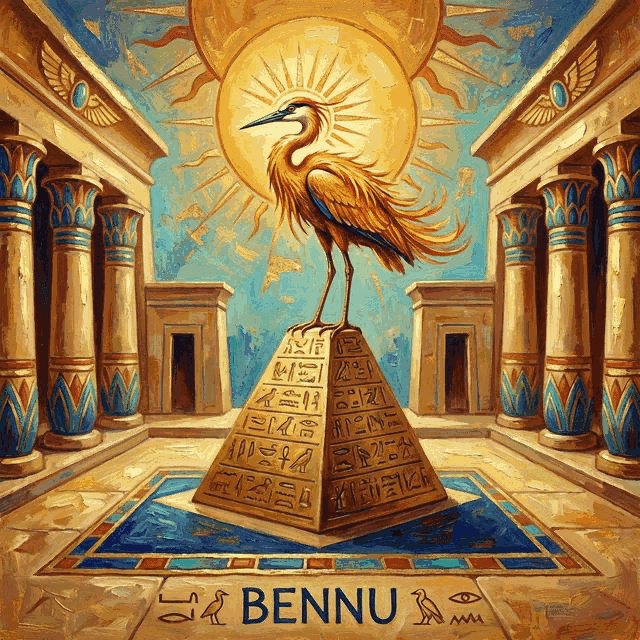
The bennu is a heron of Heliopolis tied to Atum/Ra and to the benben stone. Pyramid Texts already know a bird of becoming. Later Greek writers (Herodotus, then the phoenix legend) recast it as a fire-rebirth cycle Egypt itself did not narrate that way.
Danger is low: this is a cosmogonic bird, not a predator.
Herodotus's phoenix
Herodotus (Histories 2.73) says the priests of Heliopolis told him of a bird, which he had seen only in paintings, that came from Arabia every five hundred years carrying its dead father in a ball of myrrh to bury in the temple of the Sun. Egyptian sources show the bennu as a grey heron with a two-feathered crest, perched on the benben stone or on a willow, and the Book of the Dead includes spells for transforming into the bennu.
Quick answers about Bennu
- What is Bennu?
- A sacred phoenix-like bird associated with the sun god Ra and rebirth. It created itself from the fires of a sacred tree in Heliopolis and inspired the Greek phoenix legend.
- Where does Bennu live?
- The atlas lists Bennu's habitat as Heliopolis.
- What abilities does Bennu have?
- The atlas lists these abilities for Bennu: Rebirth, Solar Connection, and Creation Magic.
Sources and further reading
Source notes
These references are recorded in the catalog. Their passage wording and translation have not been checked, so quotations are not displayed here.
- Pyramid Texts (Heliopolitan solar theology)
About this entry
By Elizabeth Stein for Mythos Atlas. About the author. Editorial notes are grounded in the site's cited sources and can be challenged through the contact page.
The danger rating is an editorial shorthand for how the myths portray the creature, not a claim made by the sources.
Keep exploring
One myth a week, with its sources in a short email. The sign-up form is just below.